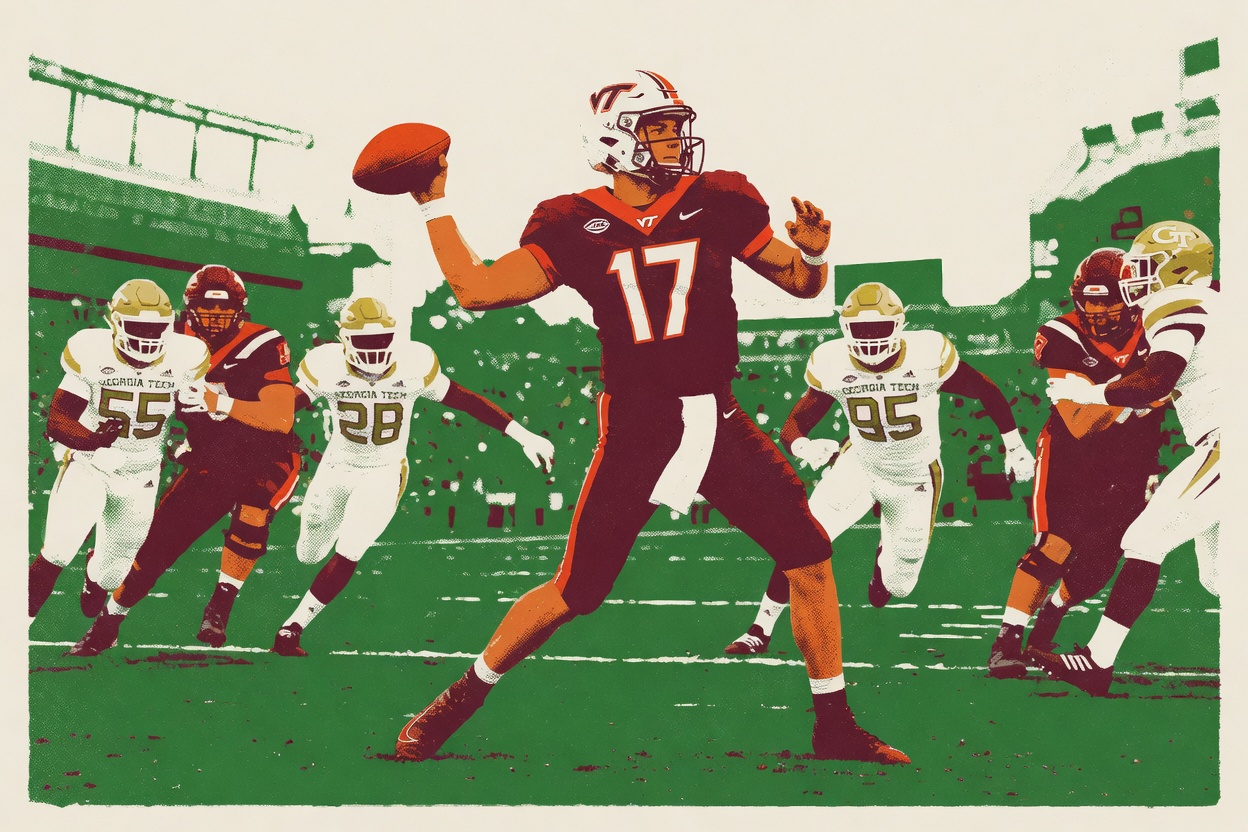
College football is still the better product. On any given Saturday it has more teams that can win a title and more games that actually mean something to the people in the stands than the NFL will ever manufacture. The hatred between fan bases is real, too. That's the honest answer to the argument everyone's having right now. And it comes with a warning: the people in charge are doing their level best to throw that advantage away.
The sport is losing to itself, in a conference room, over a check.
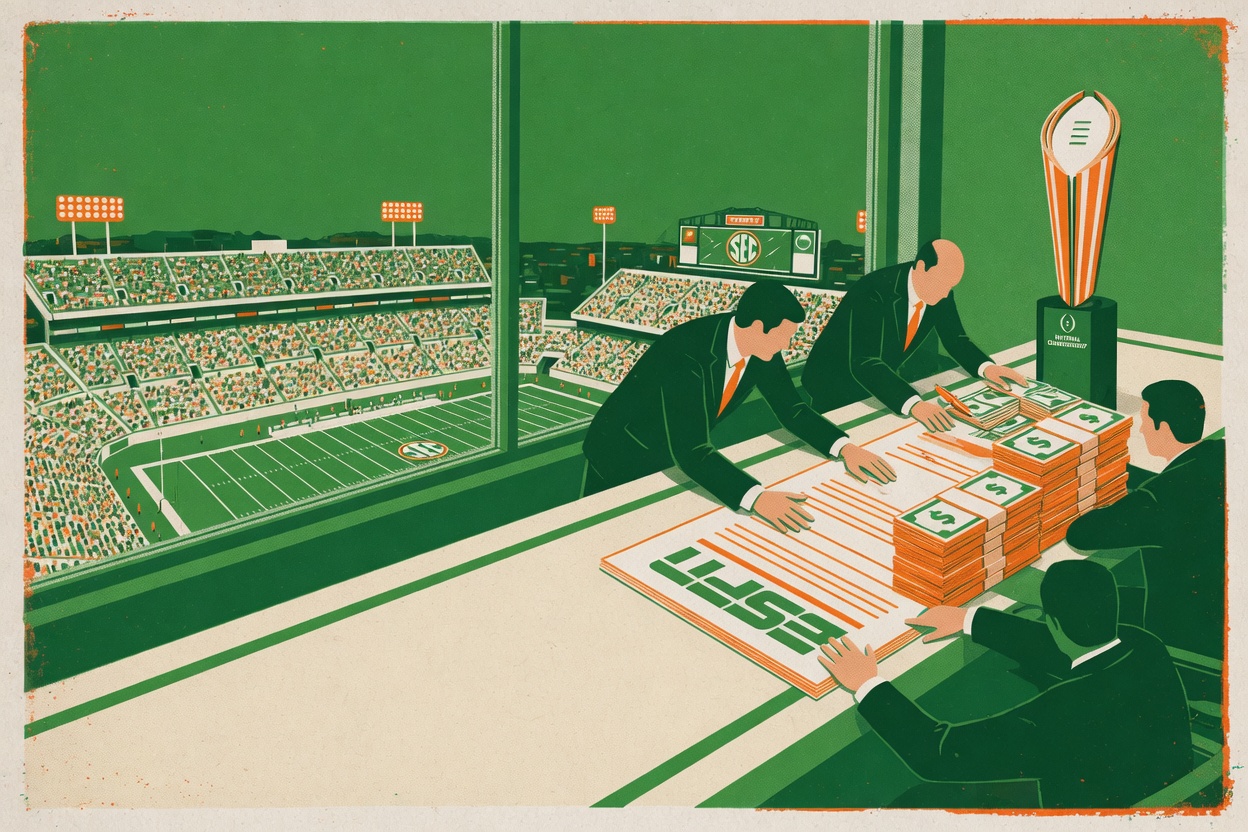
That check has a number on it. A small group of college sports executives spent the last month hammering out a new deal with ESPN to expand the Playoff to 24 teams, and as of October 16 they've got a handshake agreement to start in 2027. The average additional payment from ESPN is reportedly $345 million a year for five years. Nobody has formally voted on it. The 2026 Playoff is still a 12-team event. But the direction is set: more inventory, more money, more games that don't matter while they call it access.
The pitch for a bigger bracket is that everyone gets a shot. Look at the actual 2026 format. The four Power Four champions are guaranteed in regardless of where they're ranked. Notre Dame gets a guaranteed at-large if it lands inside the top 12. And exactly one automatic slot is left for the highest-ranked team out of the American, Conference USA, the MAC, the Mountain West, the Pac-12, or the Sun Belt. One. For six leagues. Five of the ten FBS conference champions are guaranteed nothing at all. Win your league and the system can still shut the door in your face while telling you it loves you.
The process was contentious from the start. When the new contract details got walked through the CFP management committee, the meeting ran more than 90 minutes and got spicy. The power brokers are fighting each other in the room while selling the rest of us on inclusion. The whole 24-team idea traces back to Big Ten commissioner Tony Petitti, who floated it last summer after the realignment wave reshuffled the sport. The year before that, the Playoff stayed at 12 because the Big Ten and the SEC couldn't agree, with the Big Ten wanting 24 teams and multiple automatic bids per conference and the SEC leaning toward a 16-team "5+11" setup. Two leagues. That's who decides.
And they decide for themselves. The SEC just adopted a nine-game conference schedule starting in 2026, ending a format that had stood since 1992, which pulls it in line with a Big Ten that's played nine since 2016. The two of them are still negotiating scheduling and format leverage, each refusing to give ground without getting something back, with no timeline set for a vote. If you want the clearest proof of what this is about, look at the study the two biggest leagues commissioned themselves: pooling their media rights would make less money than selling their own games. So they'll keep selling their own games. They looked at growing the sport together versus maximizing their own slice, and they picked the slice. Every time.
The crowd that insists the NFL has already won has a real case. The pro game is crisper. The pacing is tighter. The commercial load in a college broadcast is genuinely brutal, and the best teams can go weeks without a game that scares them. All true. But the NFL plays the same money game, just with better production values. This is a league whose signature talking point is that 87% of its games were on free over-the-air TV last season, a number independent analysis pegs closer to 33% once you ask whether a normal fan could actually watch. Everyone at the top of football is reaching into your wallet. College football's sin is that it's reaching while torching the exact things that made it worth more than the NFL in the first place.
No expansion check can buy back what matters here. You can stand in an SEC stadium on a Saturday night, or walk through a tailgate that's been in the same family's lot for thirty years, and feel something the NFL has never once replicated. That atmosphere is the product. It's built on regional grudges, on a champion from a league nobody circles meaning something, on the idea that your team's path is real. Strip out the access, hand the keys to two conferences, let ESPN set the bracket size, and what you get is a worse NFL with a marching band.
Schedule a cupcake like Alabama lining up Mercer and nobody blinks, because padding the slate has always been part of this. Fine. But a 24-team field full of 8-4 blue bloods, built by two leagues who've openly decided the rest of the sport is competition to be managed, is a different thing entirely. Nobody asked for this playoff. It's an inventory problem solved with your Saturdays.
College football is still better than the NFL today. Ask me again after Petitti and the SEC get what they want, and I might not be able to say it.