Atlético Madrid have drawn their line and dared everyone to cross it. On Thursday the board of directors issued a formal statement saying it "unanimously expressed their full support" for the decision not to sell Julián Álvarez to Barcelona, and that "there has not been and there will not be any negotiation with them regarding Alvarez's transfer." The wording left no wiggle room: "there will not be any negotiation and there is zero consideration of an Alvarez transfer to Barcelona."
As theatre, it's clean. As man-management, it's a mess waiting to detonate. It doesn't much matter who "wins" this saga before the window closes on September 1. Atlético have already created a rift they'll be living with long after the paperwork is settled.
The problem with fighting your own player in public
Start with the tone. This isn't a club quietly holding firm on a valuation. It's a club that has gone on record calling itself the aggrieved party. "The player is being portrayed as the victim, but we are the only victims in this case," the club said, adding that Barcelona "have harmed us both financially and socially." Then this: "There is a zero-per-cent chance of selling him to Barcelona. It's not about money, it's about dignity."
Dignity. That's the tell. Once a boardroom reframes a transfer standoff as a matter of honor, it has stopped negotiating and started fighting. And you can't fight a player you still need to score your goals.
CEO Miguel Ángel Gil doubled down on Movistar: "My personal dream is for Julian Alvarez to stay at Atleti. If he wants to leave the club, we will look for an alternative, but he will never, ever, ever go to Barcelona." Never, ever, ever. That's not the language of a club managing an asset. It reads like a grudge.
What the crowd already showed you
We've seen how this plays with the supporters. In the 2-2 draw with Villarreal, Álvarez made his first appearance of the season and was whistled from the moment his name went up among the substitutes pre-match, again when he came on in the 66th minute, and once more when he walked off. A section of the crowd chanted, "Let him leave once and for all, let him leave." The match itself had everything: Marc Pubill opening the scoring, Gerard Moreno equalizing from the spot, Robin Le Normand sent off, Georges Mikautadze converting a penalty to put Villarreal ahead before Giuliano Simeone rescued a point late. Álvarez, who admitted at the World Cup he'd spoken to the club about a move to "fulfil my dream," was jeered from before kickoff to full time, and it wasn't warm.
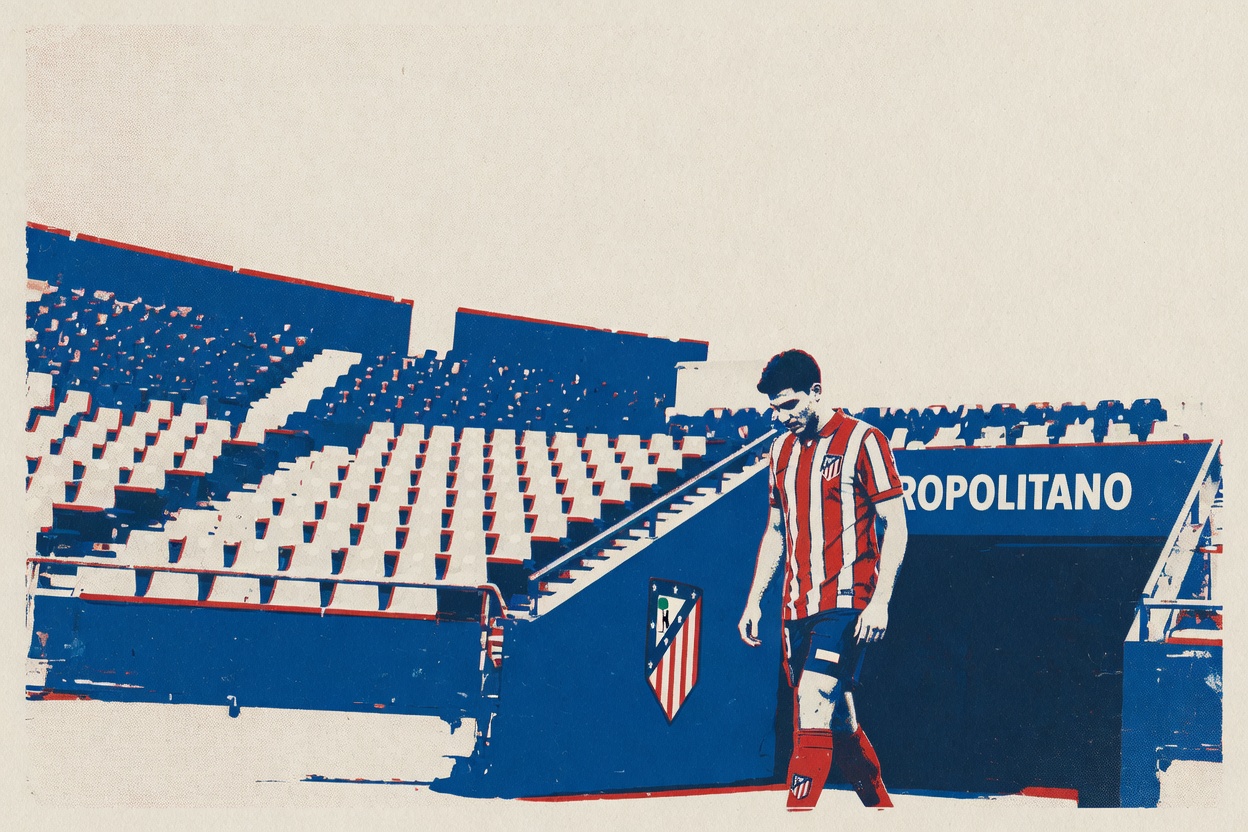
One detail should worry Atlético more than any whistle. When the players stayed on to applaud the fans at full time, Álvarez headed alone down the tunnel. Diego Simeone later confirmed that was the club's call, not the player's: "The club decided he should not go near the stands or the fans." So the institution physically separated its forward from its own supporters to protect him from them. A club managing the distance between its star and its base is not a club at peace with itself.
The dressing room is the real fault line
The public messaging from the squad has been supportive. Jan Oblak said, "As long as he is with us we will support him." Simeone has repeatedly pushed the sticking-together line. That's exactly what you'd expect professionals to say into a microphone.
But look at the two forces pulling in opposite directions. On one side, a board treating this as a war of dignity against Barcelona, one that's even filed a complaint with FIFA and the Spanish federation over Barça's pursuit. On the other, a manager whose entire method depends on a group that feels like a family. Simeone's football lives and dies on collective buy-in. A boardroom that publicly says its own player is "in poor health" and being "deceived and confused" by outsiders isn't making his job easier. It's asking a dressing room to rally around a teammate the institution has just described as compromised.
You can't do both. You can't tell the world your striker is a victim of manipulation and then expect him to be the emotional engine of your season. The moment ownership speaks about a player in those terms, the locker room hears it too.
Winning is the trap
The outcome barely matters. Say Atlético hold the line and Álvarez stays. He's under contract until 2030, with a release clause reported around €500m, so legally they hold every card. Even so, they've got a forward who said his dream was to leave, whose own fans chanted for him to go, and who had to be walked away from the stands for his own protection. That's less retention than a hostage situation with a wage bill.
Say they sell him elsewhere instead. The board has been clear it's open to other suitors, with Arsenal named as the club still in the running alongside Barcelona, and interest also floated from Paris Saint-Germain and Real Madrid, who are said to have failed with a €150m bid. Laporta, meanwhile, insists Barcelona's offer of over €100m stays on the table if Atlético change their mind, and he's pointedly noted that a club claiming it won't sell somehow seems willing to deal with others. That contradiction is the crack Barcelona keep prying at, and they're not wrong to. "It's about dignity" sounds a lot weaker when you're taking calls from Arsenal.
Either path leaves Atlético having spent real credibility to prove a point. That's the danger of turning a transfer into a matter of pride. Pride doesn't press for 90 minutes, and it doesn't rebuild trust with a fanbase that's already chanting a player out the door.
The window closes soon and this could all move within days. But whatever the resolution, Atlético have shown their hand: a board willing to fight in public, a manager pleading for unity, a crowd that's made up its mind, and a player caught in the middle of it. You don't heal that with a press release. And a club that had to walk its own forward away from his own supporters should know better than anyone how far this has already gone.