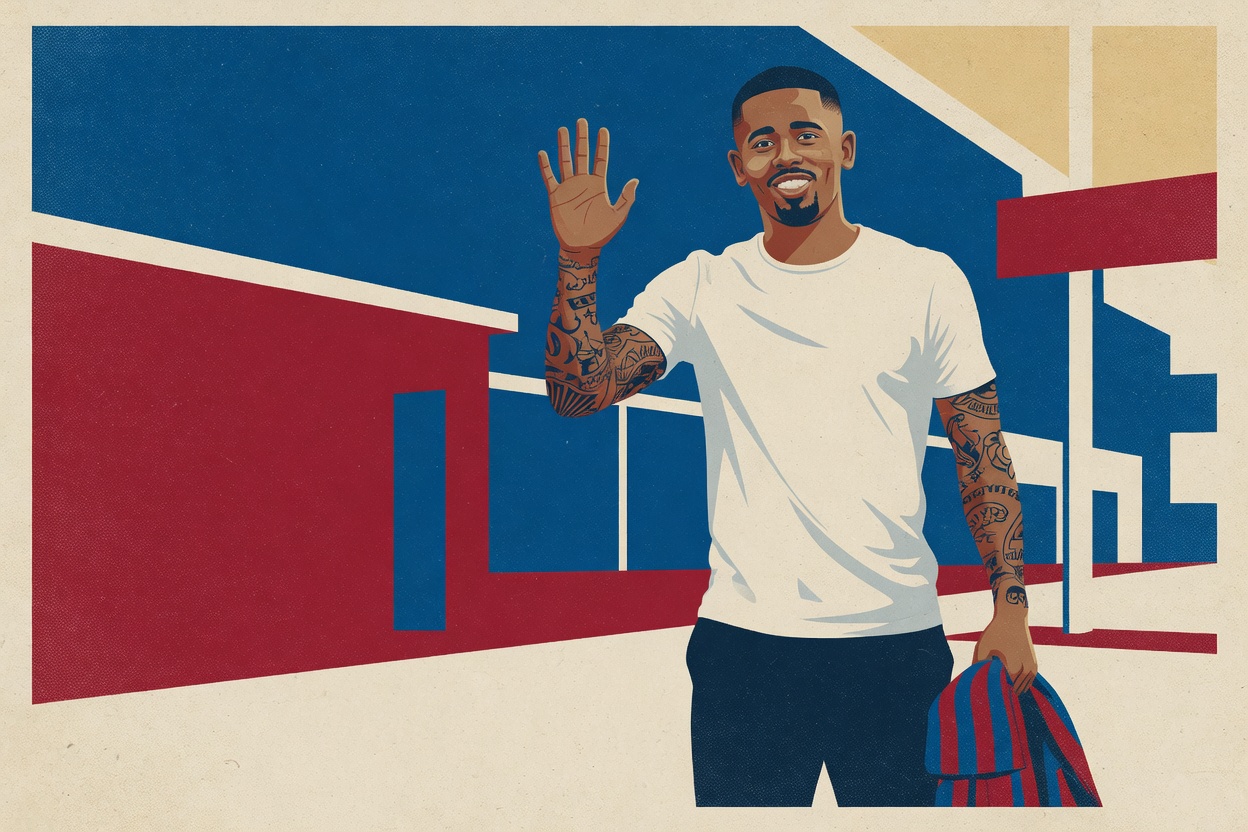
Barcelona have agreed a deal with Arsenal to bring in Gabriel Jesus. As of deadline day the move still isn't done: he's arrived in the city, the medical is underway, and the contract hasn't been signed or announced. Jesus told reporters at the airport he's "very happy." Good for him. He's earned a fresh start.
But a fresh start for the player isn't the same thing as an ambitious swing by the club. This is a pragmatic pivot dressed up as a marquee arrival, and the way it came together shows exactly how boxed in Barcelona have become.
Start with the price. The reported fee is around €10m at base, rising toward €15m with add-ons, and there's a further wrinkle: Barcelona would only hold 80% of Jesus's economic rights, with Arsenal keeping 20% of any future sale. That's the shape of a deal you take because it's the one you can afford, not one you chase because you believe in a player.
This isn't who Barcelona were trying to sign, either. The forward they wanted was Julián Álvarez, and Atlético made it plain they had no intention of selling him to a rival, standing firm against Barcelona's interest. Barcelona couldn't force that through, so they went shopping in the bargain aisle, and Arsenal happened to have a striker they were desperate to move.
The seller's motivation matters here. Arsenal weren't reluctantly parting with a key man. Jesus had fallen behind Kai Havertz and new arrival Viktor Gyökeres in the central striking role. Mikel Arteta left him out of training and, asked whether that meant he was on his way out, offered a curt "Personal situations, whatever they are, I think it's clear." Jesus had a year left on his deal and was set to walk for nothing next summer, so cashing in now was simply good business for Arsenal. When the selling club is this eager and the buying club pays this little, you're not landing a coup. You're catching what someone else threw away.
Then there's the body. This is where the risk lives. Jesus tore the ACL in his left knee in an FA Cup tie against Manchester United in January 2025, a serious injury that kept him out for a long stretch. It wasn't a one-off, either: he'd previously missed a run of games with a right-knee problem at the 2022 World Cup and needed a follow-up procedure the next preseason. He arrived in Barcelona insisting his knee is "perfect," but that's the player's own line, not a medical clearance, and it's fair to reserve judgment until the medical says so.
Over four seasons at Arsenal since joining from Manchester City in 2022, Jesus made 123 appearances, scored 32 times and set up 22 more. Useful player, versatile and willing on his day. But that return, spread across four years and repeatedly interrupted by injury, is the profile of a squad option, not a player you build a title push around.
And Barcelona need more than a squad option. They've lost Robert Lewandowski and Ferran Torres from the forward line, and they're chasing goals in a season that matters. The reported contract runs to June 2028 with an option to extend, which suggests they see him as a medium-term piece rather than a stopgap. Fine. But betting your center-forward spot on a 29-year-old with two significant knee operations behind him is a gamble born of necessity, not conviction.
Gabriel Jesus might work out fine. If his knee holds and he finds his sharpness again, €10m for a forward of his pedigree is good value, and Barcelona will look smart for it. But the club didn't set out to be smart. They set out to sign the striker they wanted, got told no, and settled for the one another team was actively trying to unload. Whatever the medical says, that's the story of Barcelona's summer.