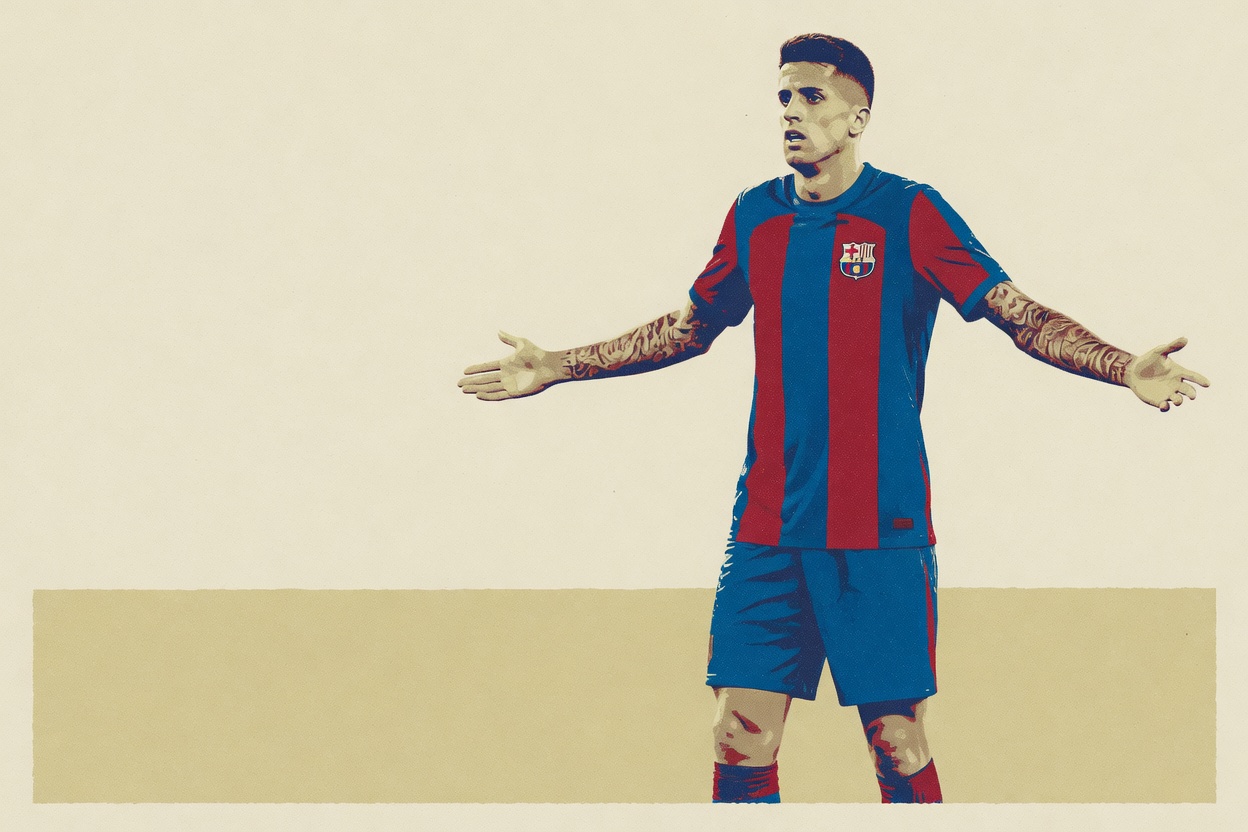
The math is brutal, and it's entirely of Barcelona's own making. Eric Garcia is out three to four weeks with a right thigh injury, Jules Kounde will miss PSG with a left ankle sprain, and the man left to hold down right-back for a club chasing everything is Joao Cancelo, 32, back on a cheap deal.
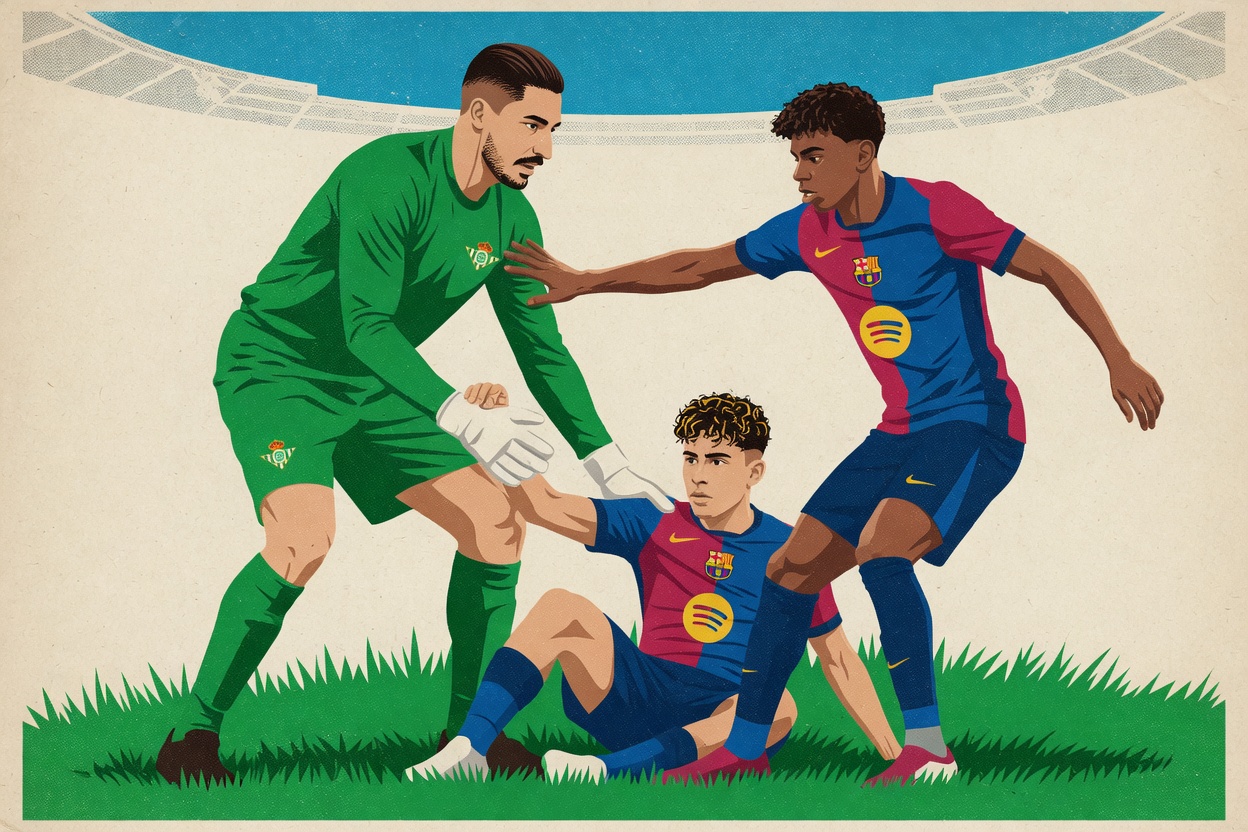
Both injuries happened in the same game, Saturday's win over Real Betis. Kounde played the full ninety and was limping by the time the squad got home. Garcia came on as a substitute for Gerard Martin and couldn't finish, walking off before full time; in one afternoon, Barcelona lost two right-back-capable defenders.
The depth behind them is a rumour. Right now, Cancelo is the only natural option left at the position. Beyond him, Barcelona are either converting a center-back (Gerard Martin, who took a knock to his own ankle against Betis and was pulled at half-time as a precaution) or asking Hansi Flick to improvise with players who don't play there. There's no like-for-like deputy waiting.
A club this size walked into mid-October with one fit right-back because they chose to. Barcelona agreed to loan Ronald Araujo to Liverpool for the season, with a reported permanent option around 55m euros, then decided against signing a direct replacement. They ruled out names like Cristian Romero and Aymeric Laporte and put their trust in the academy instead. In August, with everyone healthy and nine straight league wins piling up through the Betis match, that looked like faith in the project. Right now it looks like a club that mistook luck for planning.
The players aren't to blame for this. The blame lands on Deco and the sporting hierarchy who signed off on going into a campaign this short at a vital position. A squad that believes in its depth doesn't get hollowed out by a single Saturday's worth of knocks. Barcelona did. This is bad planning: the entire backup plan at right-back comes down to hoping Cancelo's legs hold and hoping Garcia's recovery timeline was pessimistic.
It gets worse away from right-back, too. Andreas Christensen is also sidelined, expected to miss PSG and, on current reporting, the Clasico, with no club-confirmed return date. The one left-back on the fringes, Alejandro Balde, has barely featured, around twelve minutes across Barcelona's first ten competitive matches this season, stuck behind Xavi Espart and Cancelo, and is reportedly weighing a January exit. Flick has admitted the obvious: "The situation isn't easy for Balde right now, and I'm fully aware of that." Balde plays left-back, but his situation shows how top-heavy and inflexible this full-back rotation has become. The club has stars and almost nothing underneath them.
The fixture list doesn't help. PSG away, then Real Madrid, Alaves and Aston Villa at the Camp Nou, then Atletico away: five serious nights inside three weeks, every one kicking off in the 8-9pm window. Three of those five are at home, so travel isn't really the issue. The names and the compression are the real problem.
The calmer view says this isn't a crisis yet. It's only the league phase of the Champions League, January is still open, and Flick's attack might simply outscore whatever the back line concedes. There's truth in the attacking part: a team that can win 5-2 can paper over a makeshift defence for a while, and Cancelo has played right-back at a high level before. But "we'll fix it in January" is an admission that the summer plan failed. It means the people who built this squad already know the bet was wrong and are hoping the results hold until they can correct it.
Kounde's Clasico availability is still up in the air, decided by how the ankle settles over the coming days. If he makes it, the panic eases a notch. If he doesn't, Flick walks into the two biggest games of his autumn with Cancelo and improvisation at right-back, and a back line missing Christensen. Deco decided in August that confidence could substitute for cover at a vital position. This is what that bet looks like in October.