Start with the part that's easy to agree on. The Big Ten and SEC were right to close this door.
On Tuesday, August 25, the two leagues announced rule changes that stop players who have already been through the professional ranks from suiting up for their schools. The Big Ten went first, with its athletic directors adopting a rule that bars any athlete who signed a professional contract, appeared on a professional roster, or declared for the NFL draft without withdrawing. Hours later the SEC followed with a wider net, covering athletes who have been drafted or appeared on professional rosters across the NFL, NBA, WNBA and the NBA G League.
The logic behind the ban is sound, and you don't have to squint to see it. A flood of former professionals dropping into the transfer portal was going to cost current players and incoming recruits their roster spots, their scholarships, and their NIL money, all so a program could plug in a 24-year-old fresh off an NFL camp. Oregon's Dan Lanning put the competitive-fairness case plainly: "I think there's a lot of negatives that are involved around it… it's unfair to the players on current teams." College football has spent two years being reshaped by things nobody voted for. Here, at last, the people running the sport actually voted.
The rule itself is fine. Good, even. The problem is what the leagues bolted onto it.
The penalty is where this gets uncomfortable
The punishment is severe, and it's severe on purpose. A school that violates the rule faces a half-season suspension for its head coach, a fine equal to 50% of that sport's annual operating budget, and the revocation of its league voting rights on business matters. In the SEC's version, the suspension covers all coaching, recruiting and administrative duties, and commissioner Greg Sankey was handed the authority to impose additional sanctions as he sees fit. The Big Ten's structure mirrors it: a half-season suspension for the head coach and an institutional fine.
One detail is worth pausing on. The template reportedly comes from the NCAA's ghost transfer rule, which bans coaches from 50% of games and hits the school with a fine equal to 20% of its football budget. The new rule keeps the suspension and more than doubles the fine, to 50%. The leagues didn't just borrow the existing penalty, they escalated it, and they escalated it for conduct that, in the situations actually driving this whole mess, hinges on a judge's ruling rather than a coach's decision.
Coaches can't predict what a courtroom will do
That's the part that doesn't sit right. Trace how these players became eligible in the first place. A Louisiana judge granted temporary relief to a group of former college players, several of whom had signed NFL contracts, clearing a path back into the portal. Earlier in the summer, a federal judge in Colorado issued a class-wide preliminary injunction tied to the five-for-five eligibility model, only for the 10th Circuit to later stay that sweeping relief. A court in Kentucky handed TROs to another group of athletes. None of it lined up: different courts, different states, different outcomes, decided at different times.
That inconsistency is just the current state of the sport. A coach can be told by one court that a player is eligible and by another that a nearly identical player is not. My read is that punishing a head coach with a half-season on the sideline for guessing wrong about how that patchwork shakes out is asking him to referee constitutional litigation on a recruiting timeline. That's not the coach's job, and it isn't within his control.
The leagues clearly anticipated the legal fight. Their own theory, and it's their theory rather than settled fact, is that the rule survives scrutiny because a conference has more latitude than the NCAA and because the punishments target schools and coaches rather than the athletes themselves. Clever. It also means the people absorbing the penalty are precisely the ones who can't undo the court order that created the opening.
The Kiffin problem cuts both ways
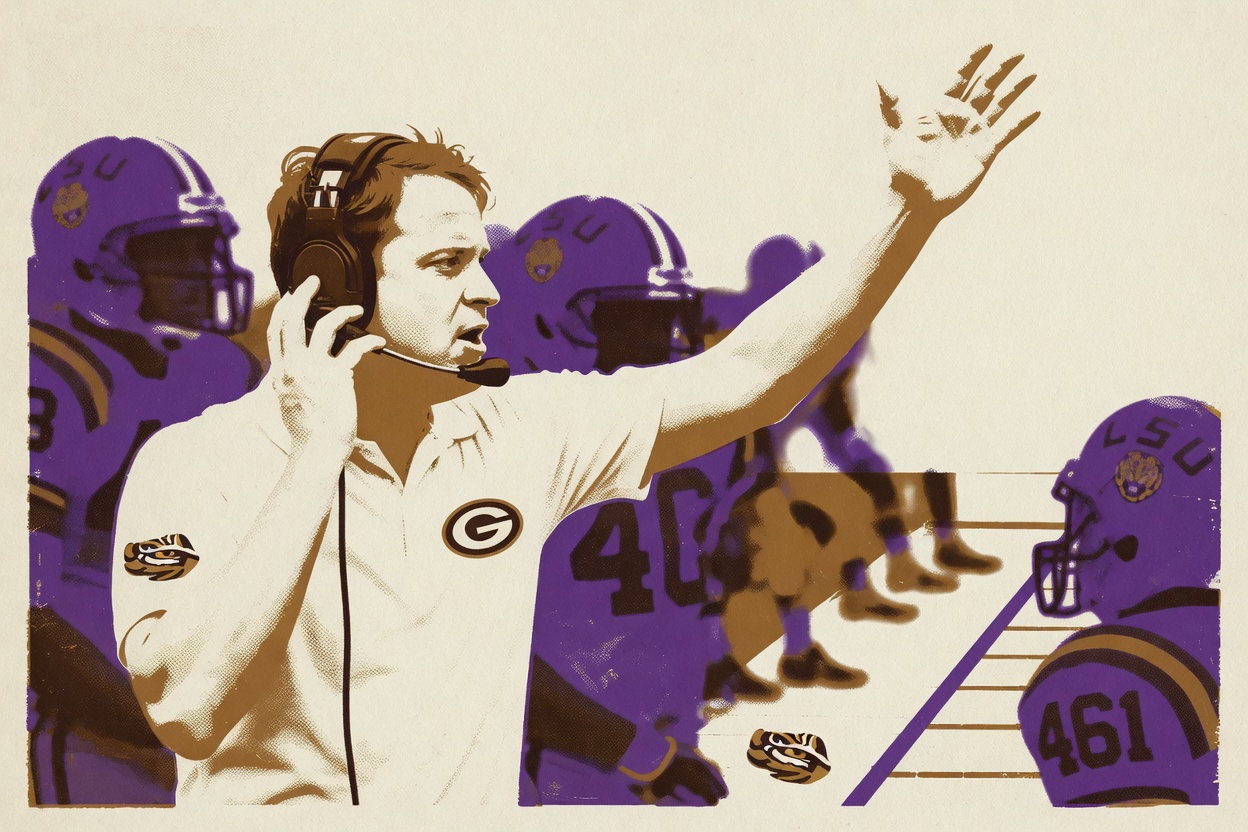
This is about LSU and Lane Kiffin, not some abstraction. The Tigers lined up commitments from players cleared by the Louisiana ruling, including former Ole Miss tight end Dae'Quan Wright, who cleared waivers with the Cleveland Browns to return to college, and defensive lineman Zxavian Harris. Reports allege Kiffin and LSU actively encouraged players on NFL rosters, or their representatives, to bring the suit, and that the case wasn't filed in Louisiana by accident. That's an allegation, not an established fact, and it should be read as one.
The response was swift and pointed. The SEC's presidents and chancellors voted 16-0 to approve the new policy, LSU's own leadership included, with a separate 15-0 vote to confirm the penalties from which LSU abstained. A school got outvoted by its own conference on a matter aimed squarely at its coach's plan.
And yet Kiffin's argument isn't nonsense, which is what makes this messy. He's said flatly that he doesn't even like the practice in principle: "There's a lot of parts of this I don't like. I don't think professionals should come back to college sports and college football." His defense is narrower and sharper: "Over 100 athletes in multiple sports were cleared and said you could go play. That's a court order." His point is that he followed the court orders that existed, the same way programs followed the orders that let Diego Pavia keep playing. You can find Kiffin's forum-shopping instincts distasteful and still concede he's identified the real fault line: what happens when a coach obeys a valid injunction and then gets suspended for it?
Fix the rule, rethink the hammer
Where does that leave things? The ban is the right instinct. Left unchecked, the loophole was going to turn college rosters into a resting place for cut pros, and someone finally acted before it got out of hand. The ACC and Big 12 hadn't formally joined as of late August, though reporting suggests momentum, and challenges to the new rules are expected rather than resolved. Kiffin has said he plans to fight it.
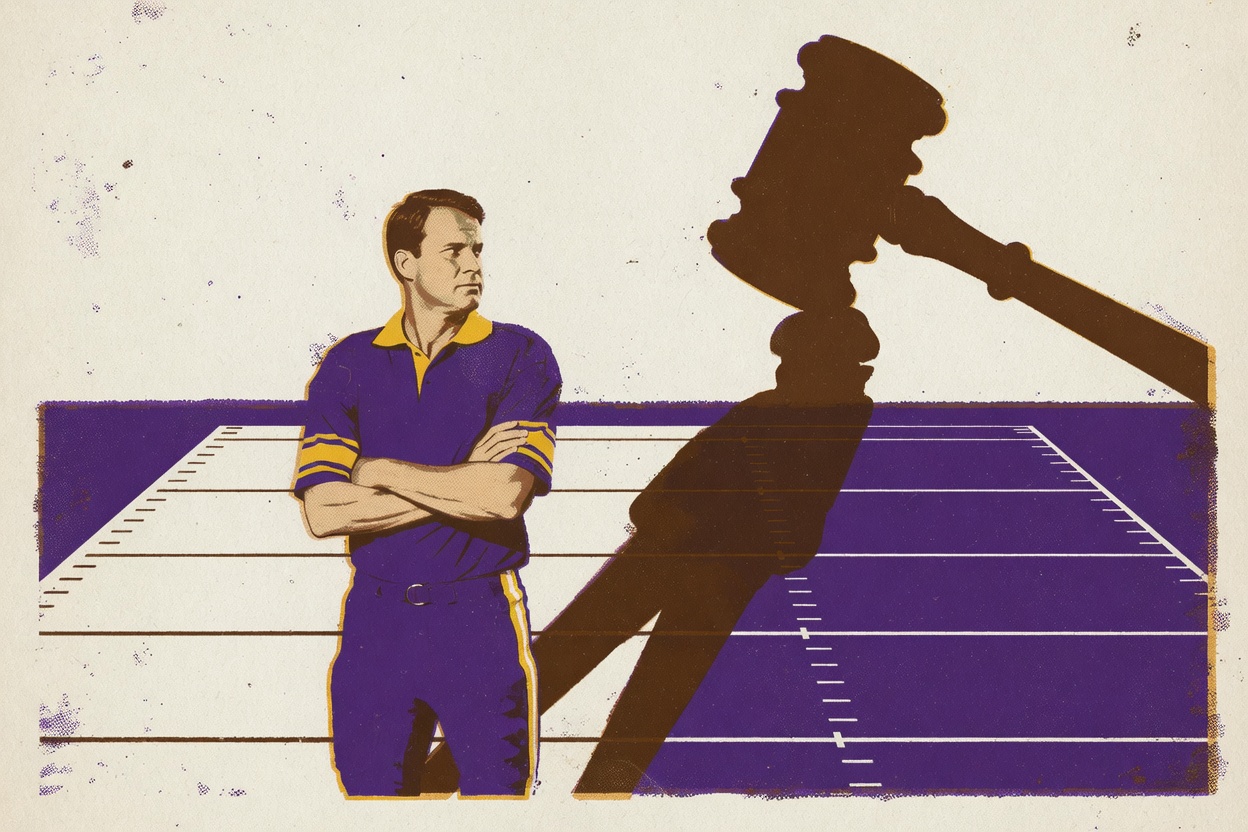
Keep the ban. Reconsider the penalty. A financial hit on a program that games the system is defensible. Docking a coach half a season for the unpredictable output of a court he never sat in is a different thing, and the leagues would be smarter to punish the willful abuse rather than the outcome. Right rule. Wrong hammer.