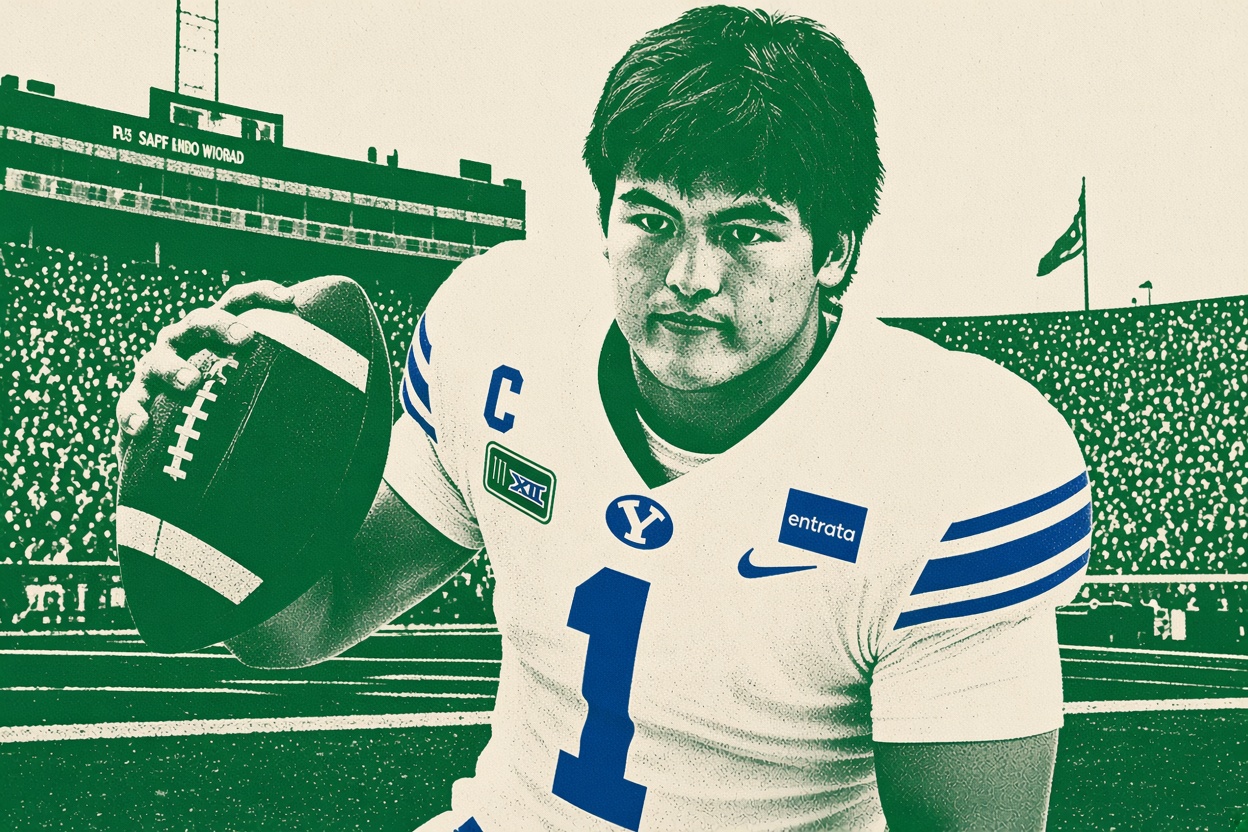
BYU beat Arizona State 27-20 on Saturday, and writers covering both sides quickly landed on the same comparison: this felt exactly like the last time these two teams played. In 2024, Arizona State backpedaled deep into its own territory and launched a desperation heave into the stands to protect a lead, followed by a premature field-storming and a long delay before BYU got one last Hail Mary. This time it was BYU, up a score after recovering an onside kick, grinding out the final minute with kneel-downs, backward runs, and a Bear Bachmeier scramble-and-throwaway on the last snap, officials taking a brief look before it was finally, officially over.
Two different plays, two different teams doing the burning-clock dance, but the same result: a rivalry that can't seem to end on a normal snap. That's a pattern, and it says something unflattering about how both programs are coached in the moments that matter most.
Start with BYU, since it's BYU's program that just did it again. Kalani Sitake had a one-score lead, the ball back after an onside kick recovery, and an offense that had played well enough to be ranked No. 8 entering the week. His answer was to call runs that went for next to nothing, string together what Deseret News called "crazy kneel downs and backwards plays," and finally hand it to his quarterback to scramble around and throw it away rather than simply take a knee or run honest plays to finish the clock. Bachmeier executed exactly what was asked of him. The problem was the assignment itself. A team that trusts its offense doesn't need its quarterback backpedaling and chucking the ball out of bounds with the game on the line. It just runs its plays. BYU's staff didn't trust that. The only reason anyone's talking about a review on the final snap of a seven-point win is that the coaching staff manufactured the jeopardy itself.


None of this was ever really in doubt, goes one argument: the chaos was just broadcast and officiating noise layered on top of a result that was already decided. That's a convenient way to let the coaching staff off the hook, and it doesn't hold up. If the outcome truly wasn't in question, there was no reason to turn a simple clock-out into a sequence that needed a review on the final play. Teams that are actually comfortable don't invite scrutiny on their last snap. BYU invited it, same as Arizona State did in 2024 by running backward for what amounted to a 26-yard loss instead of just taking the sack and letting the clock bleed. Both staffs, in back-to-back meetings, chose unnecessary risk over the boring, correct way to kill a game, and got away with it. Both programs would rather improvise under pressure than trust their own players to finish a lead the normal way.
There's a separate conversation about the disputed goal-line touchdown that opened the scoring and drew criticism from officiating voices. That's a story about replay standards. Keep it separate, because conflating the two lets everyone off the hook for the real issue: a rivalry where the winning team's own coaching staff keeps finding a way to make the ending look like a coin flip.
BYU is 7-1, 4-1 in Big 12 play, with a huge game at Utah coming next. The record looks fine; the process that produced the final two minutes against Arizona State needs work. If Sitake's staff treats the trip to Utah with the same hesitation it just showed with a one-score lead and the ball in its own hands, it'll cost them a game they're supposed to win, not just a few gray hairs for the people watching.