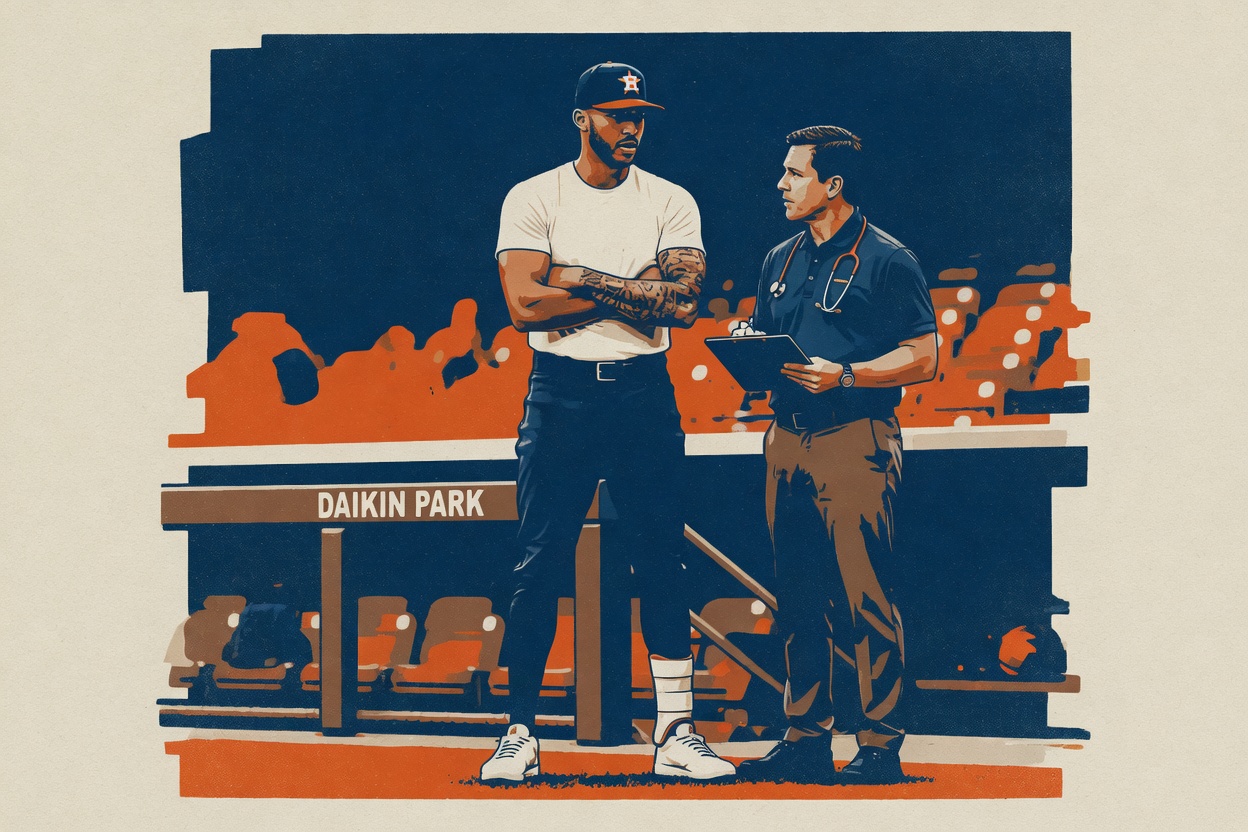
Carlos Correa spent four months trying to write a better ending than the one he got. On Friday, September 18, talking to reporters for the first time since the decision came down, he described how it actually ended. Not a dramatic setback on the field, but a doctor telling him, plainly, that this was as far as it went.
"He told me, 'I don't feel comfortable with this,' and he pretty much said I'm not going to play," Correa said.
A player who had ground his way back ahead of schedule, who had already resumed live batting practice, who genuinely thought he might rejoin the Astros last weekend against Tampa Bay, was told no by the person best positioned to protect him from himself. Manager Joe Espada had already announced on Tuesday, September 15, that Correa wouldn't return this season. Correa's own words filled in the why.
The comeback was real, and that's what makes it dangerous
Start with the timeline, because it matters. Correa had left ankle surgery on May 11, a peroneus brevis tendon repair, after hurting himself taking pregame swings in the batting cage on May 5. The original timetable had him out six to eight months. By early August he was working out on the field well ahead of that pace and had been cleared to start swinging a bat. Everything pointed toward a September return.
Then he pushed into live BP, felt he was close, and his ankle talked back: two to three days of soreness and inflammation. Not a reinjury or a collapse, just a body flagging that the tissue wasn't ready for the load he was asking of it. Correa now says he'll get another MRI in two months, expects to be at 100 percent, and plans to show up at spring training with no limitations. For now he won't hit for a month, and his doctor doesn't want him doing anything that turns his foot over.
Look at that sequence and the risk is obvious. The gap between "ahead of schedule" and "you're jeopardizing next year" was one hard week in mid-September. If he'd forced his way onto the roster and that inflammation had turned into something structural, this winter wouldn't be about a clean offseason ramp-up; it would be about whether he's ready for Opening Day 2027 at all.
The timing is what makes the restraint worth praising
Here's my opinion, not some reported consensus: both Correa and the Astros handled this right, and the moment they did it makes that harder than it sounds.
The calendar was cruel. As of the most recent snapshot around September 20 and 21, Houston sat at .500 and had slid out of a postseason spot entirely after getting swept at home by Atlanta, with Texas moving into sole possession of first place in the AL West (Houston holds the head-to-head tiebreaker). A season that looked fine a couple of weeks earlier was coming apart in real time.
That's exactly the kind of environment where teams talk themselves into bad medicine. A three-time All-Star who'd stayed around the dugout through his whole rehab, with a stretch run tightening by the day: every incentive pointed toward finding a reason to activate him. Some had already sketched the romantic version of this story a month earlier, in mid-August, well into the season, Correa limping back to drag Houston across the line. Reality intervened, and to everyone's credit, nobody argued with it.
Worth being precise about who did what here. This wasn't a front office coldly pulling the plug over a player's objection, and it wasn't Correa waving a white flag on his own. A doctor made the call, the player accepted it, and the organization honored it instead of leaning on him for a stretch-run cameo. Baseball has a long, ugly habit of nudging injured stars back onto the field. Deferring to the medical call when the standings are screaming at you to do the opposite is the right instinct.
Correa gets the tone right too
Give Correa this: he didn't spin it. "I was here every day from the moment that they took my boot off and I had in my mind to come back and play and be there with the boys again," he said. Then the line worth remembering: "So, just to hear that news, obviously not what I wanted to hear, but I can go to sleep at night knowing that I tried my best."
That's a healthier way to lose an argument with your own body than most athletes manage. He tried, it didn't take, and instead of treating the doctor's caution as an insult, he treated it as information.
Correa, now 31, has been through enough of these to know the difference. His career has included a broken fibula, a back issue that cost him more than a month, a neck problem, and an earlier ankle sprain. I won't pretend those unrelated injuries add up to some tidy diagnosis, because they don't. But a player with that history has earned the right to think in years rather than weeks, and so has the team paying him.
Before the injury he was doing exactly what Houston needed, hitting .279/.369/.418 with three homers and 16 RBIs across 32 games, and sliding back to shortstop while Jeremy Peña dealt with a hamstring problem. A healthy Correa in 2027 is worth far more to the Astros than a compromised one for a handful of games in a race they've already fallen out of anyway.
The comeback failed, but the decision-making didn't. This was a week when it would have been easy to chase a short-term miracle. The people around Carlos Correa chose the long game instead.