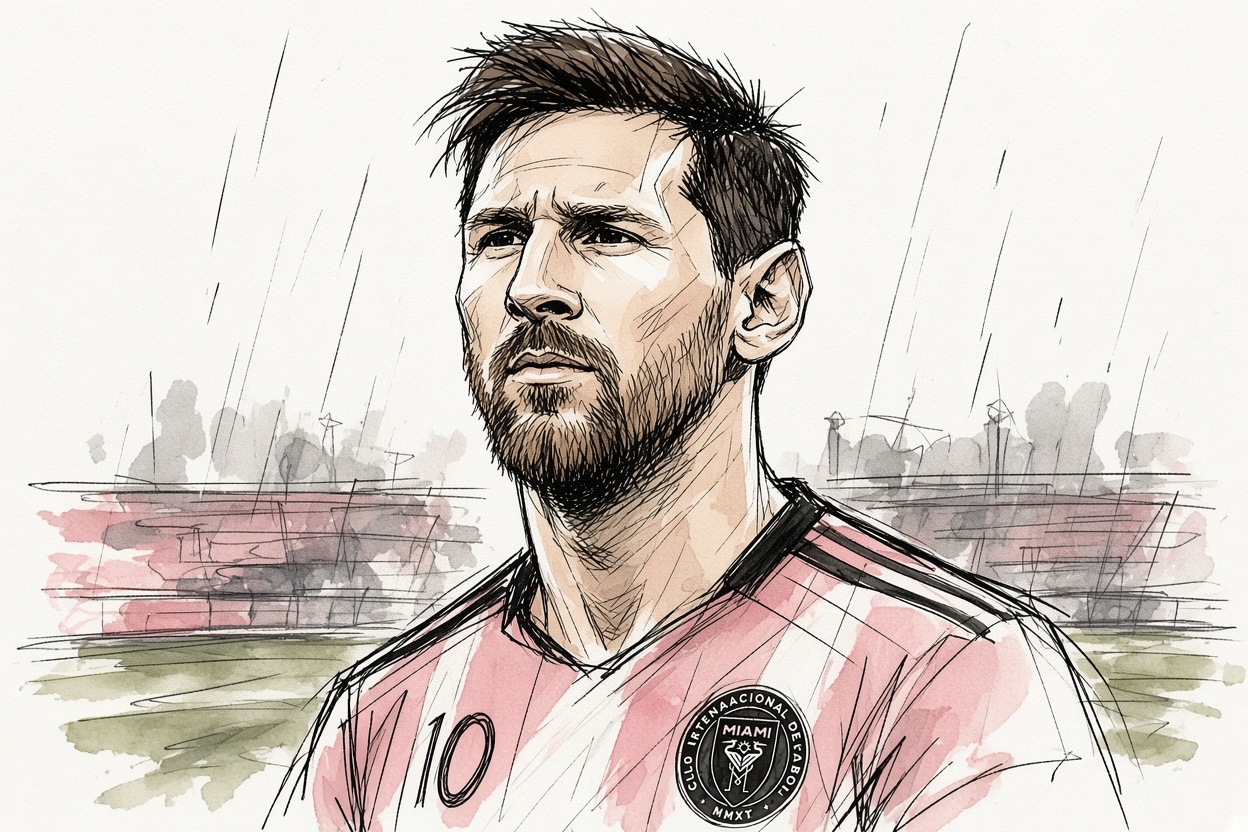
A stadium full of people in Columbus, Ohio, singing Elvis in the cold rain at Lionel Messi's team, then watching their own players knock him out, is exactly what football fans do in every city that takes the game seriously. If you still call American supporters plastic after Friday night, you're clinging to a stereotype that Columbus just buried.
Before Game 2 of the best-of-three Round One series on Nov. 27, the home crowd at ScottsMiracle-Gro Field sang "Can't Help Falling in Love" as both teams walked out. It was cold. It was raining. In the 92nd minute, Santi Rodríguez finished from close range after a goalmouth scramble, off an Anass Zaroury cross, for a 1-0 win. That completed a 2-0 series sweep, after the Crew had already beaten a 10-man Miami 3-0 in Game 1 on Nov. 21. The defending MLS Cup champions are out.
The song is older than Messi's visit
Crew supporters open their home matches with that Elvis song. Nobody dreamed it up because Messi was in town and the cameras were rolling. The best part comes when the lyric turns into "I can't help falling in love with Crew" and rolls straight into the rat-a-tat "Columbus" chant. It's ritual, a club and a city telling each other who they are every home game, whether the opponent is famous or a nobody. Rituals are the whole currency of football culture.
And it's Elvis, about as American as a song gets. Good call. Columbus sings its own thing instead of borrowing someone else's terrace chant.
The city's soccer roots run deeper than the Messi era, too. On Feb. 28, 2001, the U.S. men's national team beat Mexico 2-0 in a World Cup qualifier at what was then Columbus Crew Stadium, and the score repeated on all four occasions at that venue since. "Dos a Cero" is national-team folklore, separate from the Crew's own history, but it points to a town that had a football identity two decades before Messi landed in Florida.
One city is enough
One city singing one song doesn't turn the whole country into Buenos Aires, and MLS as a whole still has catching up to do with the older football nations. But football culture has always been local. It lives in particular cities and grounds, in songs built up over years. Ask whether American fans can produce the real thing and Columbus has already answered.
The team gave the crowd something worth singing for, too. The Crew were in last place on Sept. 1. They had to win eight of their last nine regular-season games to sneak in as the No. 7 seed, and they only got there on Decision Day, when Brais Méndez scored a stoppage-time winner in a 4-3 win over Chicago Fire FC. Interim head coach Laurent Courtois then took that side into a series against the defending champions and didn't concede a goal in either game.
Miami should own this
Inter Miami scored a league-best 80 regular-season goals. Messi led the league with 26 goals and 17 assists and won a second consecutive Golden Boot. Against Columbus, they were shut out twice in a row. Germán Berterame missed two chances in Game 2, including a header right in front of goal late on that would have put Miami ahead. Miami were chasing the first back-to-back MLS Cup titles since the LA Galaxy in 2011-12, and they went out of the first round in two games without scoring.
Interim boss Cristian Gonzalez's response: "The word failure is too strong!" He's wrong. A defending champion that won the title in 2025, with the league's best attack and its Golden Boot winner, getting swept and shut out by a seventh seed is a failure. Pretending otherwise is the kind of spin that makes people roll their eyes at American soccer in the first place.
Columbus is waiting to see whether New England or Philadelphia comes next in the Eastern Conference semifinals. Whoever it is will have to walk out into that song.
Credit for this moment belongs to the people in that stand, who built a ritual over years without a superstar to sell it. If you want to find plastic in American soccer, look at the club built around one famous name that couldn't score in two playoff games. The real thing was in Columbus, soaked, singing Elvis.