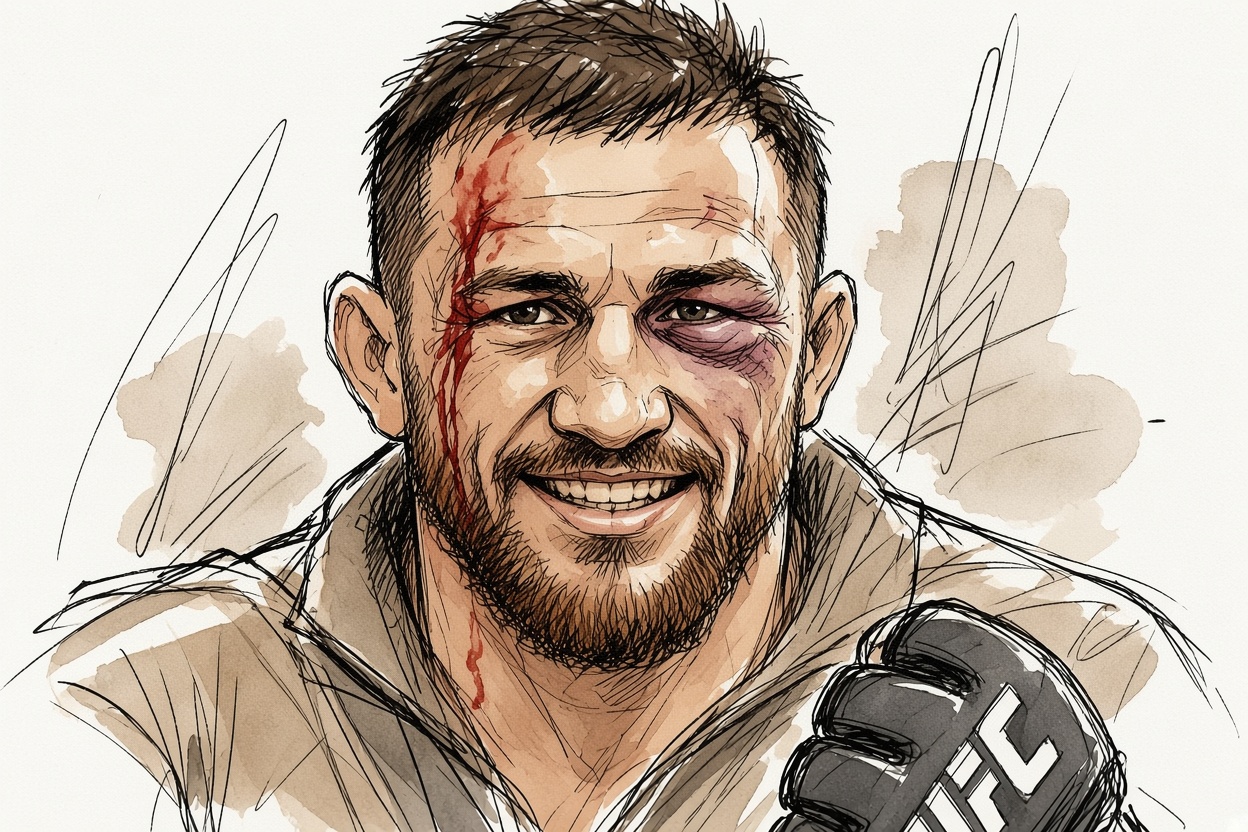
Ten years ago, on November 12, 2016, Conor McGregor walked into Madison Square Garden as the UFC featherweight champion and walked out holding a second belt. He knocked out Eddie Alvarez at 3:04 of the second round to take the lightweight title and became the first fighter in UFC history to hold two divisional belts at once. That night was the peak of prime McGregor, and the reason is simple: it was the last time the fighter and the legend were the same person.
Look at what he actually did to Alvarez, who was the reigning, defending lightweight champion. McGregor moved up a division to take the fight, dropped a sitting champion three times in the first round, and finished him in the second. The hype that week was absurd: a custom Rolls-Royce with his own face painted on it toured Manhattan while McGregor stood at the podium saying, "One Rolls for each gold belt." Then he backed every word of it up inside the cage. The talking and the violence pointed in the same direction. People who romanticize the trash talk forget that in 2016 it was never a bluff.
The UFC didn't even have a second belt ready for him. When McGregor demanded it on the microphone, Dana White sent someone scrambling backstage, and they came back with the welterweight strap Tyron Woodley had defended minutes earlier in the co-main. Woodley wasn't thrilled about handing it over. The scene reads like comedy now, but it's also a snapshot of the moment: the sport was building the stage around McGregor in real time, improvising to keep up with a star outrunning the machinery.
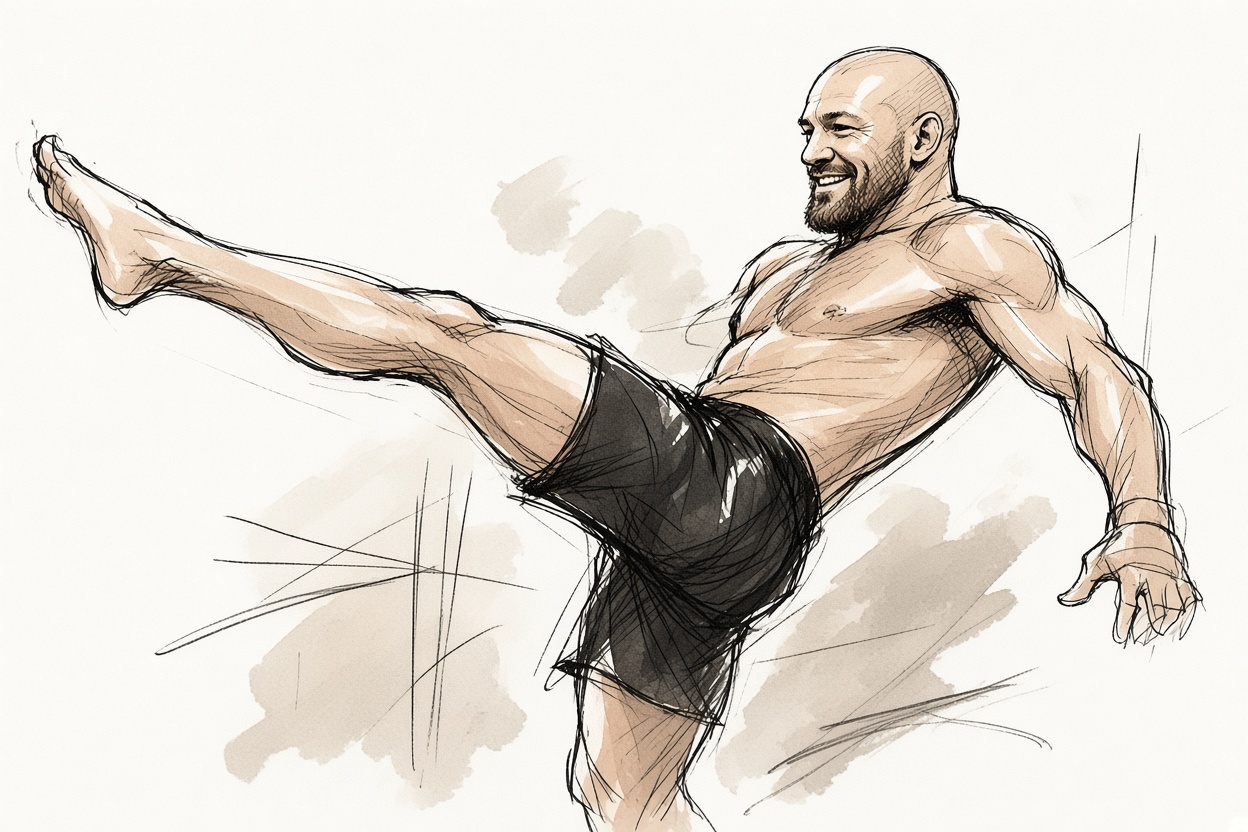
Then the machinery kept running long after the star stopped. Here is the record, and it's brutal. McGregor hasn't won a fight since beating Donald Cerrone in 2020, one victory in roughly six years. He lost twice to Dustin Poirier in 2021. Then came the comeback this year, at UFC 329 on July 11, 2026, and it lasted sixty-nine seconds. He threw a flying left roundhouse kick on the very first exchange, landed awkwardly on his right knee, and that was the fight: one minute and nine seconds. Against Max Holloway, a come-forward finisher, McGregor's answer after more than five years away was to open with the lowest-percentage technique in the book instead of the jab and the step-back left that made him a two-division champion in the first place.
Fighters usually age by losing a half-step, or by fading in the third round. McGregor spent half a decade doing everything except fighting, a run at Irish politics, the legal troubles, and then showed up and tried to win on raw spectacle because the discipline underneath it had rotted away. That's why his knee buckled on the first real exchange of his comeback.
McGregor is responsible, first and most of all. He chose the distractions, the layoffs, and the kick that ended the fight before it started. Nobody forced a generational talent to treat training like a hobby he could pick back up whenever the mood struck. Holloway and Poirier did nothing but show up prepared and do their jobs while McGregor did literally anything else with his time.
The UFC earned its share too. The promotion kept selling "event" fights long after his form no longer justified them, because his fame alone sold the pay-per-view. A fighter in that kind of decline should have been handled like one. Instead he got main events and myth-making right up until his own knee told the truth in front of everyone.
The sympathetic version of this is that McGregor played it exactly right: he turned his fighting peak into generational wealth, got out of the cage with his bank account full, and anyone demanding more of "prime him" is just a fan who wanted to be entertained. Fine. He won capitalism. But he didn't retire at the top. He kept coming back and kept selling the idea that the 2016 fighter still existed, cashing checks against a version of himself that hadn't shown up in years. You can get rich and still waste the talent. McGregor managed both.
Where it goes from here is unsettled. He's been publicly floating that his next bout, likely in 2027, will be his last, saying he wants to "sell the fight" and "keep outdoing my own records." He's talked up a trilogy with Holloway since the knee injury. None of that is confirmed by the UFC: no opponent, no date, and he's had surgery and hasn't competed since. Treat it as a 38-year-old's social-media musings until something real is signed.
None of that changes the decade. November 12, 2016 was the night the gap between McGregor the fighter and McGregor the brand was at its narrowest. Every year since pried that gap wider, and his comeback against Holloway proved it in sixty-nine seconds, on one bad knee.