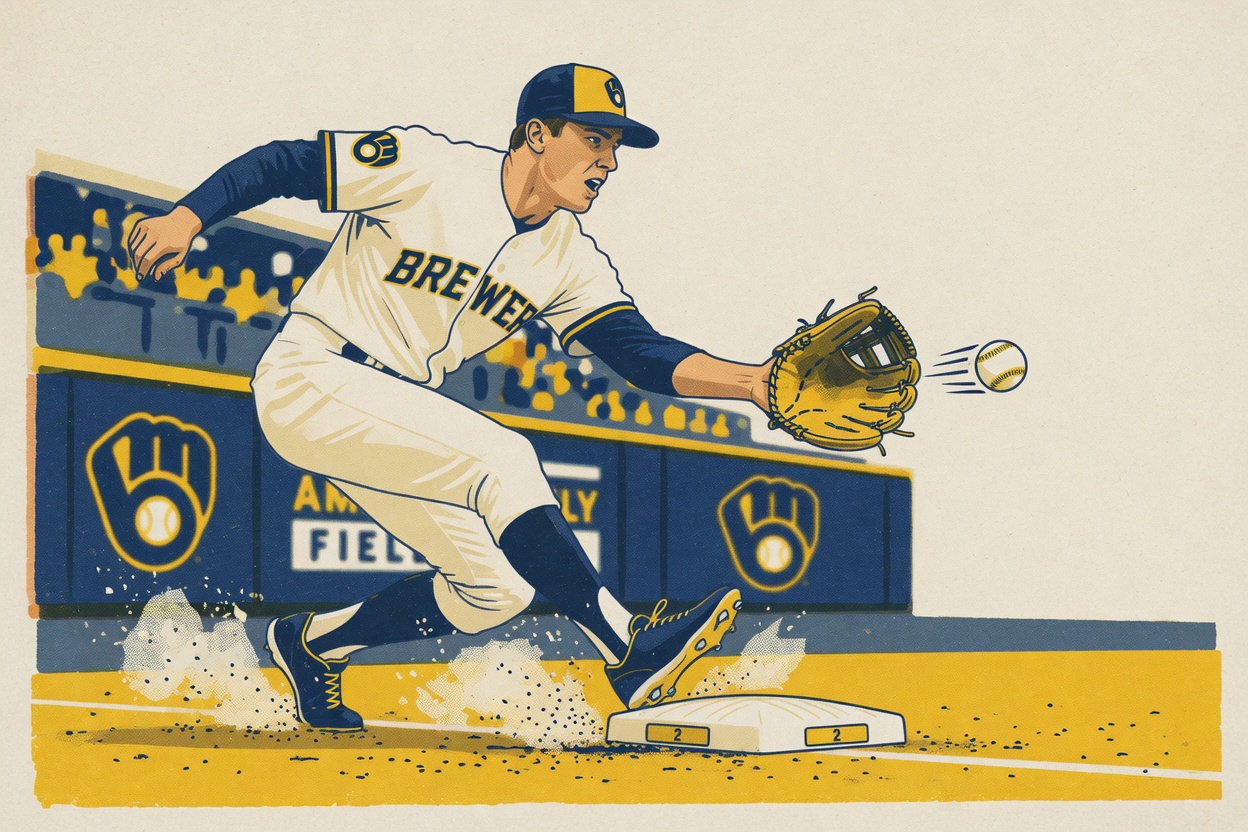
The replay crew got it exactly right, and anyone screaming at the booth is screaming at a rule their own sport wrote a decade ago.
In Game 1 of the World Series on Friday night at American Family Field, the Brewers thought they'd ended it. Up 3-1 in the top of the ninth with the bases loaded, Liam Hicks chopped Trevor Megill's first pitch to Brice Turang, who spun and fed Cooper Pratt at second for the forceout, and Pratt relayed to first for an apparent game-ending double play. The place erupted. Then the Rays challenged, and the party stopped.
Replay showed Pratt's right foot came off second base before the ball reached his glove. Fox's rules analyst laid out the sequence with no wiggle room: "When the ball touched the interior of the thrower's glove, his foot was already off the bag." That's the entire case. A force out requires possession of the ball while touching the base. Pratt had one, then he had the other, and he never had both at the same instant. Umpire Alfonso Marquez changed the call to safe from the MLB Replay Center.
 TB97-63

Here's where the nostalgia crowd wants to plant its flag. For generations, a middle infielder who was in the neighborhood of the bag got the out, and everybody nodded along. It was a convention, a courtesy umpires let slide because slides into second used to break ankles. I get it. It felt like baseball's rhythm. But the sport looked at that convention in 2016 and decided it didn't want courtesy calls deciding games anymore. It made the play at second reviewable and told fielders the foot and the ball have to actually coincide. You can't keep the leniency and the replay cameras both. MLB picked the cameras.
So when the booth freezes the frame and zooms in on a rookie's cleat in the ninth inning of the World Series, that's the system doing exactly the job it was built to do. The sequence took a fraction of a second, but there was no real doubt about the call. Fox's rules analyst, watching the same replays everyone at home watched, said it cleanly: "It appeared that they overturned the call correctly."
If you want to point a finger, point it at Pratt's footwork. The official got the call right. Pratt is a rookie playing on the biggest stage the sport offers, and for a sliver of a second he short-cut the single fundamental that makes a force play legal. That's a hard game, played under a spotlight. Give the Rays their due too: a 1990s dugout shrugs and heads home, but this front office had the awareness to challenge a result it didn't trust. Good for them.
The cost to Milwaukee was real and immediate. The Brewers kept only the out at first, Jorge Mateo scored to pull the Rays within 3-2, and suddenly there were runners at second and third with two outs and a closer who had to start his night over. Megill walked back to the mound and struck out Jonny DeLuca to finish a 3-2 win, so the Brewers lead the series 1-0, with Game 2 scheduled for that same night. The outrage that would've lingered if that call had actually ended the series never got the chance to grow.
None of this is new ground. Replay cut the other way earlier in the same game, when the Rays challenged a Jake Bauers ball down the line and the fair call stood. Last October, in Game 7 of the 2025 World Series, replay found Will Smith's foot lifting off home plate for a split second as a throw arrived, then determined his foot was down when the ball hit the mitt, and confirmed the out. Same microscope, different verdict. The tool doesn't care about the home crowd or the celebration already underway.
The people demanding the booth leave bang-bang plays alone are really asking MLB to un-adopt a rule it chose on purpose ten years ago and pretend the neighborhood play never died. It did die, and it isn't coming back. Blame Pratt's cleat if you need a culprit. The replay booth did nothing but read the frame correctly.