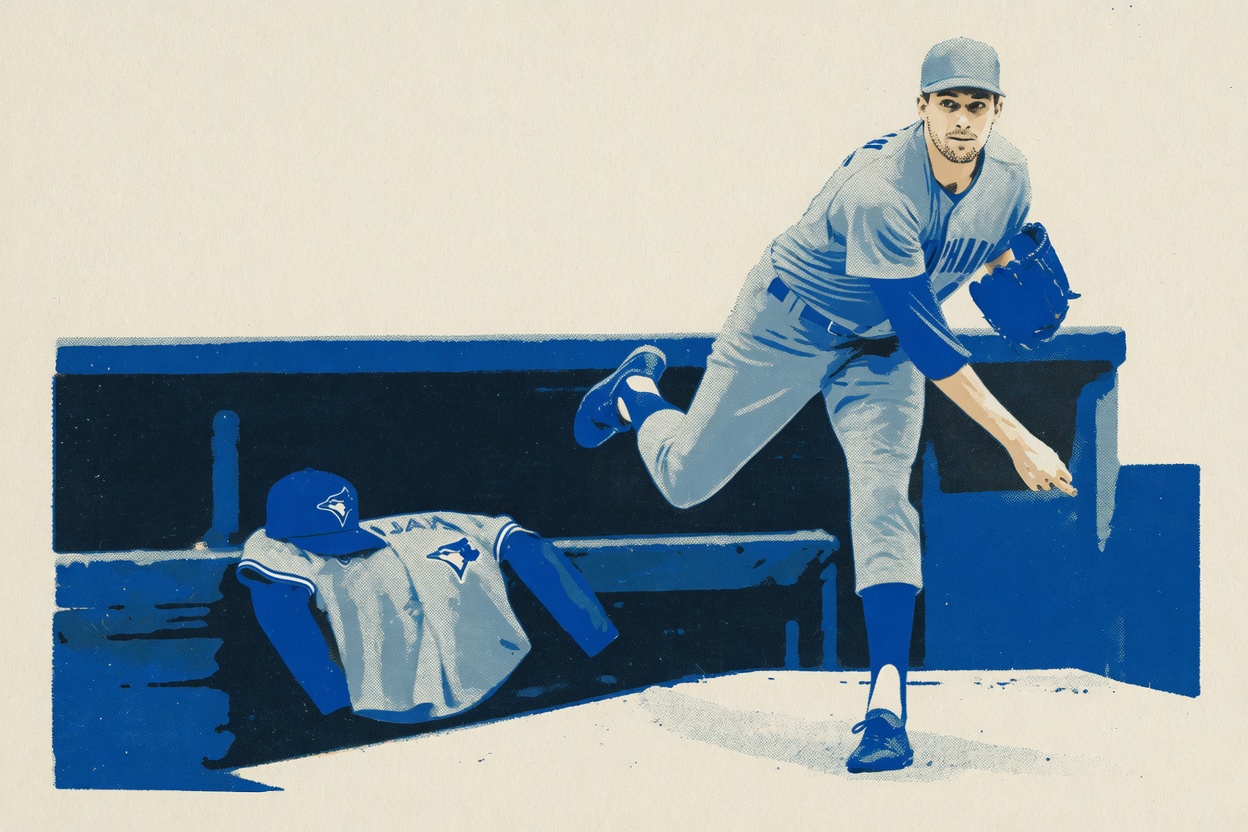
Baseball rarely hands you a before-and-after this clean. In the fall of 2025, the Blue Jays pushed the Dodgers to extra innings in Game 7 of the World Series. By the first weekend of August 2026, they were dealing away the man who started Game 1 of both the ALDS and ALCS on that run. That's how fast a contention window can get reassessed, and it's all right there in one name.
The trade itself is simple enough. Chicago got right-hander Kevin Gausman from Toronto for Triple-A outfielder Brett Bateman and Class-A infielder Ty Southisene, announced Sunday night, a day before Monday's 6 p.m. ET non-waiver deadline. No money changes hands beyond salary: the Cubs pick up the rest of Gausman's roughly $23 million for this season, the final year of the five-year, $110 million contract he signed with Toronto back in December 2021. He's a rental, an impending free agent, which is exactly why he was available.
What stings for a Toronto fan is who Gausman is. He isn't a mid-rotation arm the front office grabbed at some earlier deadline and is now flipping for value. He's the guy who showed up in October. He carried a 2.93 ERA across six postseason starts in that 2025 run, and over his career he's pitched to a 3.83 ERA in 14 playoff games. When the lights came on last fall, he answered. That's the kind of pitcher a contender pays for. Toronto just gave him away for two prospects and salary relief.
So how does a team that took the eventual champions to extra innings in Game 7 end up selling the arm that got them there? The honest answer is that the 2026 Blue Jays were bad. At the time of the trade they sat last in the AL East at 52-60, well off the wild-card pace, with a lineup that had scored the fewest runs in the sport. Gausman's own season told the same story: a losing record with a 4.38 ERA before the move, the kind of line that turns a walk-year veteran into trade bait instead of a re-sign priority.
This is where the front office deserves scrutiny, and that's a judgment, not a fact. It's one thing to slip. Rosters age and regress. It's another to go from World Series finalist to sub-.500 seller inside a single calendar year with the same core and the same expectations you set in spring. GM Ross Atkins entered 2026 talking about the AL East and the postseason. What he got was a team that never found a rhythm and a July spent deciding which veterans to sell off. Owning that gap is the job, and to his credit, Atkins did.
"I think we're close, but obviously, I would rather we were just adding at this point," Atkins said after the deadline. "We weren't in that position, so we're turning our focus to continue to win games and compete this year, and make us better for the 2027 season and beyond that. We feel that we've accomplished that."
That quote tells you most of what you need to know, and it's why this wasn't a full teardown. Atkins made five trades on deadline day. He moved Gausman and subtracted Daulton Varsho and Jeff Hoffman, but he also added starters Jose Soriano and Spencer Arrighetti, and Toronto began play Monday only 4½ games out of the final AL wild-card berth. One of the odder wrinkles: Toronto took on Jameson Taillon from the Cubs earlier that same Sunday to help eat innings, even as it shipped Gausman to that very same club. So this is a retool with a pulse, a team half-selling and half-buying. You're either chasing this thing or you're not.
Trading Gausman specifically settles the question. You don't move a proven October starter, salary and all, if you still believe in this October. That single trade is the front office grading its own season, and the grade is a step back.
For Chicago, the logic is cleaner, and the return is a good bit of business. The Cubs have been chewing through a brutal run of pitching injuries. At one stretch they had a 13-man staff on the injured list. They'd already brought in David Peterson and Aaron Civale in recent weeks, and Gausman now slots near the top of the rotation alongside Matthew Boyd and Shota Imanaga. Chicago trailed Milwaukee by 6½ games ahead of the deadline and needed innings, quality and quantity both. Gausman gives them a pitcher who's done it in the biggest games there are.
The prospect cost was real but not painful for a rental of this caliber. Southisene and Bateman were both well-regarded pieces in the Cubs system, and Bateman, 24, was hitting .312 with three homers and 20 steals in 82 games at Triple-A Iowa this season. That's a fair price for two months of a playoff-tested arm.
One club got exactly what it came shopping for; the other just confirmed what its record already showed. The Blue Jays didn't fail because they traded Gausman. They'd already failed. That's the part worth sitting with as Toronto pitches you on 2027.