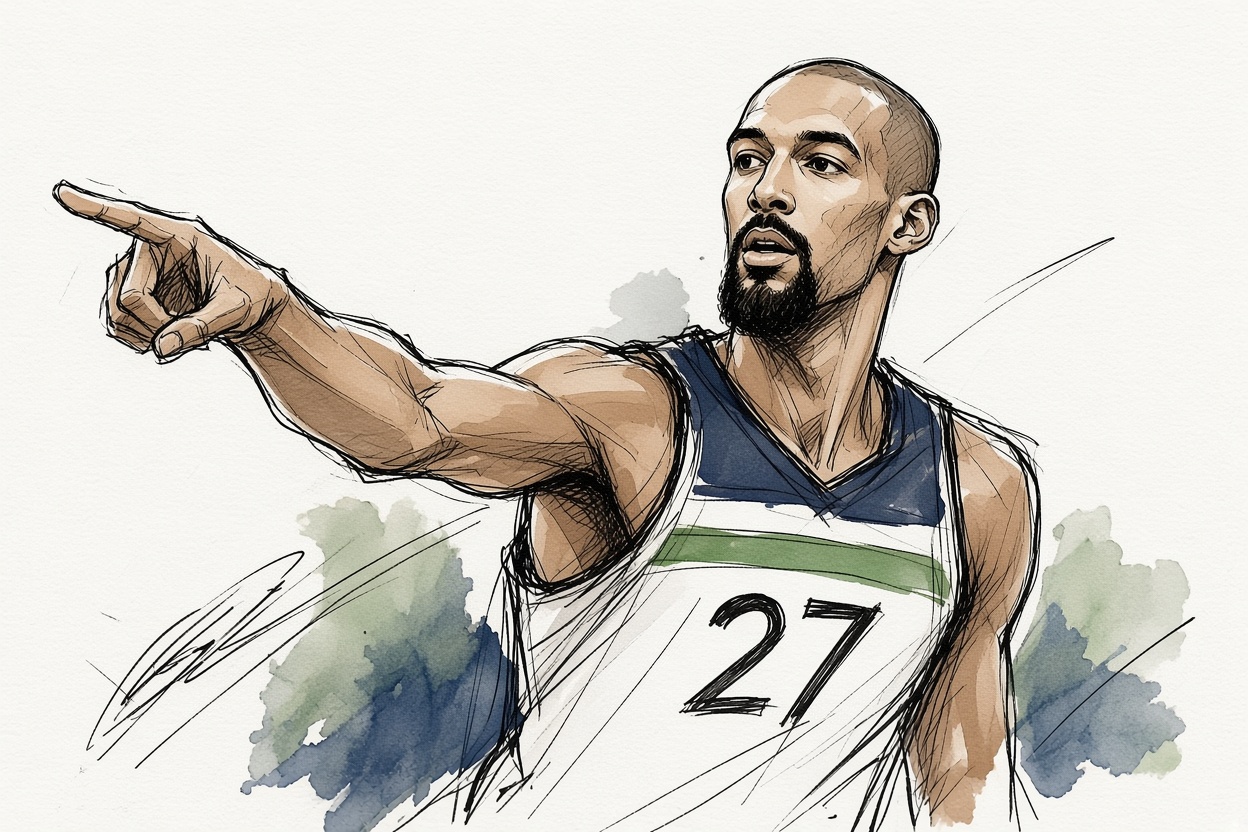
Dejounte Murray decided the way to force his way out of New Orleans was to stop playing. It's a bad plan. It won't speed up a trade by a single day, and it will cost him money and standing while he waits on a market that answers to the Pelicans.
Murray asked out Friday. His agent, Rich Paul of Klutch, and the team started working on a deal soon after. Word then came that Murray won't play another minute for the Pelicans this season; he plans to sit until the request is granted. New Orleans responded with a statement promising to "evaluate potential trade opportunities that are in the best interest of our organization." It reads like a team setting its own clock.
The CBA is the reason that clock belongs to them. The same rule that let the league fine Anthony Davis $50,000 in 2019 for a public trade demand, back when Rich Paul was also his agent, is still on the books: up to $150,000 and a possible suspension for a player or representative who publicly pushes to be moved. A refusal to play falls under that same rule. The Warriors are running the mechanism right now on Kristaps Porzingis, withholding pay at 1/91.6th of his salary per game, which works out to $218,341 for every game he sits. Murray makes $32.8 million this season. New Orleans hasn't invoked that against him yet, but the option is sitting right there on the table, and nobody has to negotiate with a man who's volunteering to stop collecting checks.
The cruelest part is the on-court math. The Pelicans are 1-8 in games Murray has played and 3-0 in the ones he's missed. Rookie Jeremiah Fears averaged 18 points and nine assists filling in. Usually a trade candidate's leverage comes from the team being worse without him. Murray can't offer that. His absence has been the closest thing to a solution this 4-8, 12th-place roster has found. A holdout only works as a threat when it hurts. This one helps.
Then there's what he's selling. This season Murray is averaging 13.4 points, 4.6 rebounds and 4.4 assists on 29.6 percent shooting from three. He's 30, he lost most of two seasons to an Achilles rupture, and he's owed real money on a player option next year. Phoenix has registered interest, but there are no talks yet. Refusing to suit up and posting about sabotage shrinks that profile instead of improving it. Every front office that might've called is now pricing in a guy who downs tools when he's unhappy.
None of this means New Orleans walks away clean. David Griffin gave up Dyson Daniels and two first-round picks to bring Murray in, and the roster that's made a 30-year-old, oft-injured, high-salary guard this miserable in year three is the front office's own construction project. Zion Williamson called the recent play "unacceptable." The dysfunction is real and the blame is shared.
Being unhappy with your boss doesn't change who signs the paychecks. Murray and Klutch reached for the oldest trick in the disgruntled-star playbook, and it's the one with the worst record. These standoffs end the same way every time: the team moves the player when a deal it likes shows up, and the player counts the money he torched waiting on it. Murray just handed the Pelicans the clock and the moral high ground, all at once.