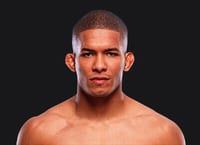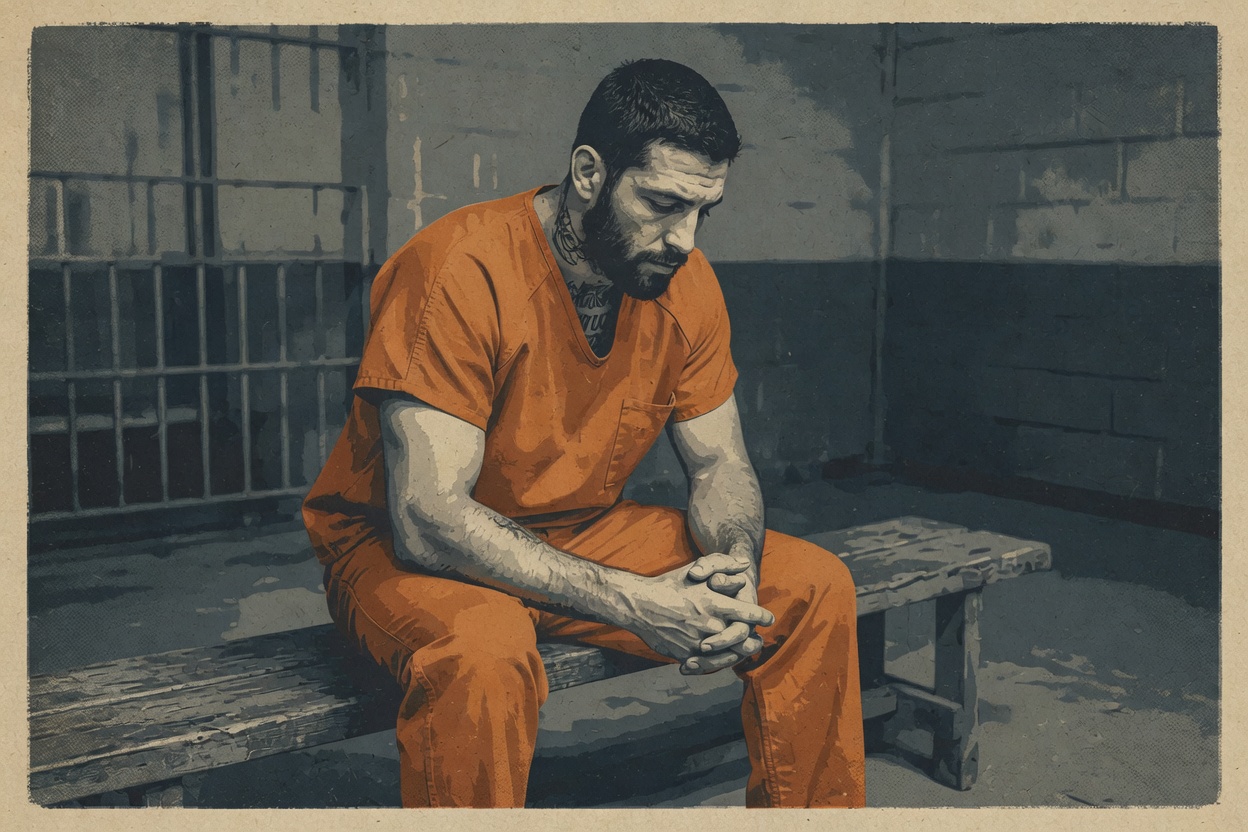
There's a temptation, whenever a former fighter's name shows up on a booking sheet, to file it away under bad decisions and move on. Diego Sanchez made the choice to get behind the wheel, if the allegations hold. Nobody forced his hand. And yet the longer you sit with the sequence of the last couple of years, the harder it becomes to treat this as a simple story about a man who won't behave.
The facts first, and only the facts. Sanchez, 44, was arrested Monday, September 7, 2026, in Socorro, New Mexico, and booked into the Socorro County Jail on charges of aggravated DWI and a probation violation. TMZ, citing booking records, put his blood-alcohol level at above .16, more than twice the legal limit; other outlets have picked up that number, but it comes from a single source, not a court filing. He hasn't been convicted of anything. An arrest is an allegation, and Sanchez can contest both the DWI and the claimed probation violation in New Mexico court. Treat all of it as unproven for now.
What makes this land differently is the case sitting underneath it. In July 2025, Sanchez fired a loaded gun from the passenger seat of a Jeep on a New Mexico highway, near Interstate 40 and University Boulevard, as the vehicle passed a crash scene. No one was hurt. He initially denied firing the weapon, then pleaded guilty in February 2026 to a fourth-degree felony, shooting at or from a motor vehicle. Prosecutors wanted two years in prison. The judge went another way in March, handing down five years of supervised probation and 800 hours of community service. One condition of that probation required Sanchez to stay away from alcohol.
So the DWI allegation, if it holds up, isn't just a DWI. It's Sanchez breaking the exact term that kept him out of a cell. That's where this stops being about one bad night and starts looking like a pattern.
Here's my opinion, stated as opinion: when somebody keeps colliding with the same wall, the more interesting question is whether anyone ever built a guardrail, not why they can't stop. Sanchez has been telling us, on the record, that he's in trouble. At his March sentencing he pointed to substance abuse and mental health problems as contributing factors, and said he was already going to the Turning Point Recovery Center and taking new medication for a bipolar diagnosis. Outside the courthouse he told reporters, "All I can do is take accountability, own it, and spread positivity for the youth of the next generation to change these ways, man. Not to be shooting out windows like cowboys." That's a man naming his own diagnosis in public and asking for grace, not one in denial. Months later, he's back in custody.
You can read that as a personal failing, and you wouldn't be entirely wrong. Accountability is his to carry. But this is a fighter the sport already knew was vulnerable, and knew loudly. Remember what happened at the end of his UFC run. Sanchez left his longtime gym in 2019 to train under Joshua Fabia, a self-styled "healer" running something called the School of Self-Awareness in Albuquerque, a man with no verified legitimate credentials. It got dark enough that UFC president Dana White publicly called Fabia an abuser. Sanchez himself later described those years as a fight for survival against a manipulator who "ruined my life."
So how did that chapter end? ESPN reported that the UFC canceled his scheduled fight and terminated his contract after Fabia requested Sanchez's full medical history and an attorney, on Sanchez's behalf, told the promotion it couldn't guarantee his health wasn't compromised. You can defend that as a reasonable response to an unverifiable situation engineered by a fraud, and there's a real argument there. But look at the shape of it: a fighter in visible crisis, tangled up with someone the promotion's own boss called an abuser, and the resolution was a release, not a rescue. The exit was administrative. Whatever care existed is hard to find in the record.
I want to be precise about what I'm not saying. I'm not diagnosing Sanchez with anything. The brain-trauma talk that swirled around the Fabia era came largely from Fabia himself, and the MMA world broadly treated those claims as self-serving rather than medical. No CTE finding has been made public by anyone credible. What I am saying is narrower and, I think, harder to argue against: this is a man who won the very first season of The Ultimate Fighter in 2005, who challenged B.J. Penn for the lightweight title in 2009, whose brawl with Clay Guida was inducted into the UFC Hall of Fame's Fight Wing, and who competed 22 times in the Octagon between 2005 and 2022. He gave the sport a Hall of Fame moment. His post-fighting life, by the plain characterization of the outlets covering it, has been turbulent, from a 2022 loss to Kevin Lee under Eagle FC to a bare-knuckle boxing match against Austin Trout in 2023 to two criminal cases in roughly a year.
MMA loves to talk about its fighters as family. It's a nice line on a broadcast. The test of that word is what happens when a fighter is no longer marketable and clearly unwell. There's no formal duty of care in this sport once a contract ends. No structured mental-health follow-up, no substance-abuse safety net that travels with a name after the walk-out music stops. That absence isn't Sanchez's fault, and pointing at it doesn't excuse a single thing he may have done behind the wheel.
What comes next is unsettled. As of this writing, Sanchez remains in custody in Socorro, with bail and a court date not yet public. The new DUI charge could, in theory, terminate his probation and expose him to prison on the firearm conviction, which reportedly carries a possible maximum of six and a half years, though what actually happens will be decided through the courts and the probation process. Those consequences will punish the symptom. They usually do.
The symptom is easy to see in a mugshot. The thing underneath it, the years of documented struggle that the sport watched in real time and mostly answered with a contract termination, won't show up on any booking sheet. That's the part MMA has never had to answer for.