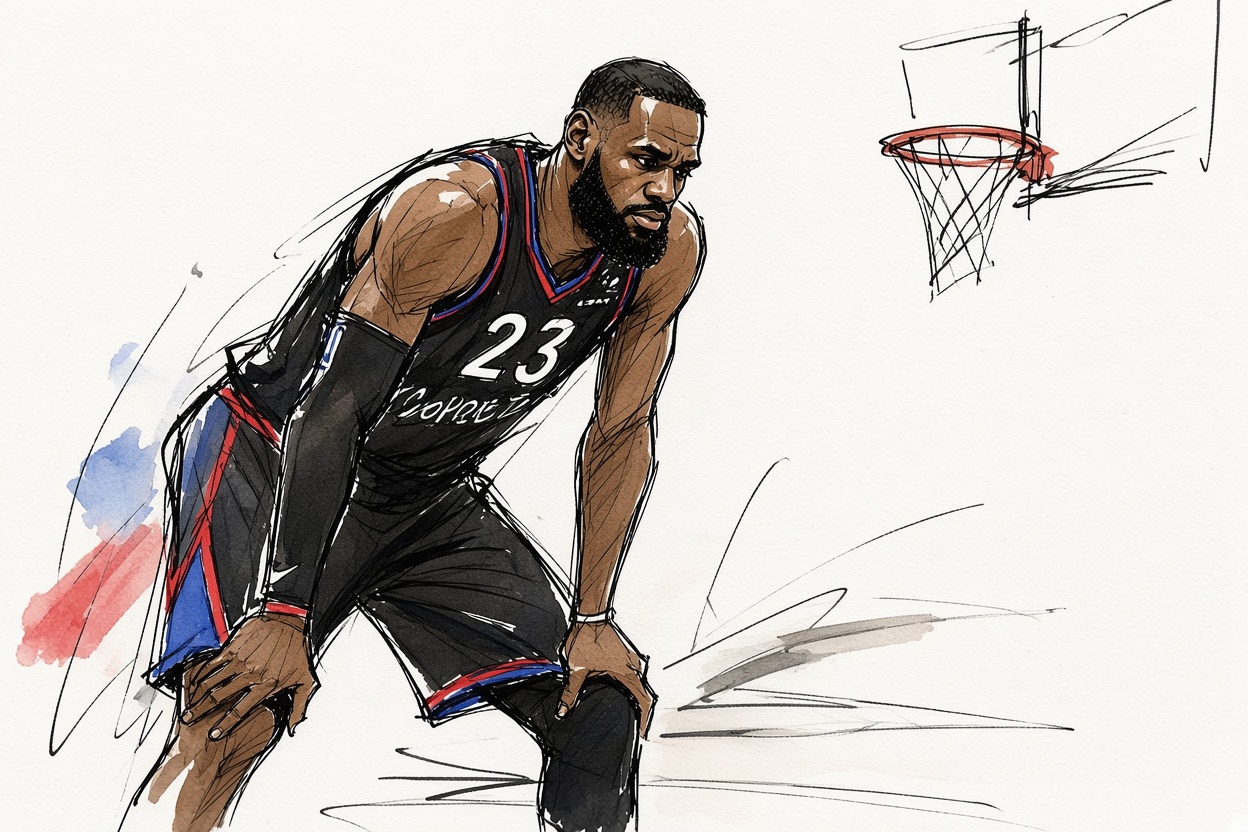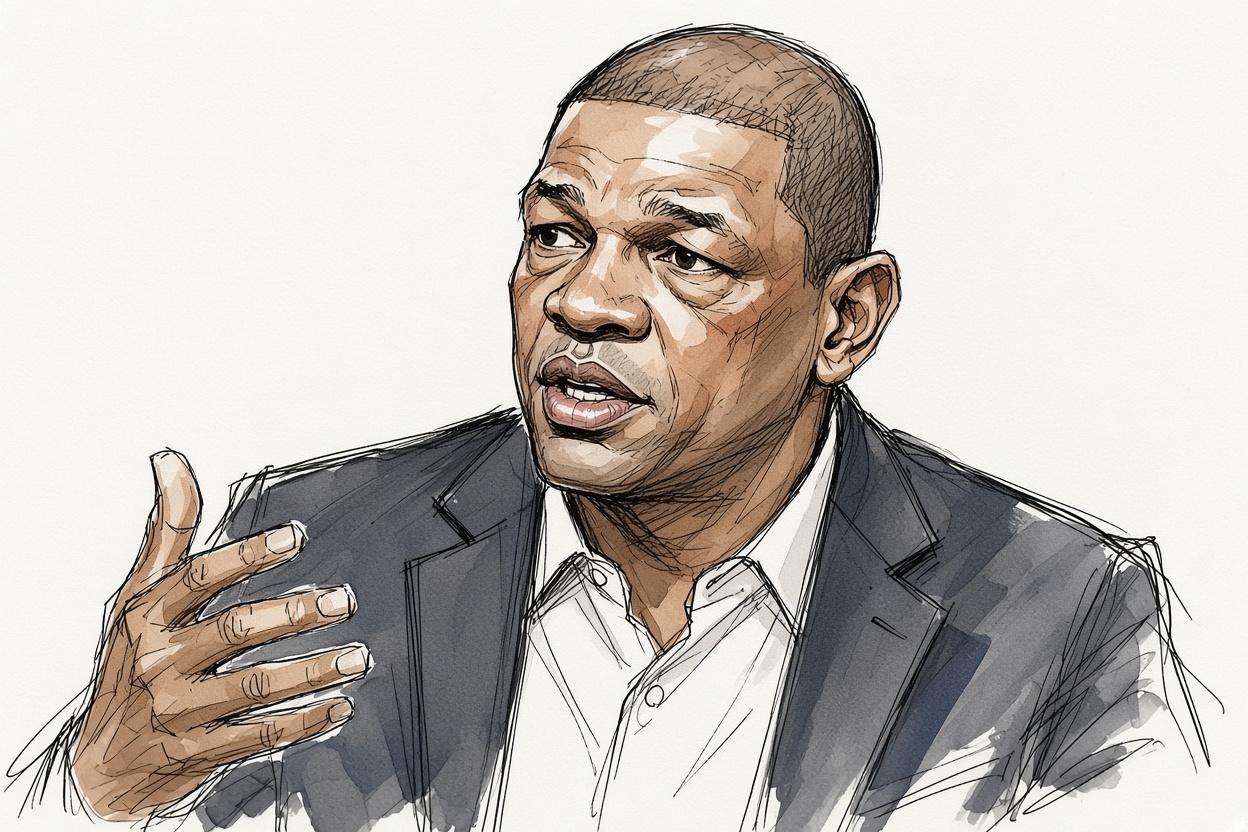
Doc Rivers has a real basketball point about Giannis Antetokounmpo. He's also about the last person who should be making it, and he chose to make it on a podcast.
Start with the critique itself, because there's something to it. On The Bill Simmons Podcast, Rivers said Giannis "plays at this crazy downhill pace," that "he has this great passing ability, but he doesn't have a super-high IQ at the same time," and that "the thing he needs to still learn is the value of execution." Strip away the phrasing and that's close to the longstanding scouting take on Giannis: a force of nature going downhill, a finisher and driver unlike anyone else, with halfcourt reads that lag behind the raw talent. You don't have to call him dumb to admit a two-time MVP has a style that's hard to build a roster around. Both things are true.
The problem is who's saying it, and when.
Rivers coached Giannis for two and a half seasons in Milwaukee, from the middle of the 2023-24 season through 2025-26, and walked away with a 97-103 record. That was the job: take one of the best players alive and get more out of him than the last coach did. He didn't. Now he's an analyst for NBA on NBC, no team, no bench, and he's using the airtime to explain, in detail, why Giannis was the complicated one. A coach who truly wanted Giannis to learn "the value of execution" had two and a half years and a locker room to teach it. He's teaching it now, to Bill Simmons.
Then there's the resume Rivers never quite owns. He's the only coach in NBA history to blow more than one 3-1 series lead in the playoffs: Orlando in 2003, the Clippers in 2015, the Clippers again in 2020. When that comes up, his answer has been that it's "part of my legacy" and "that is coaching, that is not bad coaching." A man who spends years refusing to put his own collapses on himself, and the first thing he does after his Milwaukee project ends in a losing record, is itemize his star player's cognitive ceiling. He's getting out ahead of the story.
The tell is at the end of his own answer. Rivers pointed out that Giannis now has a coach "as good as there is in execution," a clear nod to Erik Spoelstra in Miami. If Spoelstra turns Giannis into a cleaner halfcourt player, Rivers has pre-written the explanation: see, the kid just needed real execution coaching, which I was telling him all along. If it doesn't work, he already warned you the guy was difficult. He's covered either way. It's insurance.
Giannis hasn't said a word back, and doesn't need to. Rivers also used the appearance to relitigate the trade saga, saying "I thought Giannis kept yo-yoing" and "Giannis wanted out," claiming he wanted to leave without being cast as the villain. Maybe so. But the coach narrating his old job from a TV studio is working harder to avoid that role than Giannis ever has.
The basketball take is fair. The messenger is a man polishing his own record on his way out the door. You can tell a scouting report from an alibi by whether the author still has to live with the result. Doc doesn't. That's why he's talking.