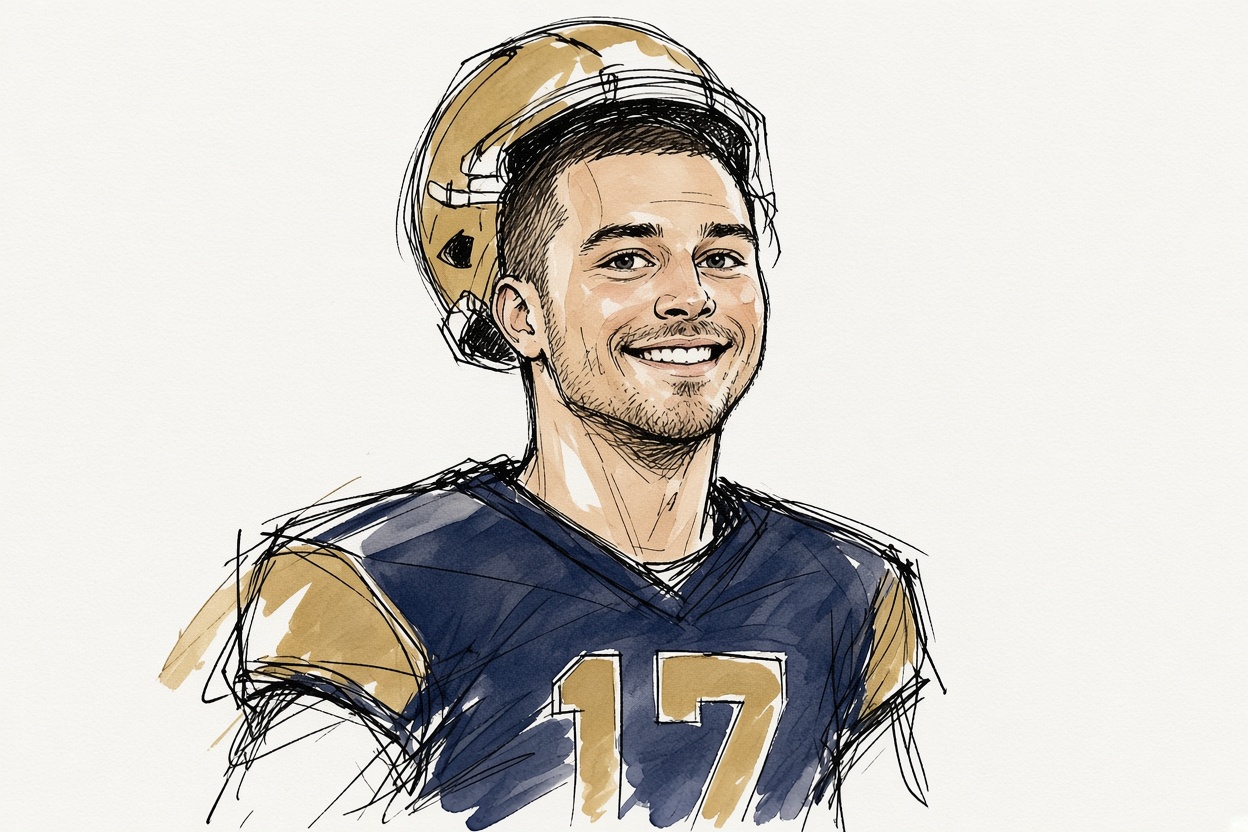
If you watched ESPN's College GameDay from Notre Dame on Saturday and came away unable to root against the Irish, congratulations: you did exactly what the segment was built to make you do. The people who produced it deserve credit for that.
The feature was called "Carr Strong." It told the story of CJ Carr, the Notre Dame quarterback from a family of Michigan men, and why he ended up in South Bend instead of Ann Arbor. The inspiration was his younger brother, Chad, who was diagnosed with diffuse intrinsic pontine glioma, an aggressive and typically inoperable pediatric brain cancer, and died in 2015 at five years old. CJ was ten. It's a real, devastating, well-documented story. Nobody made it up for a Saturday morning broadcast.
Fans were arguing online about whether ESPN turned that grief into pregame emotional ammunition. It did, and it worked. Blame falls on GameDay's production team. CJ Carr, Notre Dame, and anyone who choked up watching don't deserve any of it.
The timing is the tell. This wasn't a random week. GameDay set up on Notre Dame's campus for No. 1 Miami, undefeated at 8-0 in the CFP rankings at kickoff, against a 7-1 Notre Dame team sitting at No. 11 with its playoff margin already thin. It was a rematch of the game that got Miami into last season's playoff and kept the Irish out. Miami had just lost its top receiver, Malachi Toney, to an ankle injury. Every stake you could want was already on the table. On that exact morning, ESPN led viewers into it through the story of a dead five-year-old.
That's a programming decision. A producer looked at the schedule, looked at the Carr family, and decided grief would make the best possible runway into the day's marquee kickoff. Somebody picked it on purpose.
ESPN has run this exact play before, with this exact family. The network built a feature around Chad Carr back in 2015, when the family moved Christmas up so he could have one more holiday. GameDay has leaned on the Carrs for emotional stakes-setting for more than a decade. Fans who acted shocked that a tearjerker made them feel something were shocked by water being wet. The machine knows grief makes great television, and it keeps pulling the lever because the lever keeps working.
None of that makes the segment wrong. The Chad Carr story is worth telling on its own, football game or not. CJ Carr wrote about his brother himself, in a Players' Tribune essay: "After watching him be so tough, my context of what is truly hard is very different." A twenty-year-old who lost his little brother to brain cancer and chooses to talk about it on camera has done the decent thing. Aiming your anger at him is absurd.
The complaint is about the choice to use his worst day as a lead-in to a top-ten showdown, then act surprised when viewers got too misty-eyed to root against Notre Dame. You can admire the craft and still call it what it is. ESPN knows exactly what a well-produced, well-sourced tearjerker does to an audience thirty minutes before a huge kickoff. That's why they keep making them.
If you were mad after the segment, aim it at the producers. They figured out years ago that his loss makes good television, and they keep booking it for the biggest windows on the calendar. CJ Carr just lost his brother.