No NHL team will say it on the record, but the silence says it for them: nobody wants the headache.
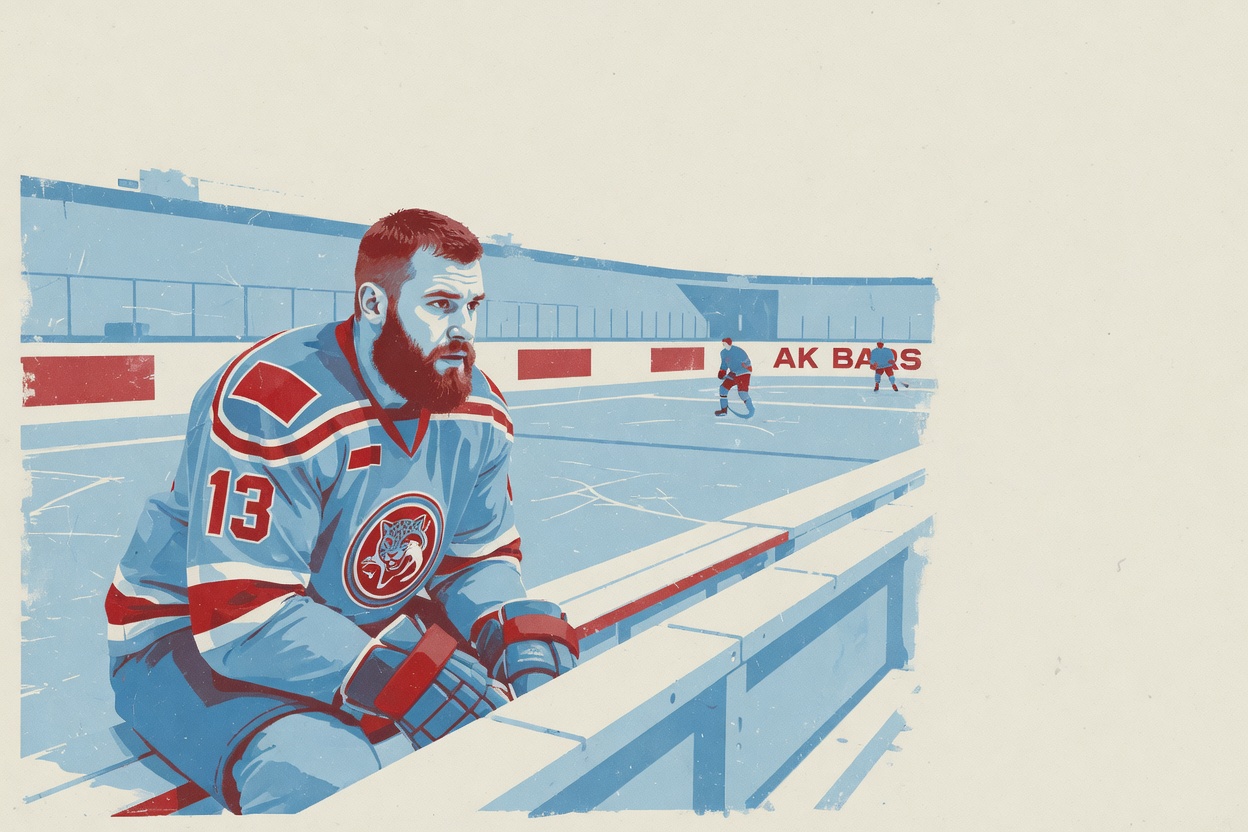
More than five weeks into free agency, Evander Kane still doesn't have an NHL contract. His only known suitor is Ak Bars Kazan of the KHL, the first club publicly tied to him since the market opened on July 1. A former 20-goal winger with a real playoff résumé, and the loudest phone ringing is coming from Russia.
Nothing is signed yet. An NHL team could still call before training camps open. But markets don't stay open forever, and the longer a proven scorer sits, the quiet itself becomes the story.
Two things are true, and both of them are hurting him
First, the production dipped. Kane put up 13 goals and 18 assists in 71 games for Vancouver last season, with 111 hits and a minus-20 rating during a year the Canucks fell well short of what they wanted. He only ended up there because Edmonton wanted out from under his $5.125 million cap hit, sending him to Vancouver for a fourth-round pick in June 2025. The Canucks hoped to flip him at the deadline for more. No deal came together, and he played sparingly down the stretch. When a team acquires a player specifically to trade him and then can't move him, the league is watching that too.
Second, the file. And this is where I want to be careful, because the honest version is more damning than the lazy one. Most of Kane's off-ice baggage is old news. A 2016 Buffalo nightclub arrest where charges were later dropped. A 2019 Las Vegas casino lawsuit over an alleged $500,000 gambling debt that the casino dropped in 2020. A 2021 chapter 7 bankruptcy filing. A 21-game suspension in 2021 for submitting a fake vaccination card, after which the Sharks released him. None of it is a fresh 2026 scandal. All of it is history.
And yet history is exactly the point.
The market is doing math, and it's cold math
This is my read, and it's opinion: teams aren't punishing Kane for one bad incident. They're weighing a pattern against a declining stat line and deciding the combination isn't worth it. When you're a 25-goal player in your prime, front offices talk themselves into managing the noise. When you're a 35-year-old coming off a minus-20 season, the noise stops being a tax worth paying.
The real question hanging over this whole thing: how much off-ice risk is a team willing to absorb once the on-ice ceiling starts falling? For Kane, the answer from 32 NHL teams, at least as of this writing, has been silence.
Even the analysts trying to be fair land in the same neighborhood. Before the market fully played out, The Athletic's Dom Luszczyszyn flagged Kane as a cautious approach, writing that "it's difficult to truly judge any player from last year's train wreck in Vancouver." Read that generously and it's a defense. Read it the way general managers read it and it's a reason to wait.
Ak Bars isn't exile, which makes it worse
The easy narrative is that a KHL move would be a fall from grace. It isn't, exactly. Ak Bars reached the 2026 Gagarin Cup final before losing to Lokomotiv Yaroslavl, and it has brought over Canadians before, adding Wyatt Kalynuk and Brendan Biro in 2025. This is a real contender offering a real hockey job.
That's what stings. Kane isn't being shut out of pro hockey, just out of the NHL specifically. And the recent reporting suggests he's not alone in Kazan's plans. As of August 9, the interest reportedly widened to include Vladimir Tarasenko and Evgenii Dadonov. That trio matters, because Tarasenko has also drawn NHL interest of his own, with talk of a Minnesota reunion after a strong season with the Wild. Kane's public link, for now, points one direction: overseas.
None of this erases what he was
Give the man his due. Kane skated in his 1,000th NHL game on March 30 in Vegas and opened the scoring, becoming just the third player born in Vancouver to reach the mark. Across 1,001 career games he has 339 goals and 309 assists, with nine seasons of 20 or more goals. That's a career, not a cameo. He's been a genuine difference-maker when it mattered.
But careers end in the middle of arguments like this one. The NHL isn't holding a press conference to explain why Kane is unsigned. It doesn't have to. Thirty-two teams looked at the tape, the age, the cap number he reportedly wanted somewhere near what he's worth, and the file, and they all reached for the mute button.
If a call comes before camp, I'll happily revise. Until then, the loudest voice in Evander Kane's free agency is coming from Kazan, and everyone in the NHL seems fine letting it stay that way.