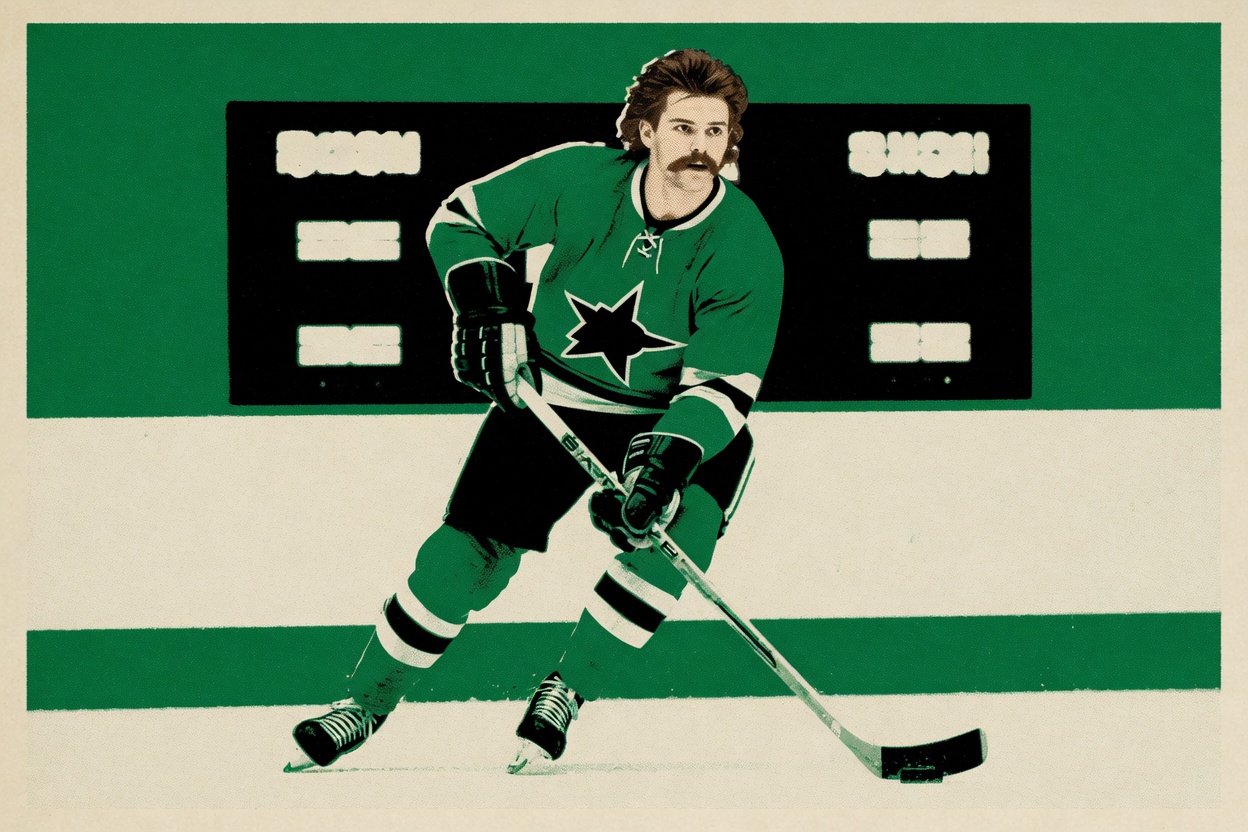
The Flyers didn't fall in love with Nikita Grebenkin. They liked what they saw and declined to pay for more than that.
On Thursday, August 6, 2026, Philadelphia re-signed the restricted free agent winger to a two-year contract worth $2.2 million, a $1.1 million cap hit. That number is the argument. It's short and cheap, built to be forgotten about for two years.
A bridge, not a commitment
The structure shows exactly how Briere sees him. The deal buys out two of Grebenkin's RFA years, and when it's up he'll still be a restricted free agent, eligible for salary arbitration for the first time. Philadelphia gets two seasons to evaluate a 23-year-old at a bargain rate without handing real money to a player who hasn't proven he's more than a bottom-six energy guy.
That's not a knock on him. In his first full NHL season he had four goals and ten assists in 55 games, with 86 hits and just over 11 minutes a night. That's a useful, physical fourth-liner who bangs bodies and kills clock, not someone you back up the truck for. Briere didn't.
The contrast makes the case
Look at the same offseason for proof this wasn't an accident.
In July, the Flyers gave Trevor Zegras a four-year extension at a $9.125 million cap hit. They also locked up Jamie Drysdale on a $26 million deal. Both got real term and real money, and both had earned it: Zegras posted a career-high 67 points in his first year in Philadelphia. Briere paid proven players like proven players.
Grebenkin got the shortest term and the smallest cap hit of the three. That's the tell. When Philadelphia sees production it can count on, it writes the check. When it sees potential and a question mark, it writes a bridge. Same front office, two different tools, used where they belong.
The question mark is real
And there is a question mark. An upper-body injury sidelined Grebenkin in mid-March and cost him the final 13 games of the regular season plus the playoffs. Briere said in May that the recovery dragged: "Initially we thought it was going to be something short, and it just never got better." He's since suggested Grebenkin should be "fully ready" when training camps open in September, but that's an expectation, not a game he's played. Camp hasn't happened yet.
You don't hand long money to a depth winger coming off an injury that surprised even the GM. This deal is the alternative: a modest number, a short runway, and a clean off-ramp if the health or the production doesn't hold.
The whole picture
Remember how he got here. Grebenkin came over in the March 2025 deal that sent Scott Laughton to Toronto, alongside a conditional 2027 first-round pick, with Philadelphia retaining half of Laughton's salary. A fifth-round pick from 2022, 135th overall, thrown into a bigger trade. Nobody drafted him to be a franchise cornerstone, and the Flyers are pricing him accordingly.
After this signing, every Flyers player is under contract for the upcoming season, with roughly $13.8 to $14 million in cap space left for in-season flexibility. One loose end remains: restricted free agent defenseman Hunter McDonald is still unsigned, and the expectation is a low-value, likely two-way deal. The offseason isn't fully closed, but the Grebenkin deal fits the pattern.
This is Briere running a value-conscious depth chart. Pay the stars, bridge the maybes. You can argue he should show more faith in a young winger. I'd argue the opposite: this is exactly how you keep useful players without letting them become expensive mistakes. Grebenkin has two years to make the next contract a hard call. Right now, it wasn't one.