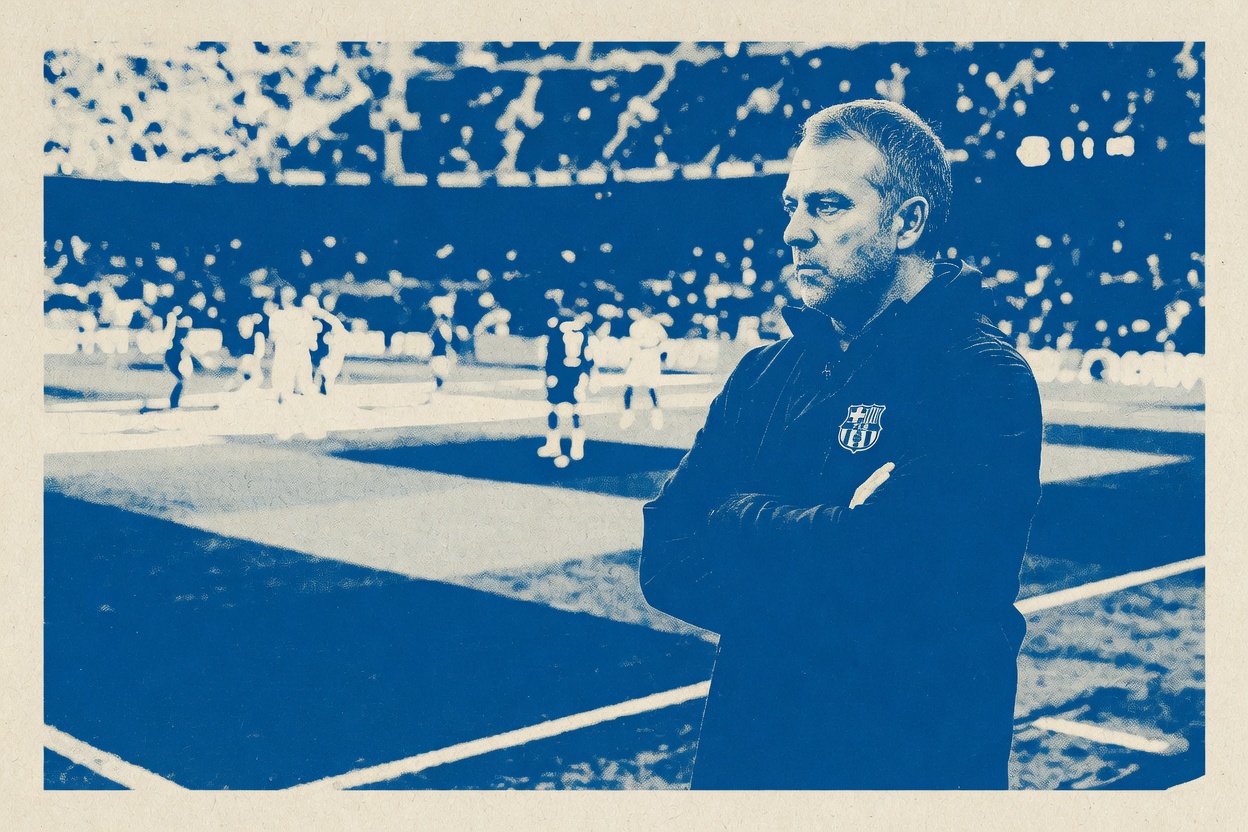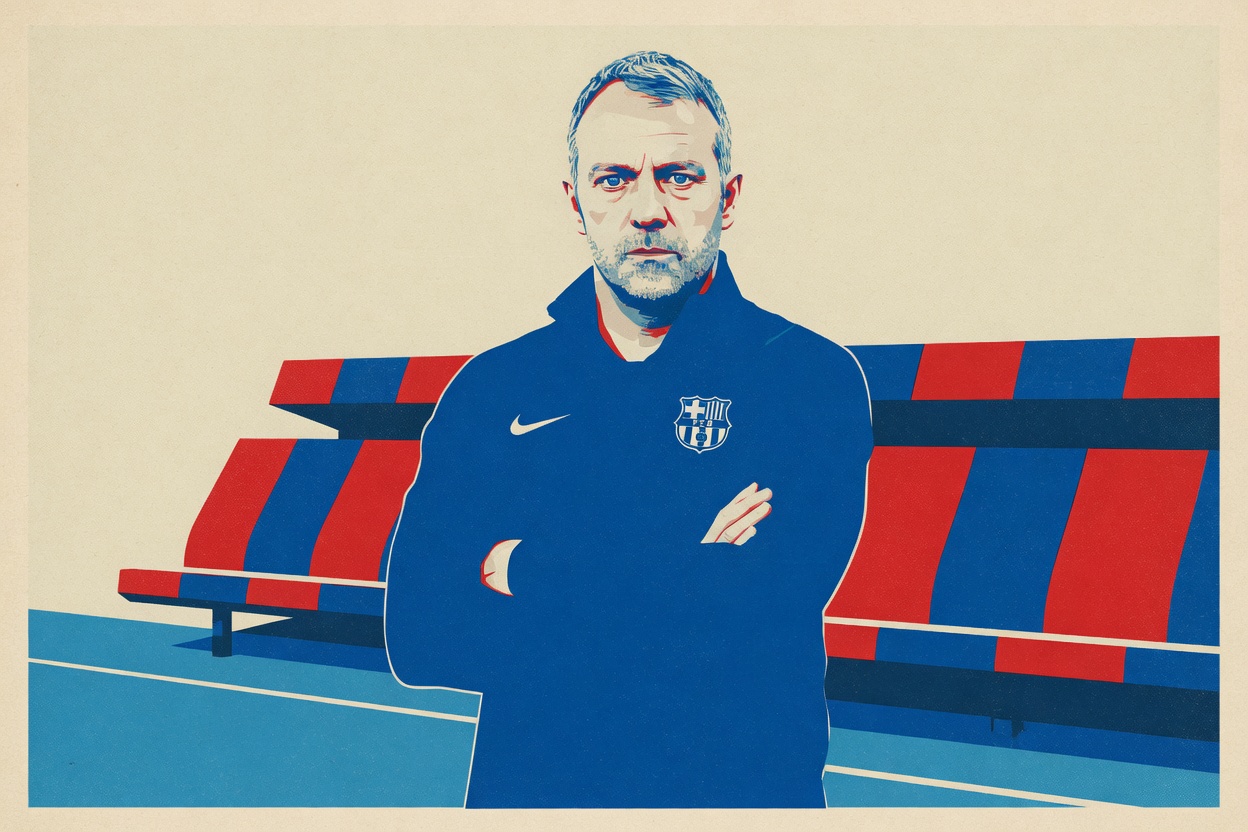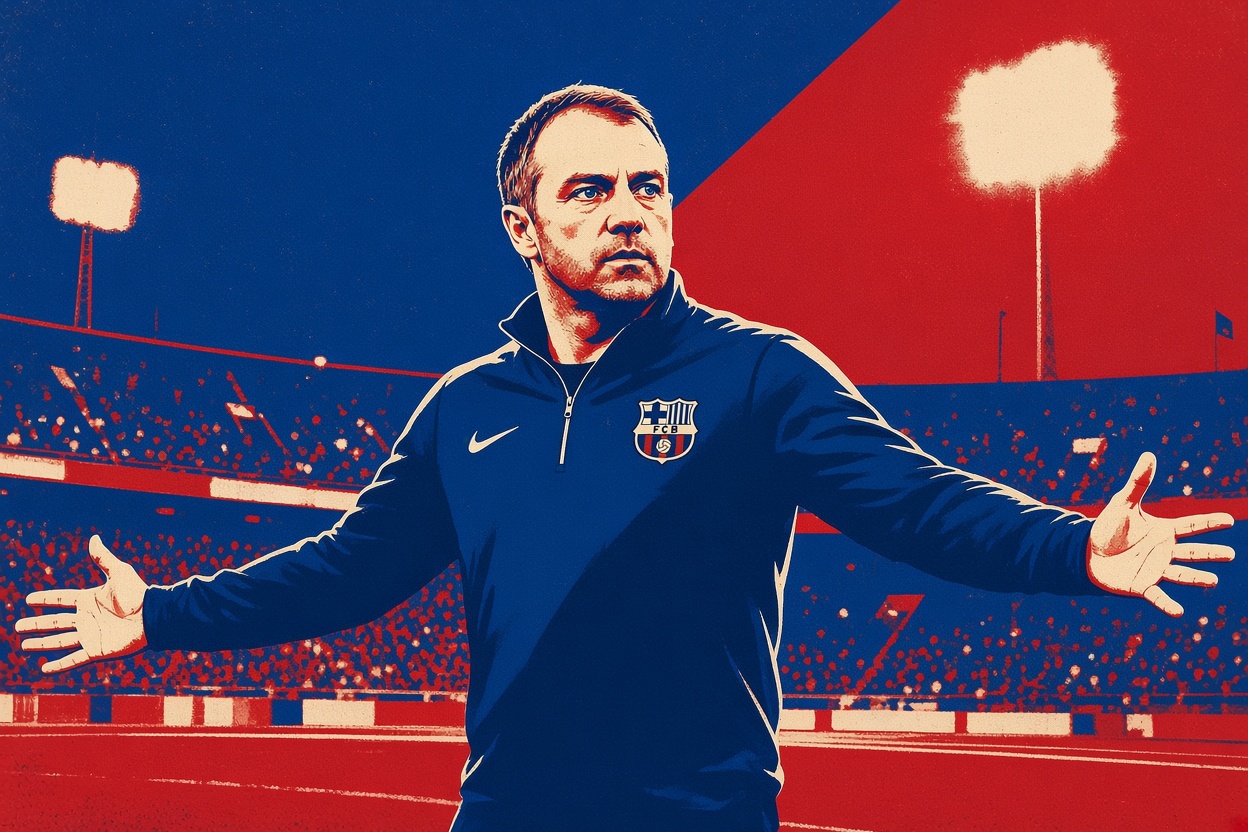
Hansi Flick's Barcelona can outscore almost anyone on earth, but they can't stop anyone worth stopping. That's the real story of his trouble against big teams in the Champions League, and it's a problem he's built with his own tactics.
Start with the number that doesn't care who's on the schedule. As of late October 2026, Barcelona had conceded in 18 straight Champions League matches, the longest streak by any Spanish team in the competition's history. You can't wave that away by arguing about who counts as elite; it happens against everyone, and it's baked into how the team plays.
Look at where the actual defeats land, and they land on the best addresses in Europe. Under Flick, Barcelona have lost Champions League games to Monaco, to PSG twice, to Dortmund away in the 2024/25 quarter-final (1-3, though they still went through 5-3 on aggregate), to Inter in the 2024/25 semi-final, and at home to Chelsea 0-3 in the 2025/26 league phase. The Inter tie ended 7-6 on aggregate, a scoreline that belongs in an arcade, and Flick himself called it "the worst night." The one genuine marquee win in this cycle was beating Bayern 4-1 back in October 2024. Since then, every meeting with PSG, Inter or Chelsea has ended in defeat or a draw.
The squad is thin at the back, short on pace and short on experienced centre-halves. That's real, and it matters. But a manager chooses the structure every single week, and Flick keeps choosing a sky-high line and full attacking numbers against teams built to punish exactly that. He's walking a defense that can't cope straight into the one scenario it can't survive. That's a decision, repeated, against the sides most capable of making him pay.
The cleanest counter is that picking out Champions League nights against big teams is a rigged game, and that his high-stakes domestic record deserves equal weight. Fine, weigh it. In the 2024/25 treble season he beat Carlo Ancelotti's Real Madrid in both league meetings and got the better of both Madrid clubs at home. That isolates the problem rather than rescuing him. The same man who beats Spain's giants in LaLiga keeps getting carved open in Europe. The issue is his approach, one that works fine until the quality on the other side is good enough to turn his high line into a motorway.
His response after losing 4-2 to PSG in Paris, which ended an 11-game winning run across all competitions, and then 2-1 to Real Madrid in the Clasico, was to shrug it off as "a very long road" and remind everyone that "defending isn't just the defenders' job; even the striker defends." He's right that defending is collective. He's wrong to treat the system producing these results as fixed furniture. Pressing higher and committing more bodies forward is a risk he's comfortable taking, and on the biggest nights it keeps blowing up in his face.
The scrutiny on Flick is fair given his track record. He has the best win percentage of any manager in Champions League history. He won the treble at Bayern after taking interim charge in November 2019 and built it into a full sweep of trophies by early 2021. He's proven, repeatedly, that he can win ugly when the moment demands it. He's choosing not to here. The pedigree is what makes the stubbornness hard to excuse: he knows how to adapt and won't.
Fix the backline or rein in the line. Until one of those happens, big-game Flick in Europe is a problem he refuses to admit he has.