Two years is not a long time in the life of a basketball player. It is, apparently, plenty of time for a lottery pick to go from franchise investment to salary a team will happily eat just to open a locker.
Devin Carter, the No. 13 pick in the 2024 draft, was waived by the Atlanta Hawks on Friday. He is 24. Not long ago he was the kind of guard front offices build development plans around: two-way energy, a Big East pedigree at Providence, bloodlines through his father, longtime NBA guard Anthony Carter, now an assistant with the Grizzlies. Atlanta cut him loose while still owing him a guaranteed $5,158,080 this season. The waiver saves the Hawks nothing on this year's books. It only clears a chair.
That, more than any shooting split, is the story here.
How a draft-and-develop guard falls off the map
Carter never really got a runway. Shoulder surgery kept him from making his NBA debut until January of 2025, and injuries chipped away at his second season too. Across two years in Sacramento he appeared in 74 regular-season games, averaging 6.4 points, 2.7 rebounds and 1.9 assists in 14.8 minutes a night, with a rough .401/.274/.674 line. Fair enough. But look closer: in his most recent Kings season alone he put up 8.9 points, 3.3 rebounds and 2.7 assists in 18.4 minutes across 38 games. The arrow wasn't pointing down. Opportunity just ran out around him.
It ran out for reasons that had little to do with Carter's game. Sacramento shipped him to Atlanta at the end of June, along with a 2033 second-round pick, as a cost-cutting move, the same summer the Kings waived DeMar DeRozan's partially guaranteed deal and stretched the remaining money over three years. It wasn't a basketball decision so much as one team paying another to take on salary, with Atlanta pocketing a pick for the favor.
Then Atlanta's own math swallowed him. The Hawks added Lu Dort and Ryan Nembhard, sending out former No. 1 overall pick Zaccharie Risacher to land Dort, one of the league's better perimeter defenders. Suddenly the guard room was full and Carter's role was undefined. So the Hawks declined his fourth-year option, valued at $7,370,897 for 2027-28, and cut him. Atlanta got its second-rounder and moved on. The lesson for any young guard on a rebuild-adjacent roster: your development is only as safe as the depth chart above you, and that depth chart can change in a single trade.
Boston's angle is the smart one
Boston's interest is the part worth studying. Jake Fischer of The Stein Line and Bleacher Report reports that the Celtics have interest in signing Carter once he clears waivers. Nothing is signed, and the report traces back to one well-sourced insider, so treat it as interest rather than a done deal. But the logic is clean enough that Boston would be silly not to look.
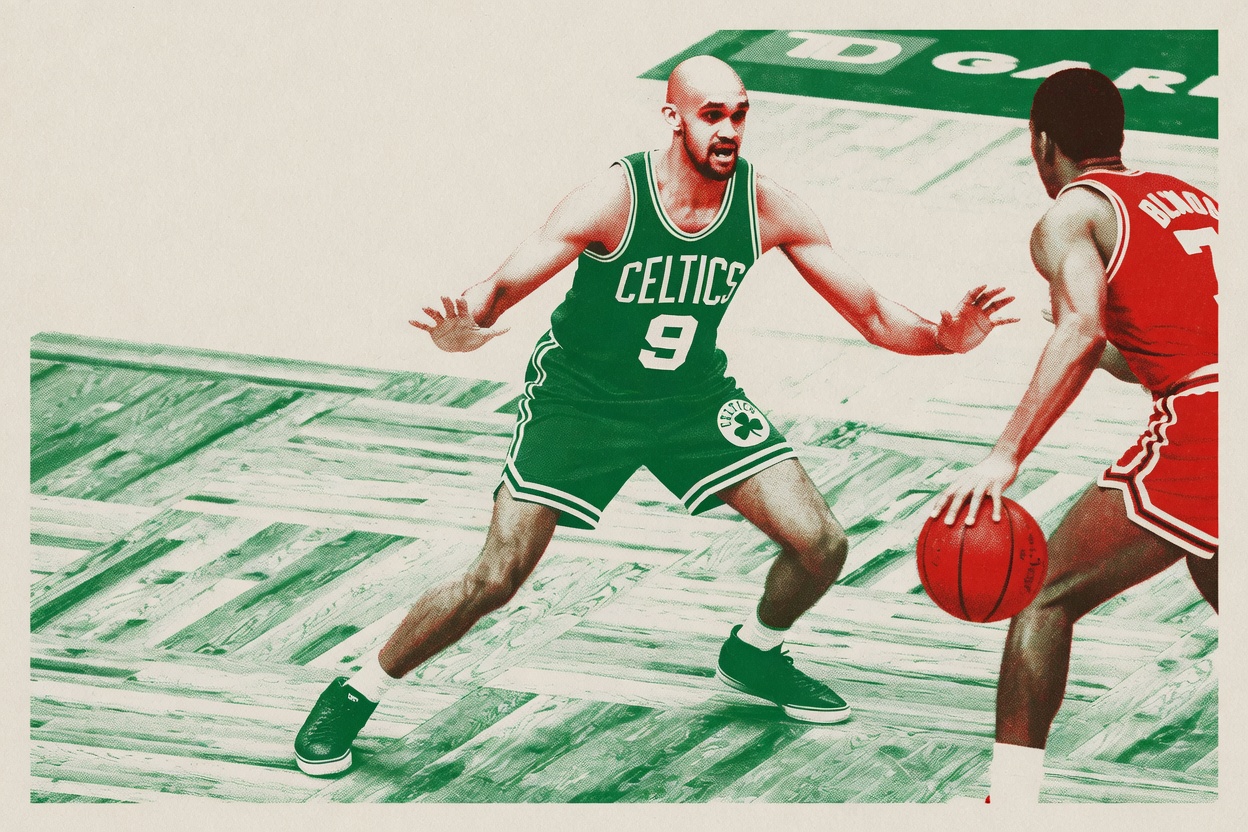
Boston entered the offseason with Derrick White and Payton Pritchard as its lead guards and Mike Conley off the bench, and not a ton of proven backcourt depth behind them. Carter is a 6-foot-2 guard whose calling card is defense, exactly the trait Boston prizes in its guards. He fits as a backup who can pick up ball-handlers and bring some bite. The real value: because Carter cleared waivers instead of being traded, Boston can add him on a minimum deal, or maybe cheaper still through a two-way slot, since he still has two-way eligibility.
That distinction matters. The reason Boston reportedly waited rather than trading for Carter earlier is, per analysis at Hardwood Houdini, that acquiring him via trade would have kept his full salary on the books at a moment when the Celtics are trying to duck under the tax line and reset the repeater clock. Take that as one outlet's inference rather than gospel, but it fits the pattern of a smart front office: let another team pay the buyout, then sign the player for a fraction of what he cost to move.
The margins are where good rosters get built
Contenders leave real value lying on the waiver wire every fall because they're busy chasing names. The waived-lottery-pick pile is full of players who were good enough to draft in the top half of the first round not all that long ago and simply got squeezed by a roster crunch, not by a sudden collapse in ability. Carter is a clean example. He was cut for cap and roster reasons, not because he forgot how to play.
Boston, if it follows through, would be doing what the best organizations quietly do: treat the 15th roster spot and the two-way slots as a bet on upside instead of a parking spot for vets riding out their careers.
With training camps opening September 29, Boston won't leave us waiting long. If the Celtics sign him, it won't move the needle on any award ballots. It'll just be a low-risk swing on a 24-year-old defender the rest of the league already paid to move. That's good process. It's how teams stay contenders at the margins.