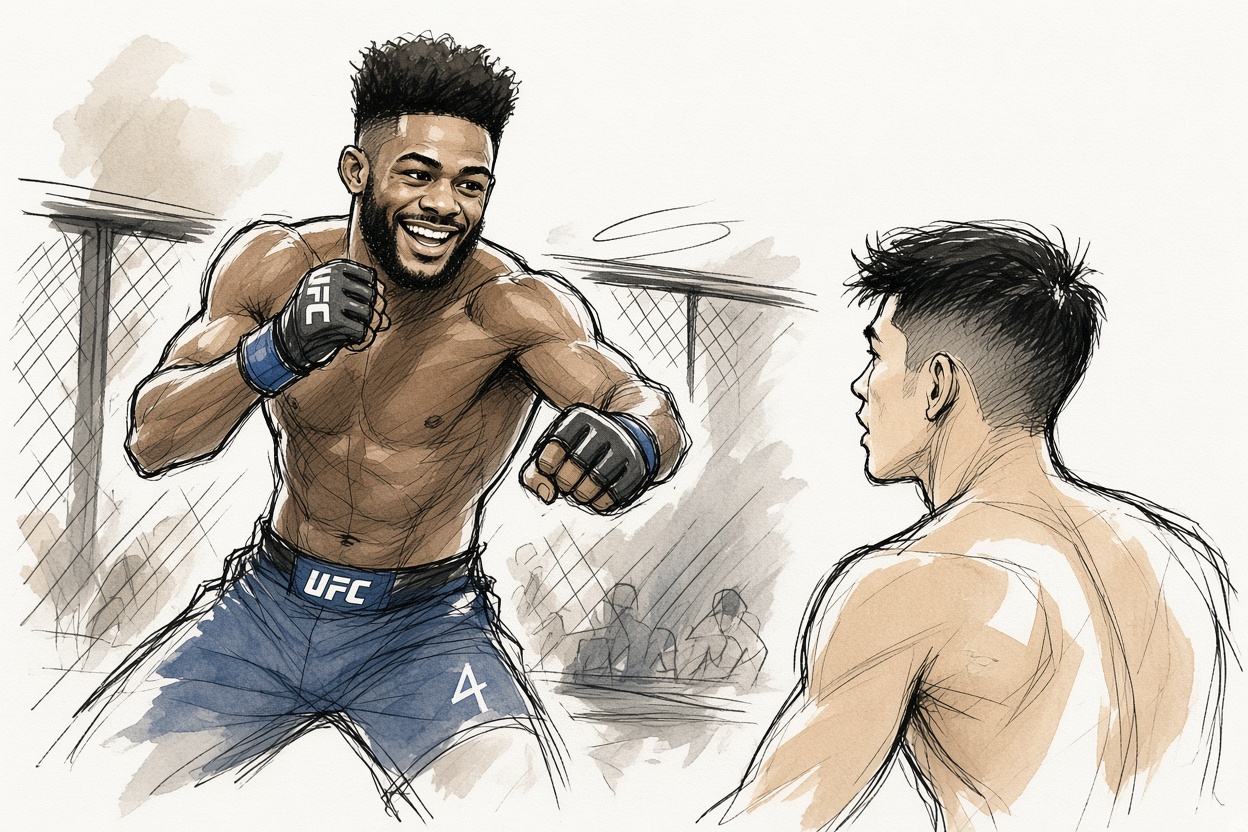


The judges got this one right, and the only people to blame for Asu Almabayev losing a fight he spent controlling are Almabayev and whoever was in his corner between rounds.
Three judges watched Horiguchi get taken down repeatedly and pinned near the fence for the better part of nine-plus minutes, and they still got this right when they handed him a clean unanimous decision. One recap framed it as Horiguchi "overcoming" seven takedowns and roughly nine minutes of ground control to win, and that word choice shows how lopsided the fight's actual output was. Control time is just real estate on the cards. Build nothing on it and it's worth nothing.
With all that time on top, Almabayev did close to nothing. Across three rounds he landed somewhere in the range of 20-odd total strikes, depending on which count you trust, while Horiguchi's total ran well over 150. Pick whichever number you like, the story doesn't change by twenty strikes either way. Nobody robbed him. He mistook being on top for doing something while he was up there. He attempted zero submissions across the entire fight. If you're going to put a man on his back seven times and sit in top position for nearly ten combined minutes and never once threaten a choke or a joint lock, you've told the judges the position itself was the whole plan. It was just denial, position for its own sake and nothing more.
Horiguchi was doing something very different. He went for submissions during the fight, even while absorbing the grappling disadvantage, and still out-landed Almabayev by a wide margin. That's a fighter hunting a finish while his opponent sat on top of him accomplishing nothing. The sport now scores damage and effective offense ahead of position for its own sake, and that's exactly what rewarded Horiguchi here. It's a case study in how modern scoring makes it hard to reward a fighter who grinds without producing, and it should be hard. The sport moved away from giving decisions to men for holding a body down because that's not what winning a fight looks like.
Lengthy, sustained top control has historically swayed scorecards in this sport, and judges breaking from that pattern can look inconsistent even when they're simply correct. But consistency with a bad old habit isn't a virtue. If judges are finally scoring output over occupancy, that's progress.
Almabayev isn't a hopeless grinder with no finishing instinct. He's shown he can close a fight: his submission win over Charles Johnson earlier this year was a genuine finish. Which makes this performance worse. He had the tools and the position to do real damage and simply didn't use them.
People are still arguing about who's responsible for the outcome. The three judges scored this consistently with where the sport's criteria actually sits. Horiguchi did what a fighter losing the position battle is supposed to do: stay dangerous and keep trying to finish, which made the scorecards easy. The responsibility sits entirely on Almabayev, who had seven takedowns against a game opponent and treated every one of them like the job was already done the moment he hit the mat. If Almabayev doesn't learn it isn't, he'll keep winning the control-time column and losing the only column that counts.