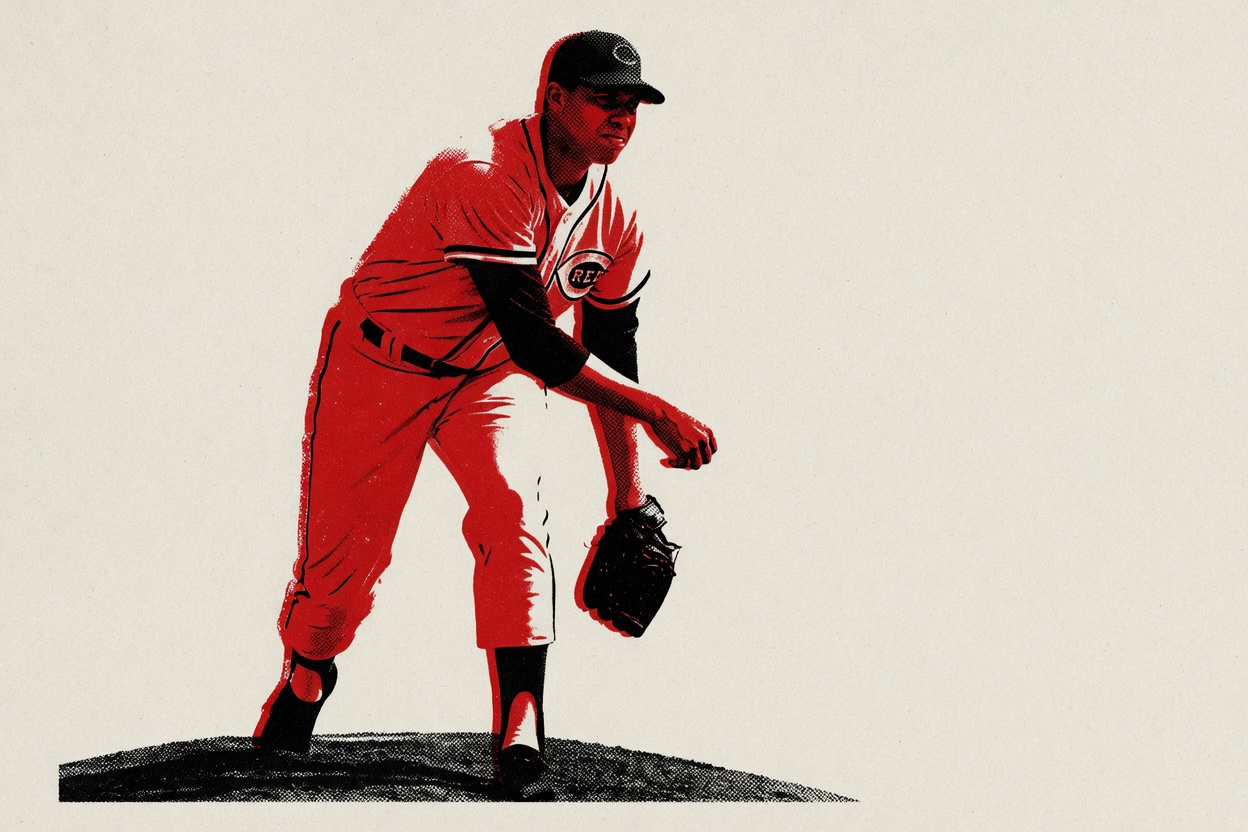
There's an uncomfortable way to tell the Hunter Greene story, and the Reds won't say it out loud: you can love a pitcher's ceiling and still admit you paid for a body that keeps breaking down.
Cincinnati announced in early August 2026 that Greene will have surgery to repair a damaged UCL in his throwing arm, ending his season. It's his third elbow surgery overall and his second procedure on the ligament, following Tommy John surgery in 2019 and a March operation to remove bone spurs. Reds president of baseball operations Nick Krall summed up the diagnosis plainly: "The ligament was failing... It's going to be some sort of procedure around the ligament. It is not going to be known until they go in, have the surgery and then find out what's inside."
That last sentence is the whole problem. Nobody knows yet whether this is an internal brace or a full Tommy John reconstruction. An internal brace typically sidelines a pitcher for around 12 months. Tommy John runs 13 to 14. Either way, it adds up to the same grim math: Greene will miss most of 2027. Krall wouldn't even speculate about next season.
My take: don't count on him being a trusted, competitive big-league starter until 2028. Surgery in August 2026, a year or more of rehab, then a ramp-up on top of that. That's a pitcher who might not throw a meaningful pitch until two full seasons from now. Nobody's reported that, but it's just the math.
The extension looked brilliant. Now it looks like a warning.
In April 2023 the Reds handed Greene a six-year, $53 million extension, tying the hardest-throwing starter in the game to a franchise that historically guaranteed money to almost no one beyond the current season. At the time, his fastball sat around 99 and had touched 102. The deal was aggressive and forward-thinking, and for two years it looked like a steal, because Greene posted back-to-back sub-3.00 ERA seasons in 2024 and 2025.
Then the injury history caught up. That's the part that gets lost when you're staring at triple-digit velocity: this arm has been fragile for a long time. A shoulder strain in 2022, hip pain in 2023, an elbow bruise in 2024, groin injuries that limited him in 2025, the bone-spur surgery in March. Now the UCL. When you sign a max-effort young arm who already had one ligament rebuilt, you're betting that the violent delivery producing all that velocity won't come back to bill you. Cincinnati made that bet, and this is the bill.
The money is the part that stings
Greene is owed $15 million in 2027 and $16 million in 2028, with a club option worth $21 million (and a $2 million buyout) in 2029. For a perennially low-payroll club, paying $15 million next year to a pitcher rehabbing an elbow, with no promise he contributes, is close to a sunk cost. That's not me being dramatic. MLB Trade Rumors framed his 2027 salary as "a largely sunk cost" in its own post-injury coverage.
Which makes the trade-deadline subplot almost cruel. Ahead of the August 3, 2026 deadline, the Reds talked to teams about Greene. Odds of a deal were pegged around 50-50 at one point, then word shifted to Cincinnati telling teams he wasn't available. No trade came together. His value was already sliding before the UCL news landed, too: rival teams had stopped viewing him as a top-of-rotation arm after the March surgery, and instead of the kind of prospect haul a healthy ace commands, teams were offering mid-tier prospect packages. The market had already priced in the risk, and the surgery just confirmed it.
The public still calls him an ace. Rival front offices don't.
That's the tension worth sitting with. His 2026 line, 27 2/3 innings and a 6.83 ERA across five starts after debuting July 4, doesn't look like an ace. There was one glorious reminder of the ceiling: seven shutout innings and 12 strikeouts against the Cubs on July 10. Then it was gone. Headlines keep calling him Cincinnati's ace. The teams negotiating for him were treating him like a reclamation project.
I should be clear here: no Reds official has admitted regret, and I'm not putting that word in anyone's mouth. The extension was a defensible gamble when they made it. But defensible and painless are different things. This winter the front office has to figure out how to build a rotation that still has young arms like Chase Burns and Andrew Abbott, while carrying real money on a pitcher who may give them nothing in 2027.
Betting on upside is how small-market teams survive, but upside and durability are separate purchases, and Cincinnati only got the first one. As of early August, the Reds sat 56-58 and four games back in the NL Wild Card race, a number that will keep shifting. The bigger question won't shift with the standings. It's whether a franchise that rarely commits money long-term can afford to have committed it to an arm this fragile.