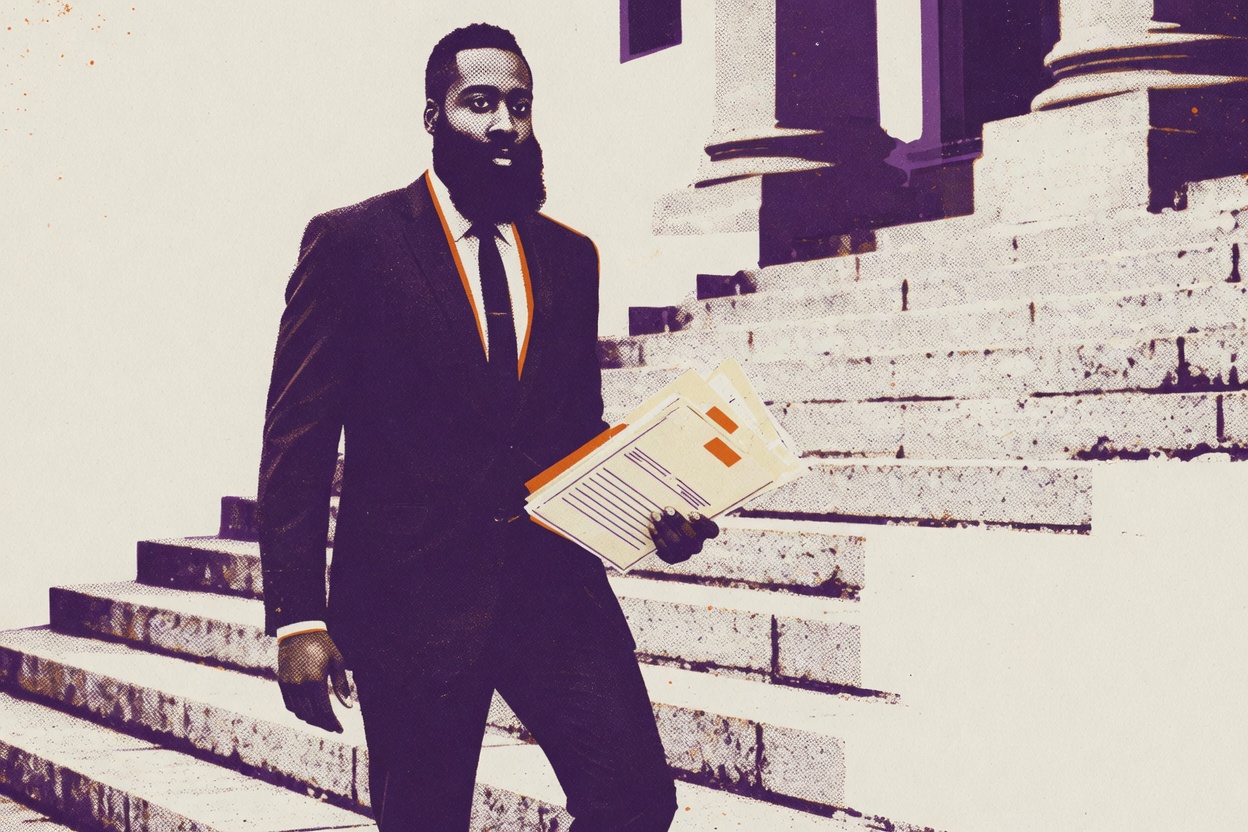
James Harden's misdemeanor gun charge is gone, and if your first instinct is to yell about a rigged system, I get it. A famous, wealthy athlete gets arrested with a handgun in his car and walks away with no conviction, nothing anyone outside the courtroom can point to. That looks like exactly the kind of thing that only happens when you're rich enough to make problems disappear.
The tool Harden used is a normal, legal, widely used mechanism, not some secret trapdoor for stars. The two-tiered justice argument gets interesting here: the scandal isn't the tool. It's who actually gets to reach it.
Start with what's documented. Harris County Criminal Court Judge Alex Salgado in Houston dismissed the charge Thursday, at the request of the Harris County district attorney's office, after Harden completed an alternative resolution program. Those programs let defendants avoid a criminal conviction by doing community service. The county's own description says its programs emphasize "treatment, community service, rehabilitation, and accountability." The specific terms of Harden's agreement aren't public. His attorney, the well-known Houston lawyer Rusty Hardin, didn't respond to requests for comment, and neither did the district attorney's office.
The underlying case: Harden was arrested June 13 in Houston after police found a handgun in plain view in his vehicle. Under Texas law, having a gun in plain view in a vehicle without a license is a misdemeanor punishable by up to a year in jail and a fine of up to $4,000. He was released on a $100 bond.
Ask what happens to a non-famous person facing that same charge. Diversion and pretrial resolution programs exist everywhere, and reform groups like the ACLU actually argue they should be used more, not less, because they're cheaper and more effective than jail. Researchers who study this aren't upset that guys like Harden get diversion; they're upset that a lot of people who'd benefit from the same off-ramp never get offered it, or get offered it and can't afford the fees attached. The Fines and Fees Justice Center's whole survey of diversion costs is about how those fees turn a second chance into a luxury good.
The honest version of the two-tiered argument isn't that Harden bought his way out, it's that the same door swings open easily for a client who can hire a marquee defense attorney, and shuts, or comes with a price tag, for someone who can't. Same statute, same off-ramp, wildly different odds of reaching it. That's the inequality worth being angry about, and it existed long before Harden's name showed up in a court file.
That doesn't let him off the hook morally. A loaded firearm sitting in plain view in a car isn't nothing, and community service instead of a record is a soft landing by any measure. You're allowed to find the outcome too gentle. I do. But be precise about the target: the outcome is soft for everyone the system chooses to be soft on. Harden just happens to be the one holding a well-known lawyer's business card.
Around the league, the case was never treated as a threat to his basketball future anyway. Harden, 36, wrapped his 17th NBA season in May, and reporting this offseason has him expected to re-sign with Cleveland after declining a $42.3 million option in pursuit of a longer deal. As of this writing, no contract has been finalized. The gun charge is closed. The uncomfortable question it raises about who gets second chances isn't.