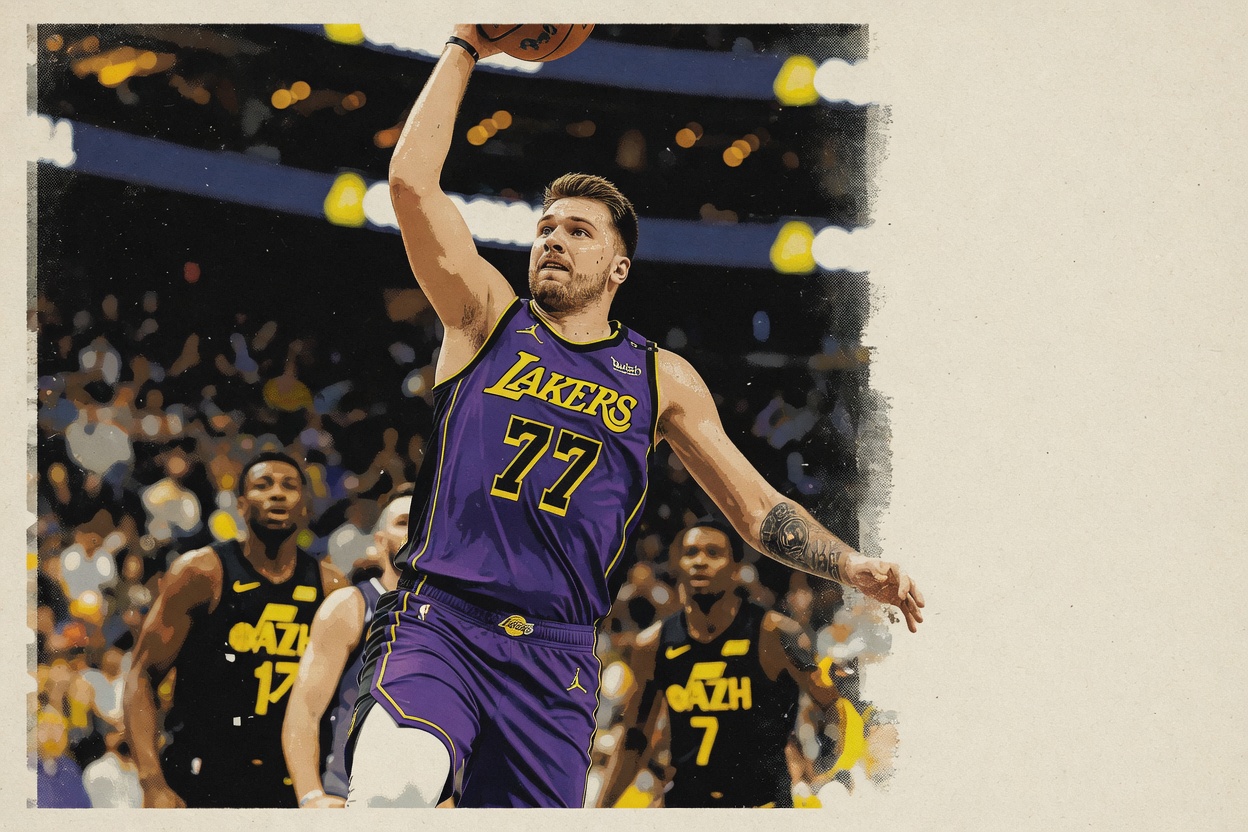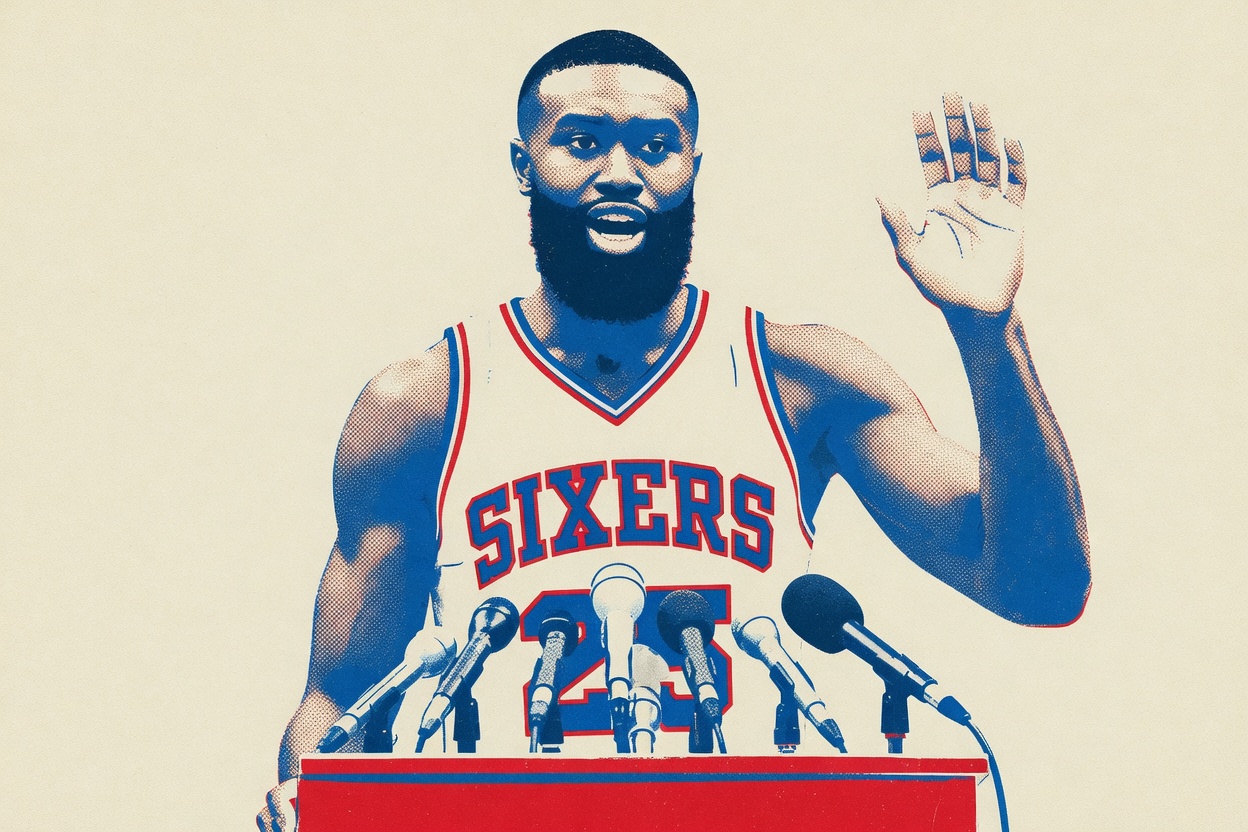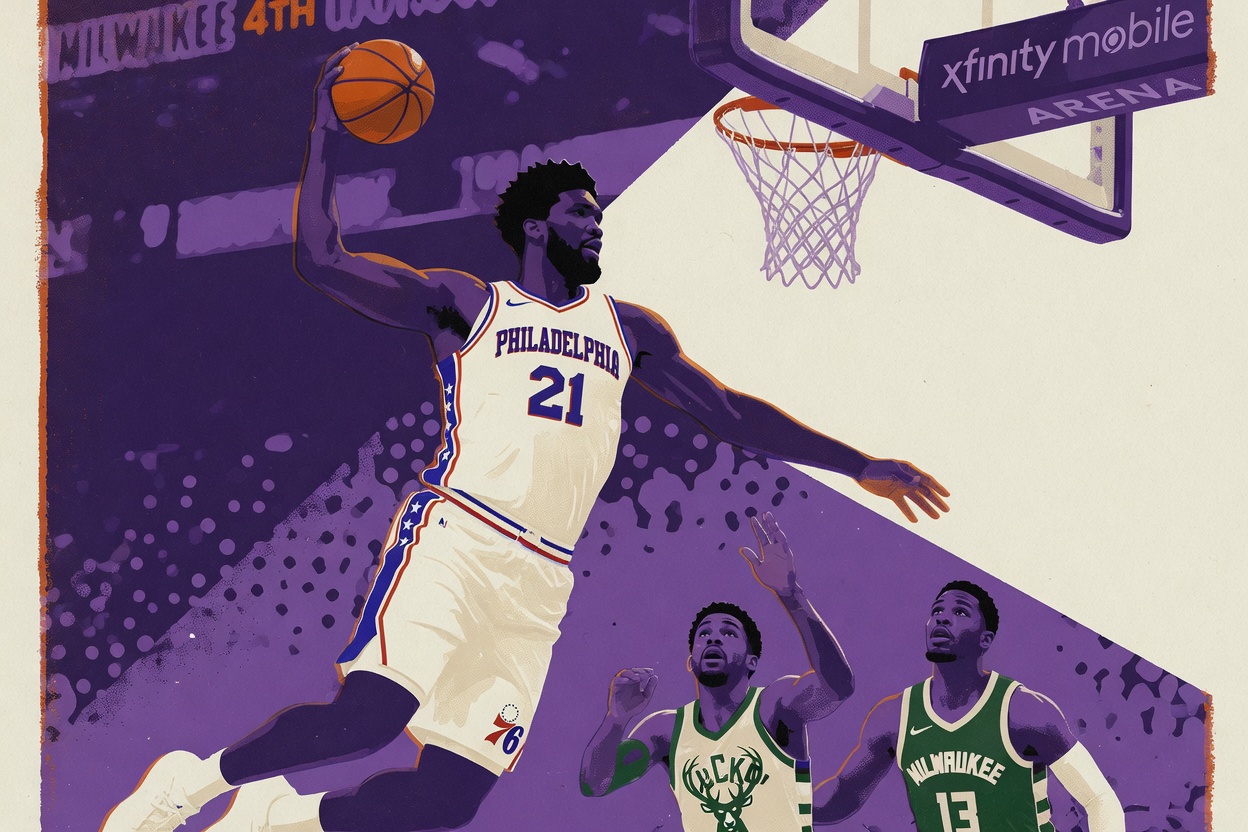
Nobody has confirmed that Joel Embiid hurt his ankle on that fourth-quarter dunk against the Bucks. He finished the game. He capped a triple-double, going for 28 points, 11 rebounds and 10 assists, then stood at the podium afterward asking reporters to lobby the Sixers' medical staff to let him play the very next night. That's the behavior of a man who thinks he's invincible, and that's a much bigger problem than a sprained ankle would have been.
Less than three weeks before that dunk, Embiid threw one down on a teammate in a scrimmage, admitted it was a reaction to getting blocked earlier in the session, and said he wouldn't do it again. He meant it when he said it. Then a real game got tight, VJ Edgecombe found him with a lane to the rim, and 19 days later he went right back up. The ankle held, the landing was fine, but none of that makes the decision smart. The whole point of the promise was that he doesn't get to make that call cleanly every time. You don't get to bank on your knees and ankles cooperating forever just because they cooperated Saturday.
People will point out that he looked terrific to start the season, that LeBron James was out managing his back, that Embiid had to carry a heavier playmaking load than usual, and that a highlight dunk in that spot is the kind of thing a dominant player gets to have. He was dominant. He was also the most injury-scarred superstar in the league stepping into exactly the kind of collision he told the world he was done risking, in a game Philadelphia was already positioned to win without it. A good night doesn't make a bad habit a good one.

 Rating
 Rating
The team clearly doesn't trust his judgment about his own body, and they're right not to. The day after this game, the team sat him down because of ongoing plantar fasciitis management, a decision made before he ever left his feet against Milwaukee. Embiid wanted to play through the back-to-back anyway. He said so, on the record, more than once. The team said no. That's the correct call, and it's also an admission: the people running this team know Embiid will push past what his body can safely handle if nobody stops him. That's exactly why letting him freelance highlight-reel dunks in live games is indefensible. If you don't trust him to decide whether he can suit up on a second night of a back-to-back, you shouldn't trust him to decide whether a given possession is worth a poster.
The Bucks were overmatched that night, and nobody should read much into an early-season laugher against a team that traded away its franchise player over the summer. That's a separate conversation. This one is about a 30-something center with a documented history of knee, hip and ankle damage going airborne for style points he explicitly told everyone he'd stop chasing. He got away with it. That's luck, and the Sixers' medical staff knows it, even if Embiid doesn't want to hear it.