The easy column here has already been written a few times over: Jonathan Kuminga left money on the table, snubbed the Lakers, and he'll regret it. Somebody's already published the piece arguing he'll rue the day. Lakers fans have done the subtraction themselves and posted the total. On the surface, the math looks bad for him.
But the surface is exactly where this story gets read wrong.
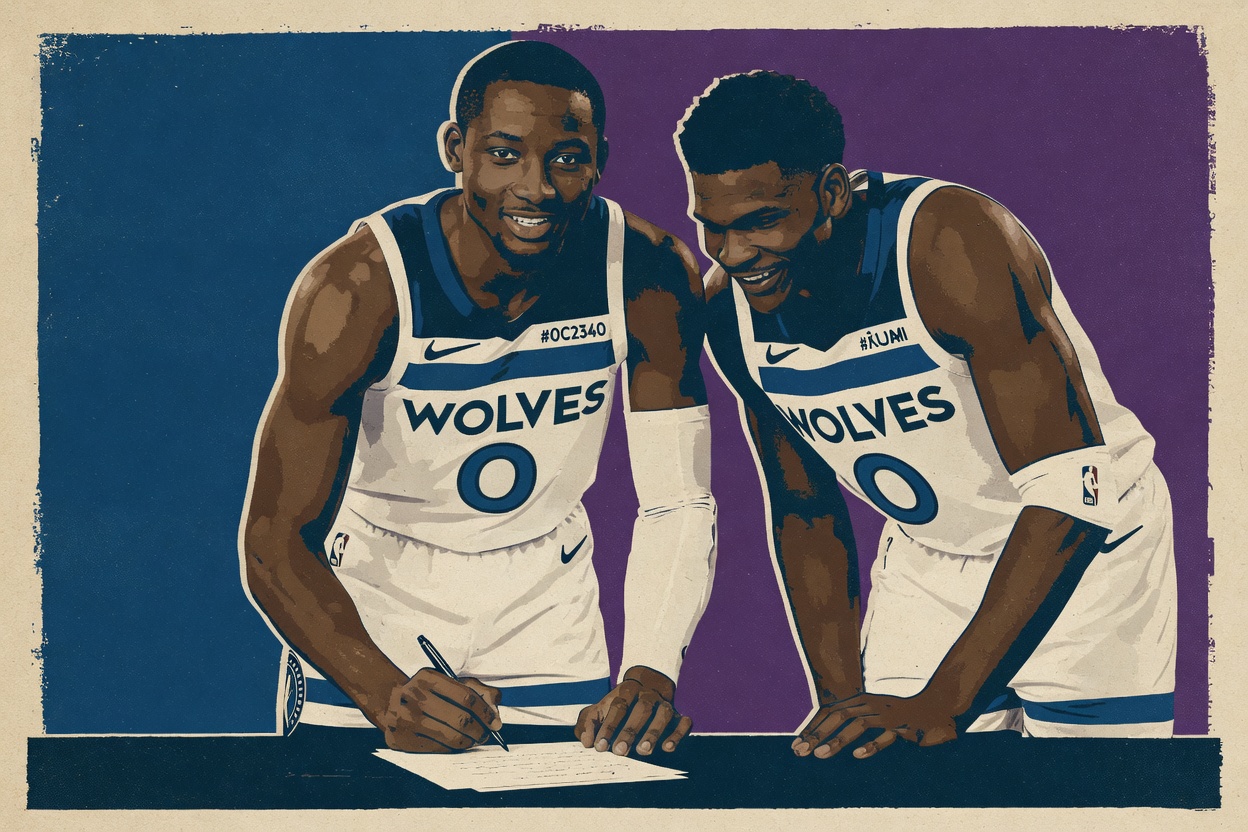
Kuminga agreed to a two-year deal with the Minnesota Timberwolves that includes a player option on the second season, his agent Aaron Turner told ESPN's Shams Charania on Wednesday. The value is reported at $12.4 million to $13 million, take your pick, it's a modest number either way. He picked Minnesota over the Lakers, Bulls and Trail Blazers, and in doing so passed on a Lakers sign-and-trade offer worth over $12 million annually across three years. Earlier in the summer, Los Angeles had reportedly dangled a different package as well. He said no to the longer term and the bigger guarantee.
Call it panic and you miss the design. This is a player choosing control.
The bet, laid out plainly
Start with who Kuminga is right now. He's a 23-year-old wing, the No. 7 pick in the 2021 draft, coming off a season split between Golden State and Atlanta in which he averaged 12.2 points and 5.6 rebounds on 46.3 percent shooting over 36 games. Atlanta declined his roughly $24.3 million team option in late June, which made him an unrestricted free agent. He isn't tied to anyone. He can move.
The player option is the whole point. If Kuminga plays well in Minnesota this season, he can decline that option next summer and hit unrestricted free agency again, at a moment when more teams are projected to have real spending room. That's the leverage a three-year Lakers deal would have taken away. Longer security is comforting when you're unsure of yourself. Kuminga, by all appearances, is not unsure of himself.
And the fit is built to make him look good. Minnesota's pitch, per Charania, is that he slots straight into the vacant starting power forward spot next to Anthony Edwards, LaMelo Ball, Jaden McDaniels and Rudy Gobert on an established Western Conference contender. This wasn't a courtesy call, either. Edwards was a vocal part of the recruiting push, team president Tim Connelly flew to Miami for a four-hour meeting earlier this month, and Kuminga had productive conversations with coach Chris Finch. A young player who wants to raise his stock takes the situation where a star is personally lobbying for him and the minutes are waiting. This is that situation.
The counterargument, and why it doesn't quite land
The skeptics have a fair opening point. Over two summers now, Kuminga's camp has turned down guaranteed money more than once, and the running fan tally of what he's passed on is genuinely eye-catching. A one-year audition is a one-year audition, and injuries or a bad shooting stretch could sink the whole plan. Nobody should pretend the downside isn't real.
But the version of this argument that says "just take the Lakers money" assumes the safest dollar is the smartest dollar for a 23-year-old with room to grow. It usually isn't. Kuminga reportedly averaged 13.7 points in the playoffs with Atlanta, a flash of the ceiling he's chasing. If he connects that upside to a defined role, the open-market number a year from now can dwarf a locked-in three-year mid-level deal signed out of caution.
There's a wrinkle here that actually strengthens his case rather than weakening it. Even Minnesota may not be able to keep him. Gobert holds a $38 million player option, and Edwards, Ball, McDaniels and Ayo Dosunmu are on the books for a combined $144.7 million in 2027-28. This isn't Kuminga betting on the Timberwolves' checkbook so much as using Minnesota as a stage and betting on the whole league. That's a bigger wager, and to my eye a smarter one, than tying himself to one team's cap sheet for three years.
One caveat before anyone spikes the football
The deal is agreed to, but not finalized yet. To fit Kuminga under the second-apron hard cap, Minnesota still has to move reserve wing Josh Green or waive and stretch him, with a Saturday deadline in play. ClutchPoints' Brett Siegel reported the Wolves sat roughly $3.9 million below that hard cap, and adding Kuminga at about $6.1 million would push them a couple million past it. Donte DiVincenzo, who tore his Achilles in the playoffs and is expected to miss a significant chunk of next season, has also been floated as a trade chip. The mechanics are still moving, and how Minnesota clears the room may look different by the time this runs.
None of that changes the shape of the decision, though. Kuminga looked at longer money and a similar role in Los Angeles and chose the short leash on purpose. Call it a gamble if you want. I'd call it a young player who finally decided the most valuable thing he could hold onto wasn't the biggest check in front of him, but the right to write his own next one.