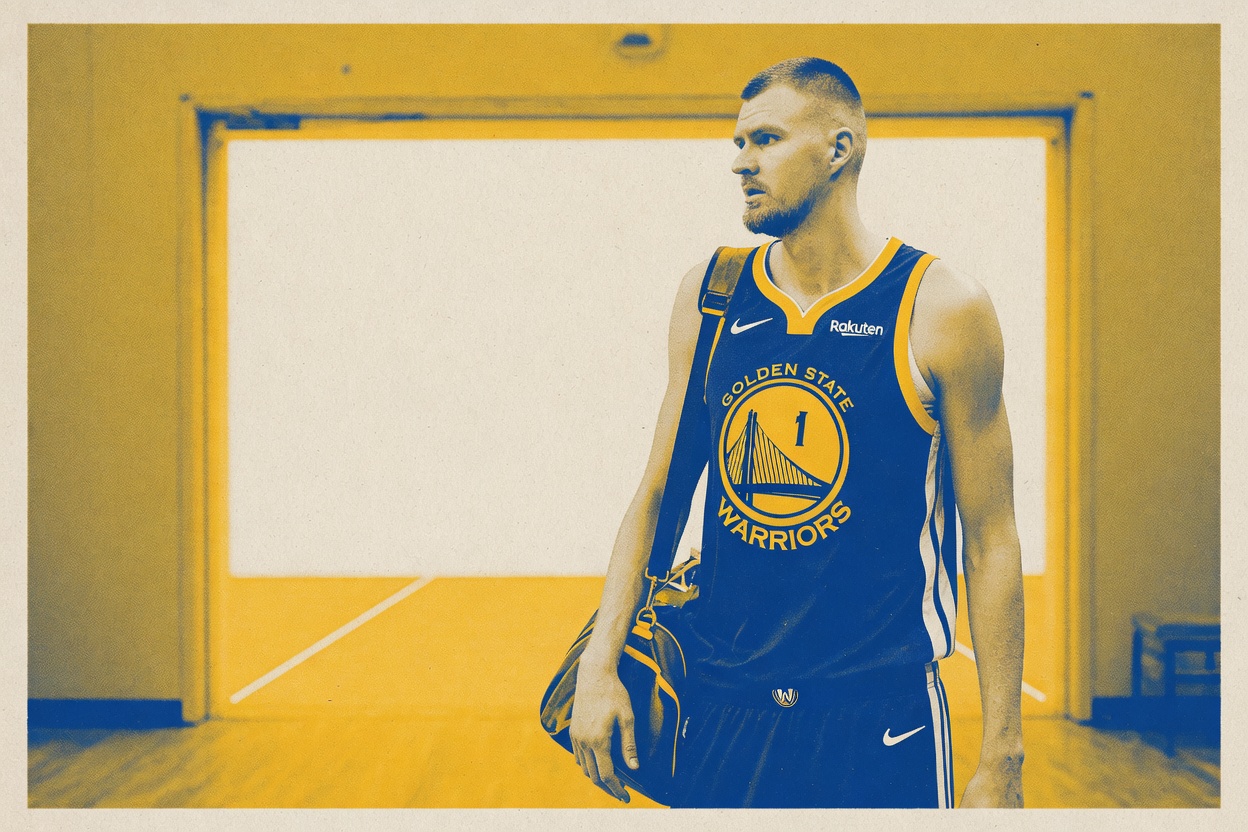
Kristaps Porzingis has decided he doesn't want to be around the team. He's using an undefined health issue as the exit that keeps everyone polite about it. The Warriors stopped being polite. They were right to.
On Oct. 13, Porzingis drove up from Los Angeles to San Francisco to meet with Mike Dunleavy and Rick Celebrini. Afterward, the team said it expected him to remain around the group while he worked to improve his health and get his career going again. He didn't. Weeks later, the team changed his official status from out with "general illness," the way they'd listed him during last season's absences, to "not with team." That was a deliberate change. A genuinely ill player who wants to play, and who just told his bosses he'd be there, doesn't vanish from the facility. That broken promise flipped the switch, and it has nothing to do with a new diagnosis.
This predates the whole standoff. Porzingis skipped the Hawaii training camp trip and the first five preseason games, then turned up at Jimmy Butler's player-led minicamp in San Diego in late September. Team sources there described him as indifferent, uninterested in joining scrimmages or the strenuous on-court work. A man too sick to function doesn't get invited to a voluntary players' camp and show up checked out. Showing up to clock out is a choice.
The cynical reading is that he gritted through enough of last season to lock in the money, then checked out once the ink dried. He appeared in 15 of the team's final 20 games last year and averaged 16.1 points, 5.3 rebounds and 1.1 blocks, good enough that Golden State handed him a two-year, $40 million extension in late June, with the second year a player option. Nobody knows what's in his head. But the timeline doesn't flatter him: healthy enough to audition, paid, then gone.
The Warriors have been the decent ones here. They built downside protection into the deal, guaranteeing only $3 million of his $20 million salary in the second season and structuring it so he could be moved right away. They've said the right things in public. Steve Kerr, asked about him, offered this: "I don't know. I don't really have anything to add on this. I haven't seen him and we've stayed in touch via text and a phone call. But we put out the statement today and there's not much more to it. We don't really know." That's a coach who's run out of information because the player stopped supplying any.
They've handled this before, with grace. In 2023 the Warriors let Andrew Wiggins step away for personal reasons and kept the details private while he missed the back end of the season: no public pressure, no adversarial language. They never downgraded his status. They never floated voiding his contract. Porzingis got the same courtesy at first. Now the front office is internally weighing whether his absence counts as a "failure to render services," a conversation that's nowhere near where things stood with Wiggins. It remains an internal conversation, and the Warriors are right to be having it.
None of this requires calling him a liar about his body. He posted on Oct. 14 that he's working with doctors and shot down the ugly internet speculation directly: "I appreciate all the internet doctors trying to diagnose and help, but I'm in the best hands... and I don't have hiv or aids." Fine. Believe every word of it. A health issue and a disengaged player can coexist, and the second one is the story now. Team sources are pessimistic enough to doubt he'll ever play for Golden State again.
Something else is going on here. The Warriors paid him in good faith, protected themselves financially like a smart front office, and still got silence and an empty locker back. A team can only keep a man's private business private for so long before the courtesy starts getting used against it. Golden State hit that limit and stopped pretending.