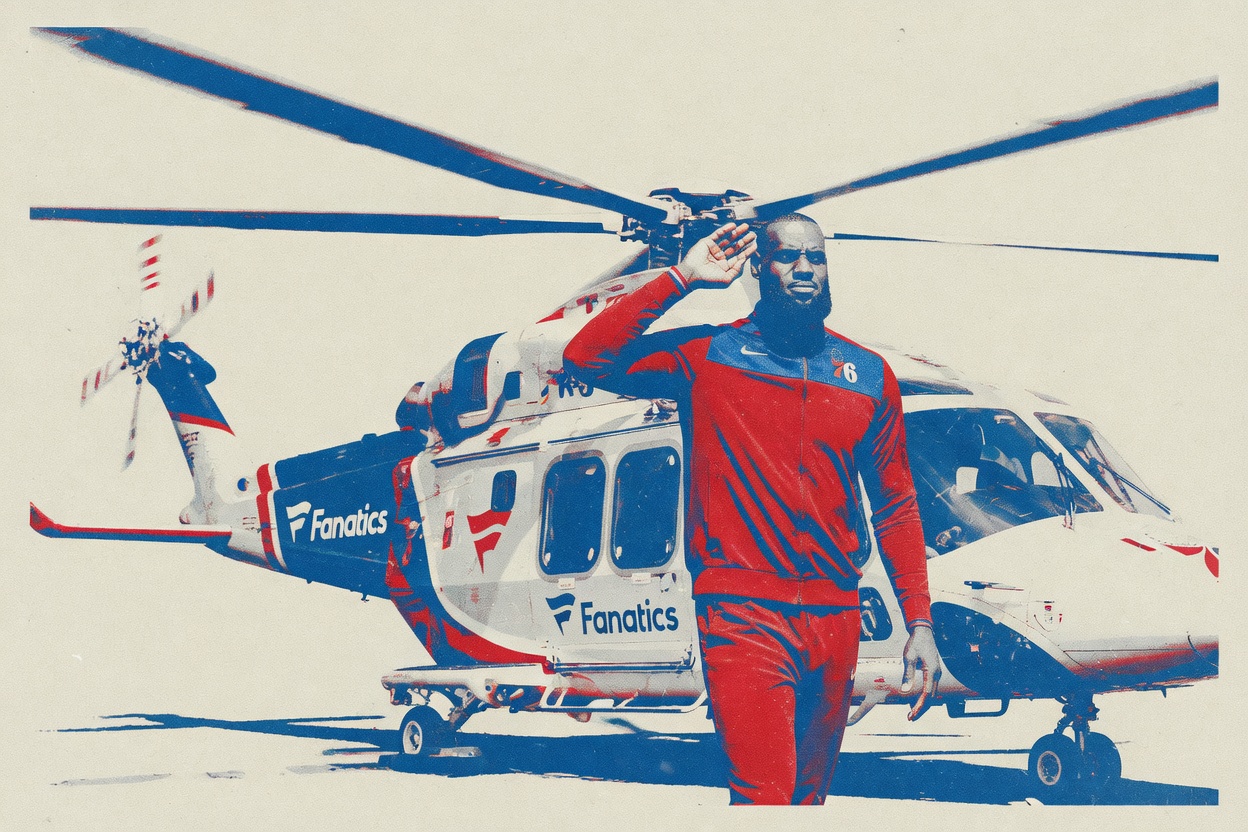
The free helicopter looks damning at first glance, but the timeline clears it. LeBron James signed his Fanatics trading card deal in January 2024, more than a year before he ever played for the Philadelphia 76ers.
The facts are real, and a little absurd. James took a two-year deal with Philadelphia worth roughly $8 million, about $3.9 million in year one, a cut of more than 90 percent from his last Lakers salary. He's living in New York and commuting to Philly. He's been doing it aboard a Fanatics-branded Leonardo AW139, roughly a 45-minute hop, after things like the team's recent intrasquad scrimmage. Flight records showed about a dozen round-trips in one week. A one-way charter like that runs somewhere between $4,000 and $10,000, and one widely cited estimate puts a full season of the commute near $804,000, about a fifth of his first-year Philadelphia salary.
So yes, it's compensation. A perk worth that kind of money is real money, and anyone pretending a free chopper is a rounding error for a regular person is insulting you. But a sponsor's gift and a team's payment are different things, and that difference decides the cap question.
The real test is simple. Did the Sixers arrange it, direct it, pay for it, or get anything back for it? Nothing suggests they did. The aviation perk flows from the Fanatics card deal, and a handful of other big-name Fanatics athletes get the same access. James's own camp put it plainly: "The deal we signed with Fanatics almost three years ago includes access to their corporate aviation. It's a feature in many of their deals with their largest athletes." A Fanatics source told TMZ the company is happy to let him use the chopper "anytime he wants."
The part that makes people squint is Michael Rubin. The Fanatics boss used to own a minority piece of the Sixers before he sold it, and he knows LeBron. It smells like a favor to some people. That's just suspicion. A friendship doesn't turn a standard sponsor perk into a team payment.
The strongest case for suspicion is that this is disguised compensation, built to help Philadelphia land him. The timeline kills it. You don't hide a lure inside a deal you signed a year and a half before the player picked your city.
If you want to be angry, aim higher. The genuinely ridiculous thing is the salary itself. The best player of his generation is on the Sixers' books for about $3.9 million while a reported $15 million-a-year Polymarket endorsement, completely off the cap sheet, dwarfs it. That one has drawn its own circumvention chatter, and it has no reported Sixers involvement either. The real money keeps landing everywhere except the line that's supposed to measure what a player is paid.
We just saw what actual circumvention costs. The league stripped the Clippers of five future first-round picks and fined them $30 million over no-show endorsement deals tied to Kawhi Leonard. That's the bar. A 45-minute helicopter ride paid for by a card company he partnered with before Philadelphia was ever on his list doesn't come close to it.
So be mad. Just be mad at the right thing: a salary cap that lets the best player alive get paid almost everywhere except on the cap sheet.