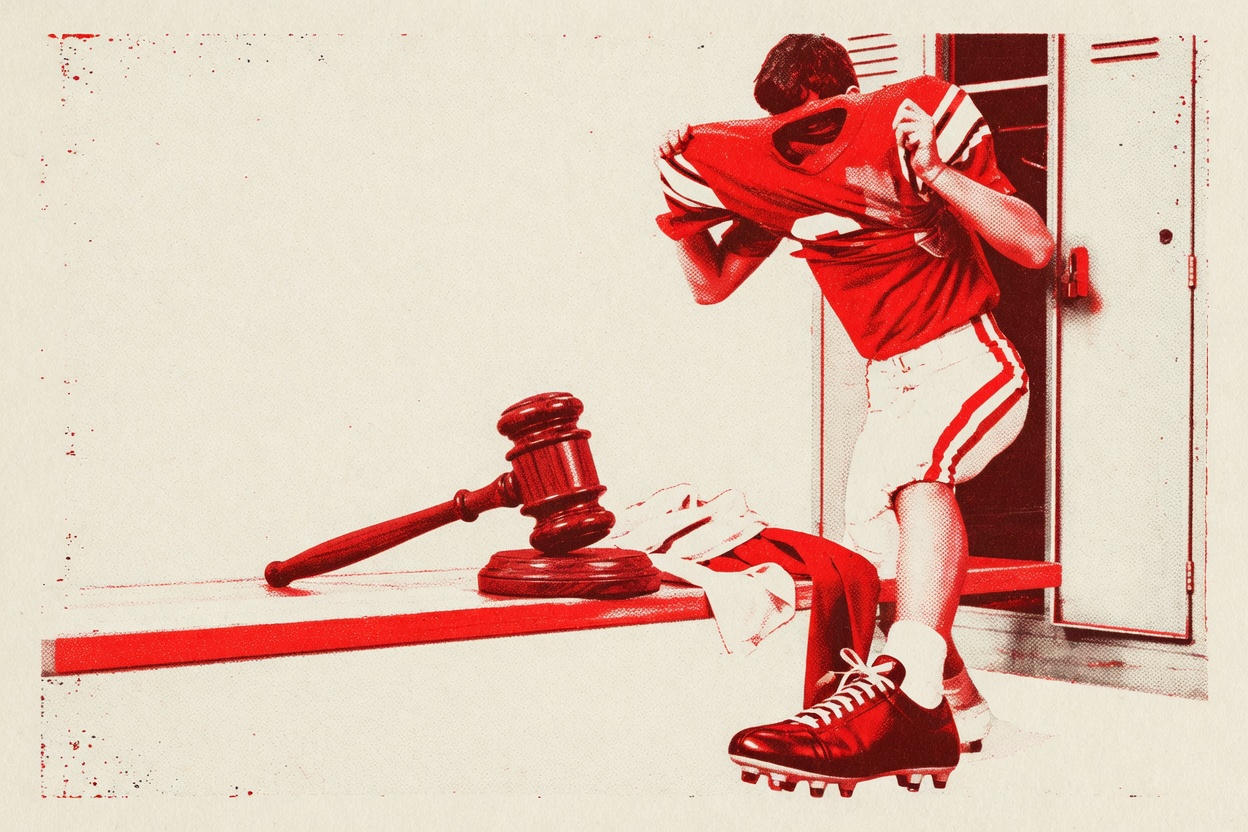
There are moments in the slow collapse of a governing body that feel less like news and more like satire, and the order that came down in a Louisiana state courtroom on Wednesday night is one of them. A local judge granted a temporary restraining order clearing a path for 16 former college football players to claim a fifth year of eligibility, part of a lawsuit brought by 33 athletes across various sports against the NCAA. The practical effect is less funny than surreal: some of the players covered by this order have already been through NFL training camps, and a few have suited up in NFL preseason games.
The mechanics are worth spelling out, because they matter. The TRO orders the NCAA to open the transfer portal for one week from the entry of the order. It enjoins the association from enforcing its transfer rules, and it specifically knocks out both the rule of restitution and the so-called ghost transfer rule. Attorney Ryan Downton, who represents players in the case, says athletes currently on NFL rosters have expressed interest in being released from their contracts, and that if their NFL teams cut them loose by Sept. 1, they can slot onto a college roster. A player can be an NFL employee this week and back in a college locker room by eligibility next month. That's where the sport stands right now.
A few caveats, since this is still developing and a TRO isn't a verdict. A restraining order is temporary by design, meant to freeze things while a court sorts out the merits. This could be narrowed or dissolved within days, or overtaken by a higher court. The order also didn't lift roster limits, so schools are still capped at 105 athletes, which means nobody's going to warehouse a dozen ex-pros. Whatever happens next, this will probably look different by the time some of you read it.
But the specifics are almost beside the point. The real story is how the NCAA arrived at a place where a state judge in one jurisdiction can, even briefly, wave NFL roster players back into college football. This is what years of eligibility foot-dragging buys you. The association has spent this whole era of athlete-empowerment litigation a step behind, treating each lawsuit as a fire to stamp out rather than a signal that its rulebook no longer matches the world it governs. Fifth-year eligibility questions have been piling up in courtrooms around the country, and the NCAA has mostly reacted and appealed rather than gotten ahead of anything.
Here's my take. The NCAA has lost the ability to define its own membership on its own terms. When a single state court can reopen the portal and strip out enforcement rules in one stroke, the NCAA isn't writing eligibility policy anymore. It's a defendant hoping the next judge disagrees with the last one. That's not a system, it's a legal weather pattern, and college programs are stuck reacting to whatever blows in.
The grown-ups in the room seem to know it. The Big Ten and SEC have thrown their weight behind the Protect College Sports Act, the federal bill introduced in this Congress aimed at giving college sports the kind of national eligibility framework that individual courtrooms keep improvising in its absence. That the two most powerful leagues are lobbying Washington to bail them out means the association can't fix this from inside its own bylaws anymore.
Don't lose sight of the human core underneath the absurdity. These athletes are chasing something reasonable: another year of playing the sport, another year of earning off their name, in a window that closes fast. The players aren't the villains here for using the leverage the courts keep handing them. The villain, if you want one, is an institution that had years of warning and chose to litigate rather than legislate its own future.
We've landed somewhere genuinely new. This isn't a rule debate or a portal squabble. It's a moment where the line between the NFL and college football briefly stopped meaning anything, in a Louisiana courtroom. The NCAA can appeal this particular order, and probably will. What it can't appeal is the reason we got here.