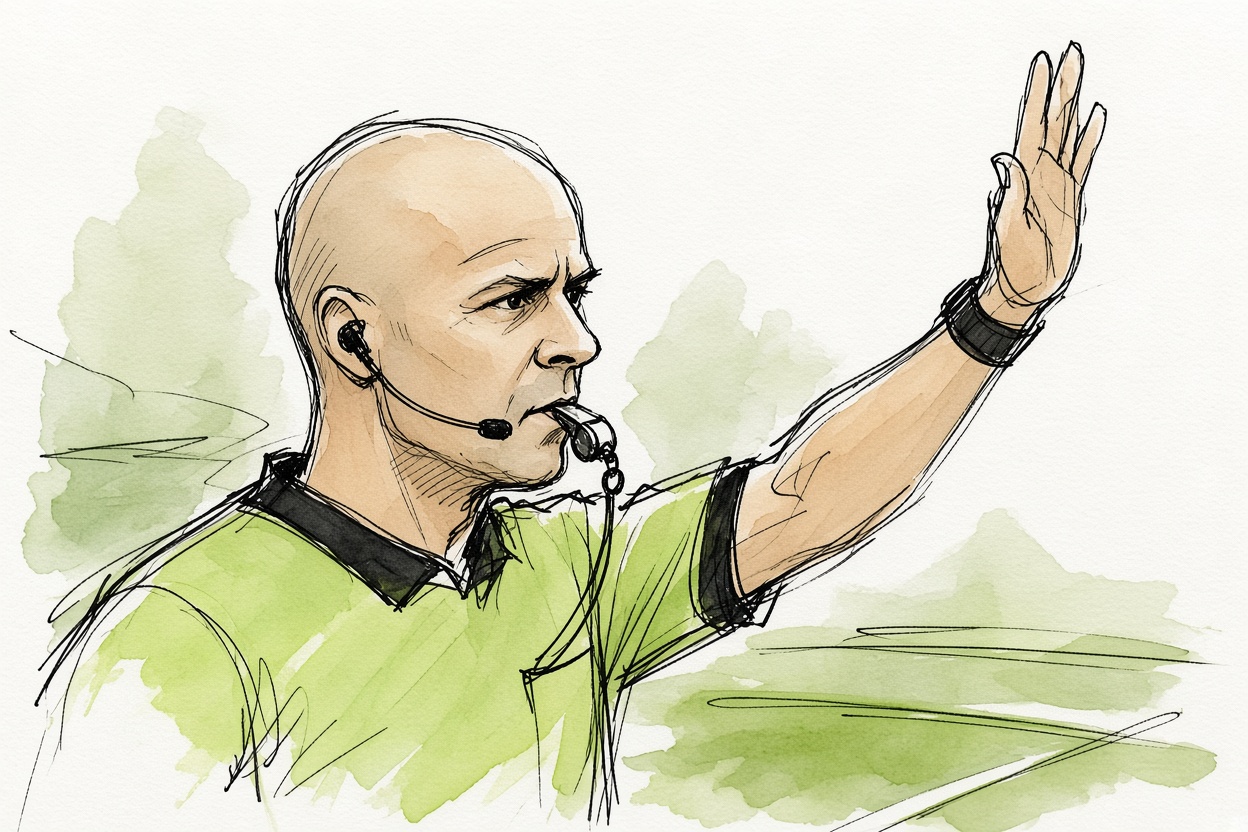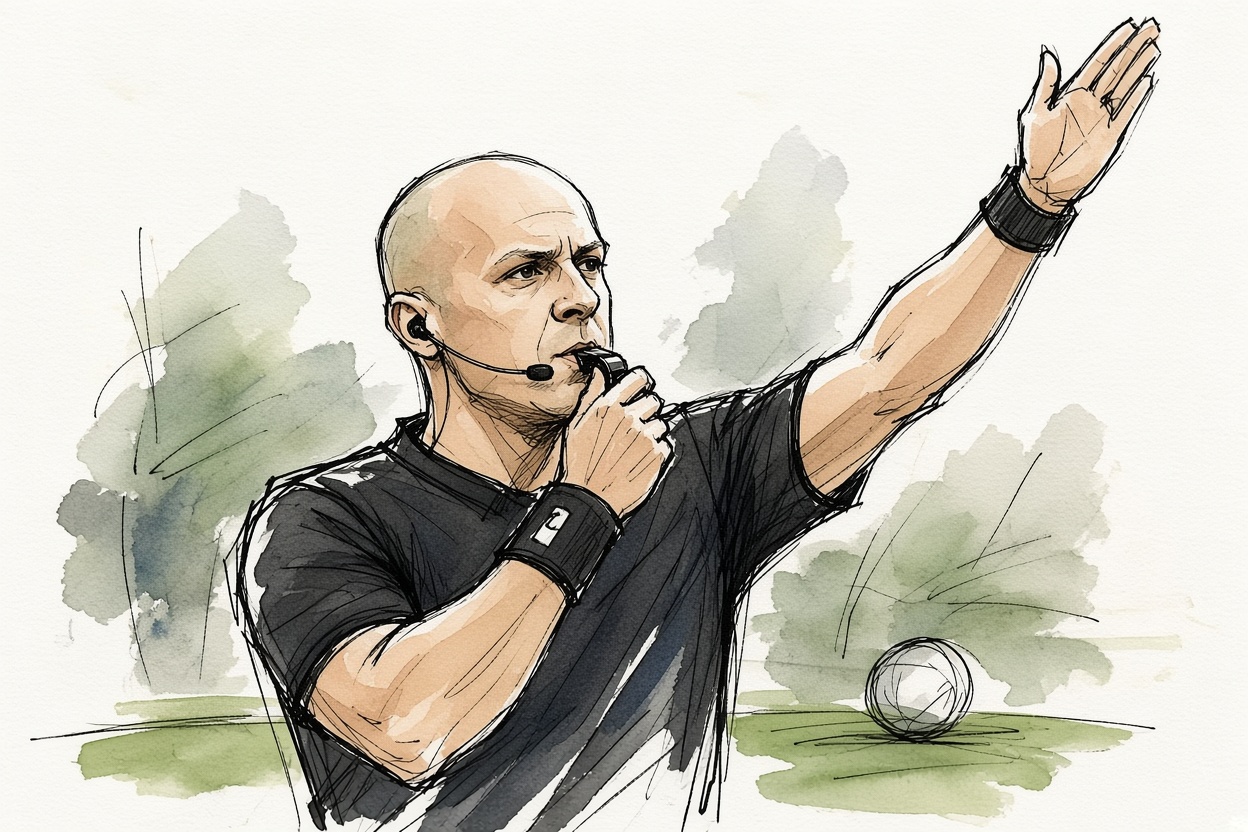
Szymon Marciniak looked at two goalkeepers getting put under pressure from a high ball, six minutes apart, in the same match, and gave two opposite answers. The second one was wrong, and it cost Manchester United a Champions League win in Lisbon.
Look at the 80th and 86th minutes side by side.
At 80, United led 2-1 off a second-half double from Bruno Fernandes. A high cross dropped into Senne Lammens' box with Suarez on him. Lammens didn't gather it, spilled it at Suarez's feet, and Suarez hooked it past Maguire. United wanted a free-kick for the contact on their keeper. Marciniak waved it away, the goal went to VAR and stood, and it was 2-2.
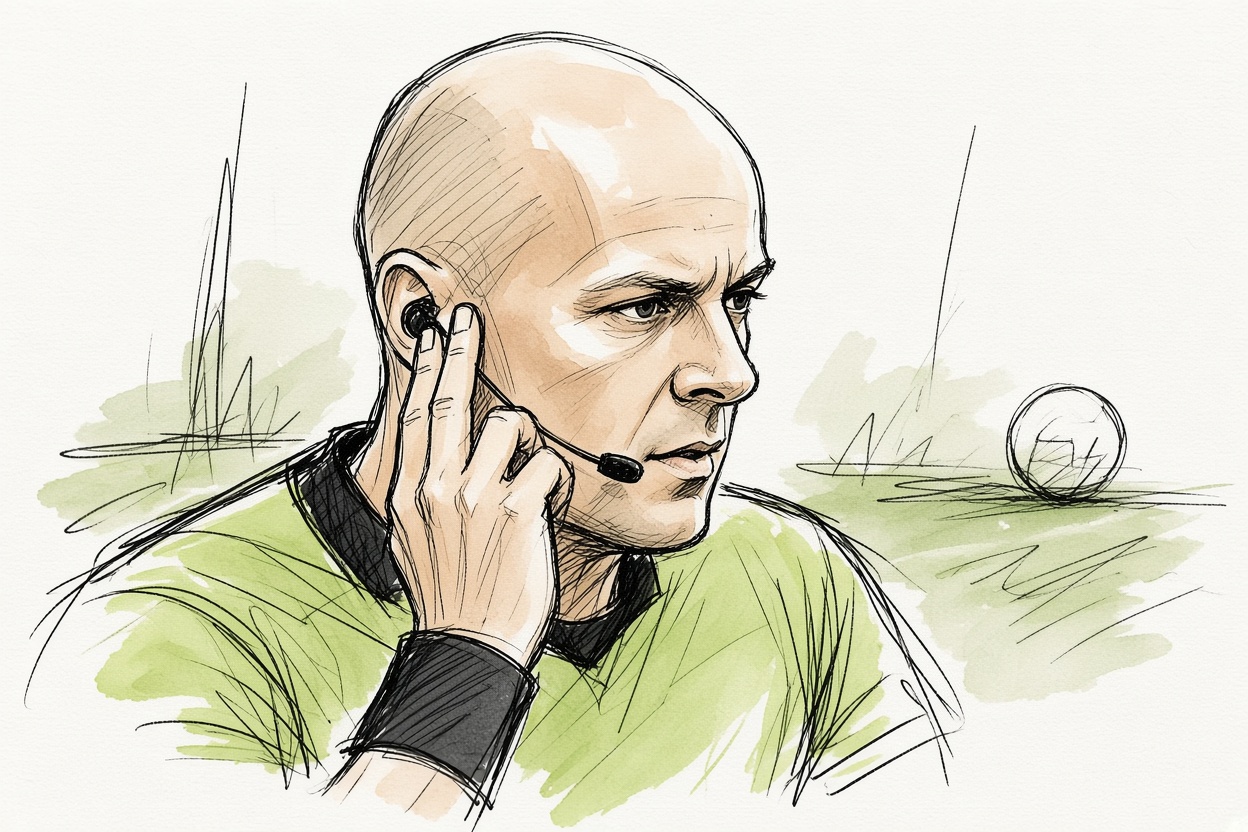
At 86, a Fernandes corner ended with Sporting goalkeeper Kaique Pereira turning the ball into his own net. United were back in front for exactly as long as it took VAR to send Marciniak to the monitor. He watched it, decided Patrick Dorgu had fouled Kaique, and chalked the goal off. It finished 2-2, with United down to ten after Youri Tielemans picked up a second yellow.
Same referee, same VAR team, same situation: a goalkeeper in his own box, an attacker on him, the ball in the air. When the keeper was United's, the contact was football. When the keeper was Sporting's, it was a foul. You can pick either standard, but you can't pick both inside six minutes and still call it officiating.
It gets worse. Replays suggest Dorgu made contact with Kaique only after the goalkeeper had already played the ball. If that's right, the foul had nothing to do with where the ball ended up. Kaique put it in his own net, and the officials went looking for someone else to blame it on.
The best defence of Marciniak is the one every referee gets: he's judging contact at full speed, and two collisions that look identical on replay can feel totally different live. That argument holds up for a referee working off his own eyes alone. Marciniak had a lot more than that. Suarez's equaliser went through a VAR check for the contact on Lammens and stood. Dorgu's moment sent Marciniak to the pitchside monitor, where he watched it back himself. Both incidents got the full video treatment. The officials had every frame they needed to be consistent, and they still weren't.
None of this lets Lammens off. He saved a penalty after Lisandro Martinez was penalised for catching Geny Catamo, then gave away another one 75 seconds later by crashing into Maximiliano Araujo, which Suarez converted. At 80 he looked more worried about the contact than the ball, and he owes his teammates a better night. But his mistake is exactly why the 80th minute matters: the officials looked at a goalkeeper getting hit under pressure and decided it was fine. Six minutes later they decided it wasn't.
This is a referee who has worked a World Cup final and a Champions League final. UEFA hands him the biggest games because he's supposed to hold one standard for ninety minutes. On Wednesday he couldn't hold it for six. A commentator summed it up the moment the goal came off: "It looks incredibly harsh."
The points matter too. United went into the night 17th in the league-phase table with six points from four games, and a win instead of a draw would have been worth two more. So far, UEFA and its refereeing department haven't said a word. They owe an explanation, and "it looked different in real time" doesn't cover a call made standing in front of a monitor.
Dorgu did nothing at 86 that Marciniak had already waved through at 80. That goal was United's. Marciniak and his VAR booth took it.