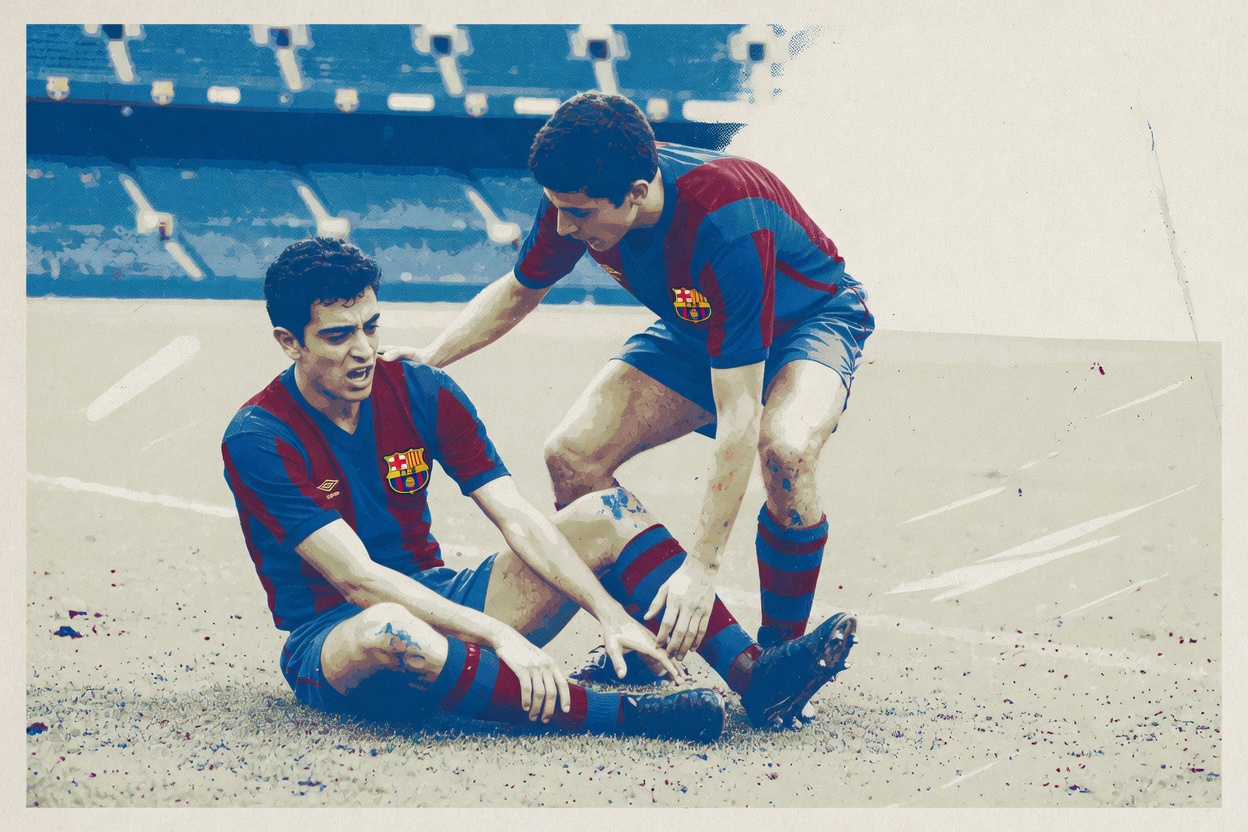

Marc Casadó won two LaLiga titles at Barcelona. He came through La Masia, made his first-team debut in the Champions League, and as recently as last spring he told Sport what excited him most was "having a very long career and staying for many years at Barça." Four months later he was climbing off the bench in the 66th minute for a promoted Deportivo A Coruña, at Villarreal, on his debut.
That's the whole arc in three sentences, and it should bother Barcelona more than it seems to.
The pathway ran out before the player did
By June 2026, reporting had Casadó slipping to fifth-choice in Barcelona's midfield pecking order, behind Pedri, Gavi, Frenkie de Jong and Marc Bernal. By the time the loan actually went through on deadline day, the queue had gotten longer still, with Fermín López and Dani Olmo also stacked into that part of the pitch. Casadó hadn't featured in any of the season's opening matches. When a club keeps adding bodies in a young midfielder's position while he sits, the message writes itself.
Here's the detail that gives it away: Barcelona agreed to cover a significant portion of his wages during the loan. Clubs don't subsidize players they can't wait to keep. That's the accounting of a squad that had run out of minutes to offer a player it still rates.
So be honest about what this move is: a squeeze-out, not a kid backing himself against tougher competition and losing. He wanted to stay. The pathway closed anyway.
Why Deportivo, of all places
This is the part clubs should study. Casadó had options. Beşiktaş and Galatasaray were in it until the final stretch of the window, and Bayer Leverkusen had asked about him. He could have chased Champions League football or a bigger paycheck abroad. He picked a newly promoted side instead.
His explanation, given across several outlets, is disarmingly human. His connection to Deportivo goes back three years, to a fixture he played there with Barcelona's reserves, when the two sides even held talks before Barça dangled a first-team route and the move fell away. He came out of that game with a lasting impression: the stadium, the fans, the way the match itself unfolded. When Deportivo came calling again this summer, that memory did real work in his decision. He thanked Barcelona, calling it the club that gave him everything, and framed Deportivo as a squad with genuine ambition rather than a step down.
There's a clip going around from a facilities tour with new teammates, where he looks stunned at Deportivo's setup, and some outlets ran "better than Barcelona" headlines off it. Treat that as color, not gospel, it's a single grabbed moment. But it fits the pattern. Atmosphere and belonging moved this player as much as tier or transfer fee.
The lesson bigger clubs keep ignoring
Recruitment departments spend fortunes modeling wages, release clauses and sporting projects, and they routinely underrate the two things that actually swayed a 22-year-old here. One is a matchday atmosphere a player never forgot. The other is a club that once made him feel wanted before anyone else was interested. Barcelona could offer neither this summer, because it couldn't offer the only thing that matters to a young footballer: the pitch.
Deportivo could. It's early, so take this lightly, but the fit already looks right. As of the reporting after his debut, Deportivo had taken eight points from their opening four matches back in the top flight, and Casadó's introduction into a double pivot alongside Lorenzo Amatucci helped seal a 3-2 win at Villarreal. Whether that holds through a Getafe trip and a long autumn is another question. The point stands regardless of the table.
The loan runs until 30 June 2027 and carries a reported €30 million option to make it permanent. If Barcelona's midfield stays this crowded, don't be surprised if Galicia buys him outright. And if that happens, remember how it started: a player who remembered how a stadium made him feel, and a club that couldn't find him a way onto the grass.