MLB just taught 29 other clubhouses a lesson: if something happens to your guy, the league won't have your back. Handle it yourself and eat the suspension later.
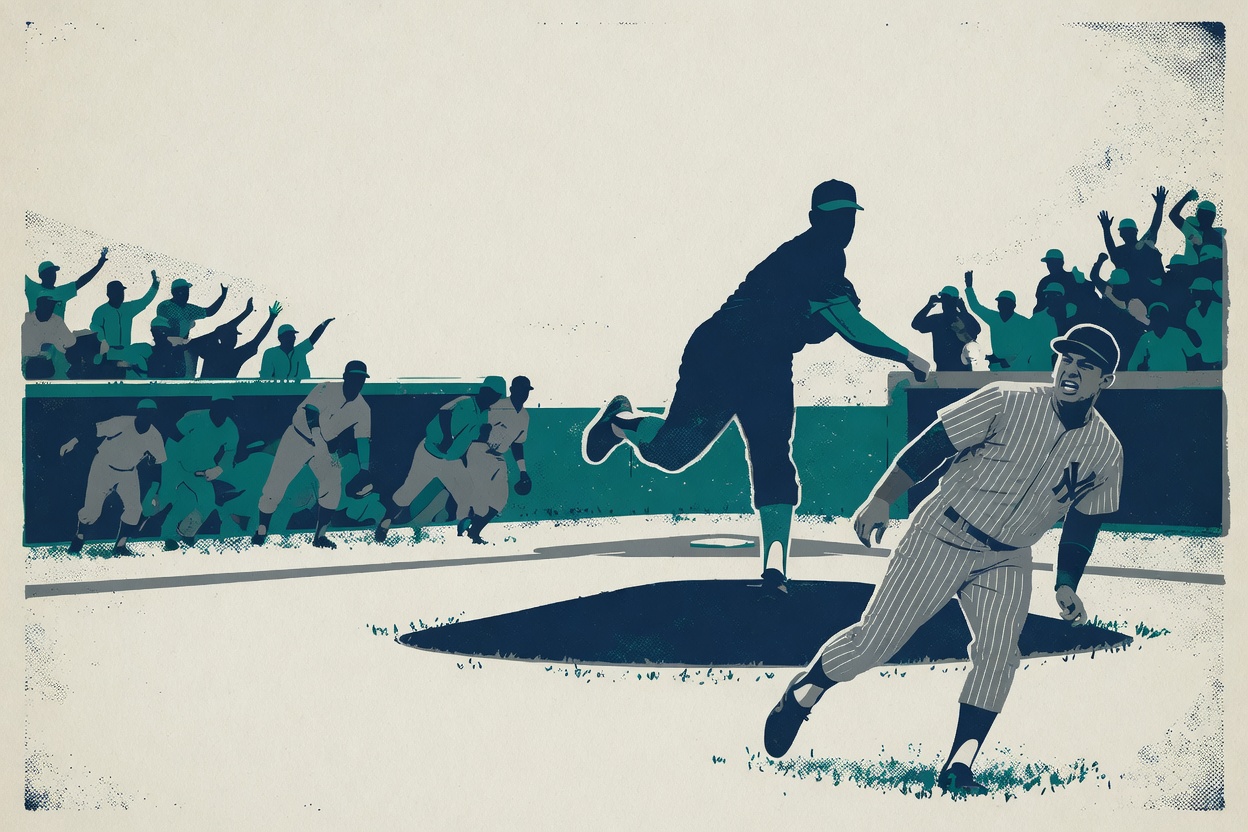
Start with what happened at T-Mobile Park on Wednesday. In Seattle's 4-2 win over Detroit, a pitch or throw from Tigers reliever Enmanuel De Jesús caught Cal Raleigh in the seventh inning. Nobody, including Detroit's own players afterward, claimed that one was intentional. An inning later, Mariners reliever Gabe Speier answered. With two outs and a 1-0 count, he came inside on Gleyber Torres, then drilled him in the leg with a 96 mph fastball. The benches and bullpens emptied. No punches, no shoves, just a lot of guys standing around glaring. Umpires huddled, ejected Speier, then tossed manager Dan Wilson when he argued.
Then MLB did its thing. Michael Hill, the league's senior vice president of on-field operations, ruled Speier threw at Torres on purpose. Speier got a three-game suspension and an undisclosed fine. Wilson got one game and a fine of his own. Detroit got nothing. No announced discipline for the pitch that started the whole sequence.
Here's the asymmetry that matters. I'm not arguing Detroit's HBP was intentional, and neither did MLB. The point is what happened next: the league looked at the inning, decided Seattle's fastball was retaliation, and punished it as retaliation. In doing that, it admitted a Mariner got hit and a Mariner hit back. One side of that exchange faced official punishment. The other side faced none.
So put yourself in a manager's seat. Your catcher takes one in the ribs. You can trust the league to sort it out, which in this case meant zero action against the team that did the hitting. Or you can send your own message with a fastball, absorb a few games, and know your guy got protected. Which of those two options actually stops anyone from throwing at your players again?
Wilson didn't bother hiding his frustration. He said afterward it bothered him that his pitcher got run while "their guy hits somebody and there's no consequences." You don't have to endorse beanball justice to see exactly what he means. The incentives are backwards.
It gets worse when you look at how the punishment actually lands. Speier, backed by the players' union, can appeal, and his suspension is held in abeyance until that plays out, so as of this writing the final number of games isn't settled. Wilson had no such option. His suspension was automatic because it stemmed from his pitcher's action, so he couldn't appeal and served it immediately, with bench coach Manny Acta running the club for the day. Wilson called it the first suspension of his career and didn't pretend to like the rule: "This is definitely a first, but it's what the rule is, and not that I agree with it, but that's where we are."
So even inside MLB's own system, the accountability is uneven. The player who threw the pitch can fight his penalty. The manager who threw nothing can't. The team that started it skated. It's a system built to make people distrust the process.
The context makes it combustible. This was a rematch of the 2025 American League Division Series, with bad blood carrying over from a June series in Detroit where Josh Naylor rubbed the Tigers the wrong way. Five hitters got plunked in Wednesday's game alone, and between two teams that already don't like each other, that isn't random, it's a feud. MLB's answer to feuds is to punish whoever gets caught throwing the last pitch while shrugging at everything that led up to it.
The league likes to play the adult in the room, the neutral party that protects players so nobody has to take matters into their own hands. Wednesday showed the opposite. The message that landed in every dugout was that the retaliator pays and the instigator walks. Until MLB enforces the front end of these exchanges as hard as it enforces the payback, teams will keep concluding, reasonably, that a well-placed fastball beats a phone call to the commissioner's office.
That's the real danger here, and it has nothing to do with Speier or Wilson specifically. It's a 96 mph incentive to keep policing your own.