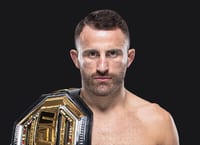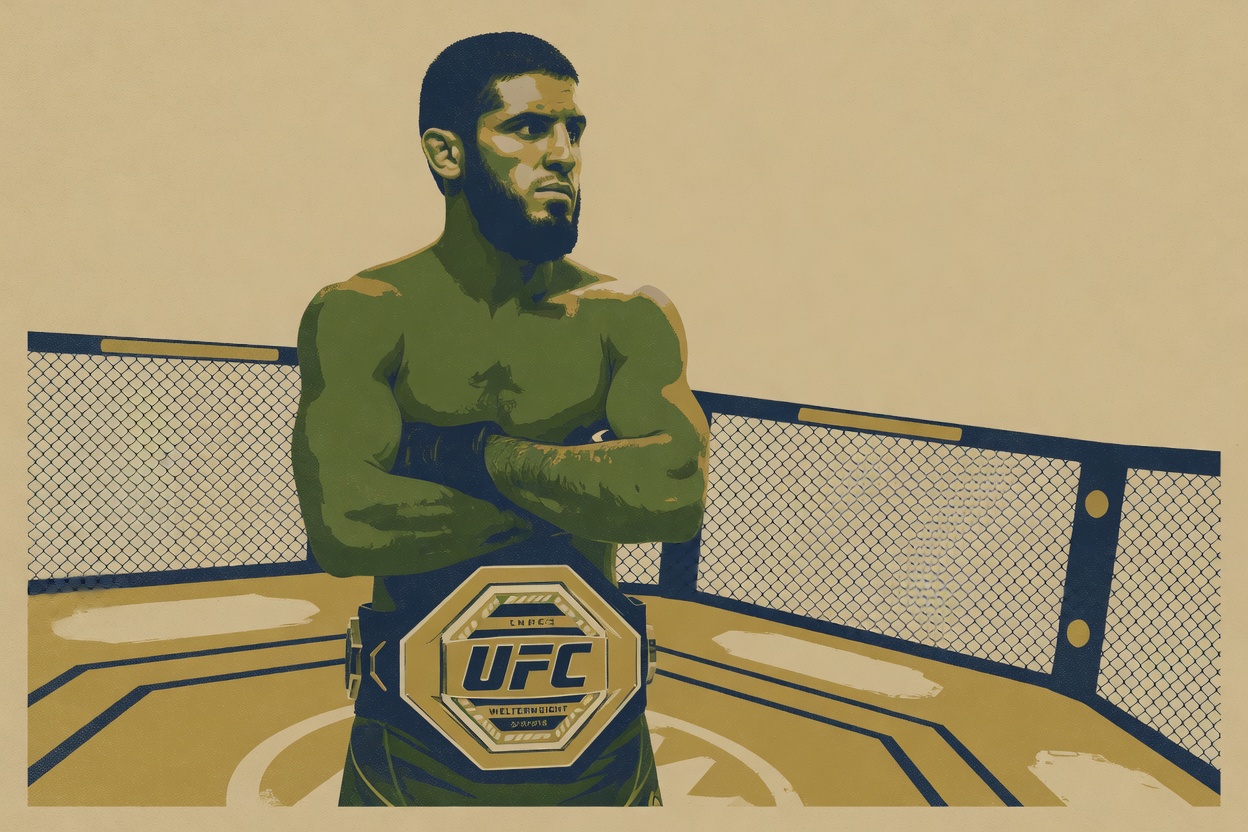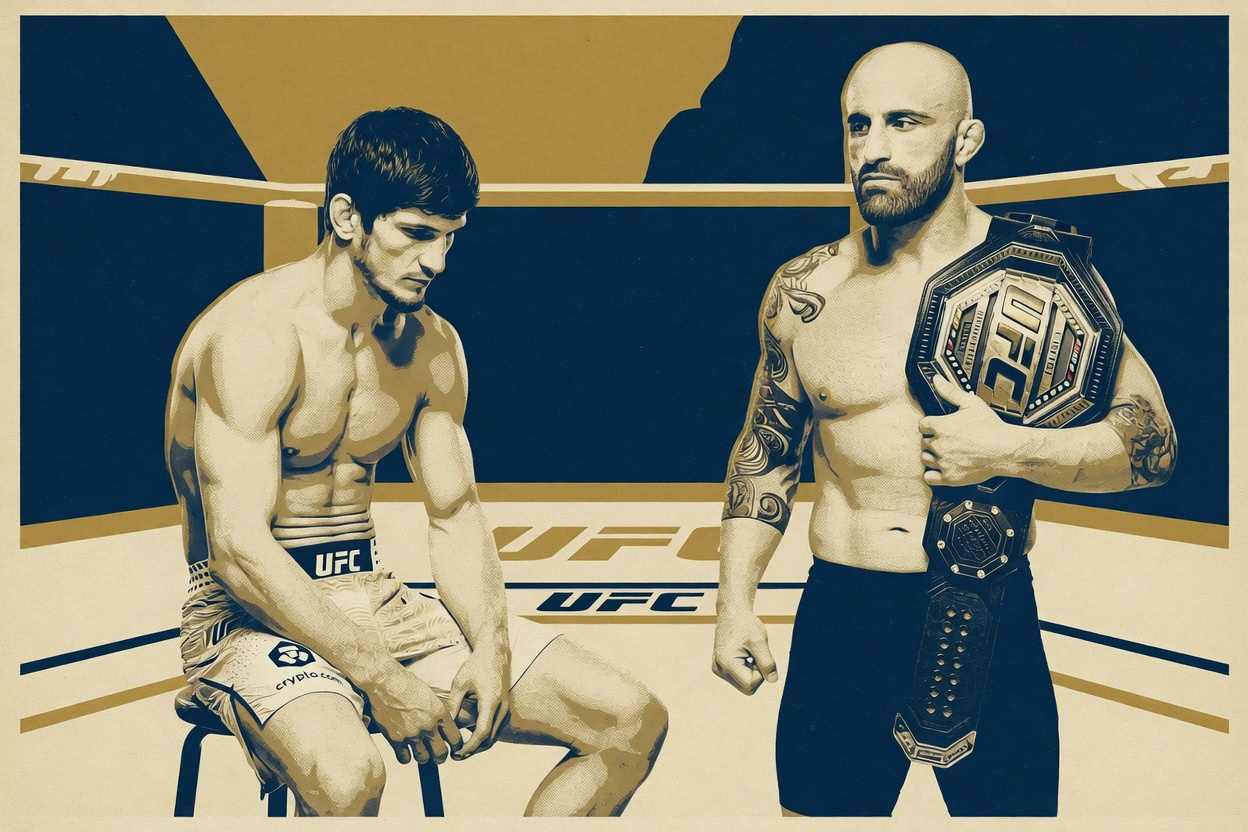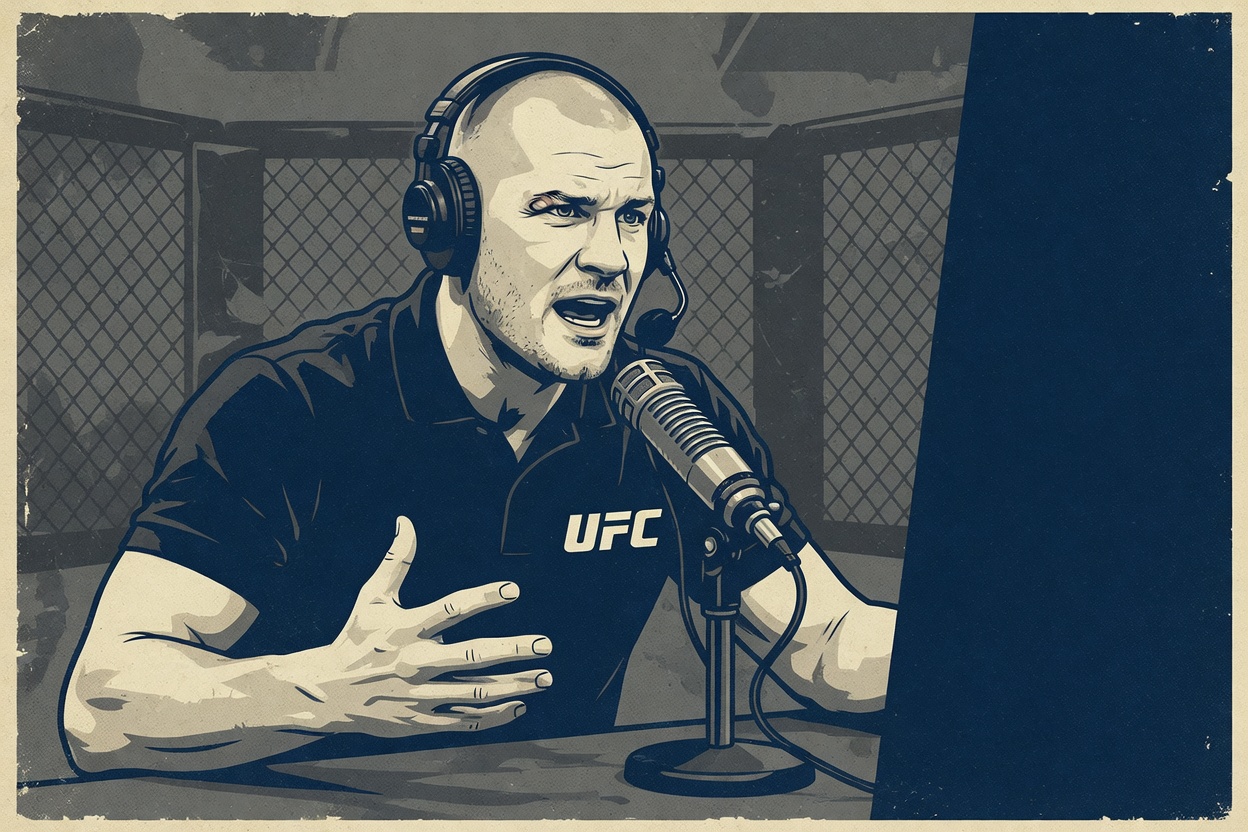
Michael Bisping wants you to know that Alexander Volkanovski is a fighter's fighter. "He steps up. He stays busy," Bisping said, before swinging the hammer at Islam Makhachev: "He's not one of these guys doing an Islam, we'll get to that later in the show, fighting once a year and then picking and choosing who he fights and letting contenders face one another."
That is a flawless description of a UFC champion. It happens to be a flawless description of Michael Bisping.
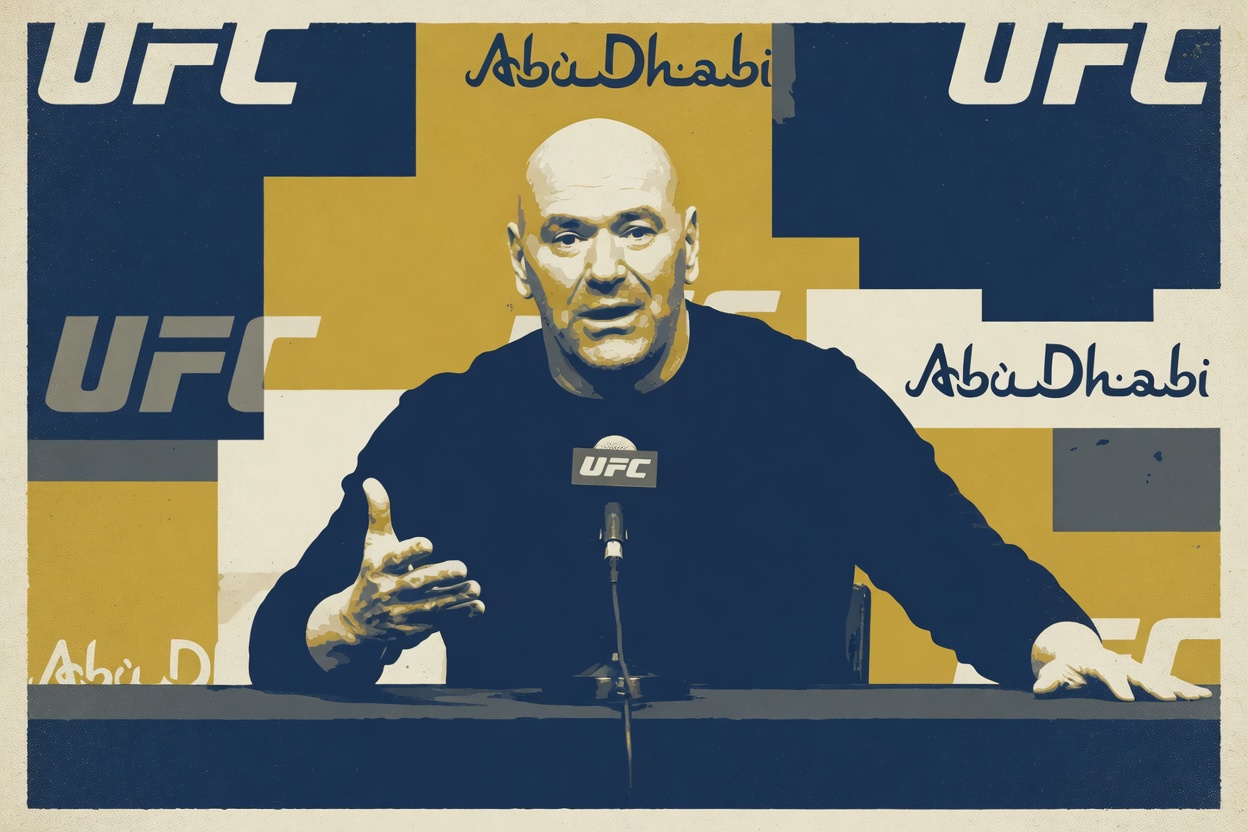
Bisping is on solid ground here. Makhachev is genuinely fighting rarely right now. His last win came over Ian Machado Garry on August 15, 2026, and he has nothing booked, with a return possibly sliding into 2027. Dana White made nearly the same point days ago: "On average, Islam fights like once a year, and he was slated for January and then said, 'I don't want to fight until after Ramadan,'" adding, "You just can't hold up divisions like this. You got to keep moving." The UFC's response was to book an interim welterweight title between Carlos Prates and Michael Morales rather than keep the belt on ice. That is the literal "letting contenders face one another" that Bisping cited. The complaint is real.
Hearing it from Bisping is harder to take. He ran one of the most matchmaking-criticized reigns in UFC middleweight history. After Bisping won the belt, he skipped the contenders lined up behind him and defended against Dan Henderson instead, a 46-year-old ranked 13th in the division, in Bisping's own hometown of Manchester. Henderson dropped him twice and still lost a close unanimous decision. Bisping picked an opponent ranked outside his own top ten, fought him at home, and nearly lost anyway. Picking and choosing who he fights, you could say.
Then Bisping sat. The middleweight title went cold from that October 2016 win over Henderson until he resurfaced at UFC 217 in November 2017, roughly thirteen months later, to face Georges St-Pierre. St-Pierre, a welterweight, got the shot ahead of the No. 1 and No. 3 ranked contenders, Yoel Romero and Jacare Souza. In the meantime the UFC had to build an interim title and let Robert Whittaker and Romero fight for it, because the champion wasn't around. He stalled a division and forced the promotion to let contenders fight each other: the exact sin, beat for beat.
Bisping has a defense: "They're saying I'm ducking contenders, you know, I'm pretty sure I accepted a fight with Yoel and Whittaker in one night. They're the ones who couldn't make it to the Octagon, not me." An injury was a real factor in the interim belt being created, but none of that erases the year he sat waiting on the biggest payday in the room instead of fighting the men who'd earned the shot.
Bisping's choice of target is absurd for another reason. Makhachev, whatever his pace, has not cherry-picked soft bodies. Since winning the lightweight belt he's gone through Charles Oliveira, Volkanovski twice, Dustin Poirier, Renato Moicano, Jack Della Maddalena and Machado Garry. That is the churn of contenders the UFC put in front of him, and he beat it. The slow pace is the charge that sticks. "Picking and choosing" is the one accusation that doesn't.
The activity complaint is fair, and Dana White can make it all day. Coming from the man whose own title reign did exactly what he's describing, it plays like a confession with the wrong name attached.