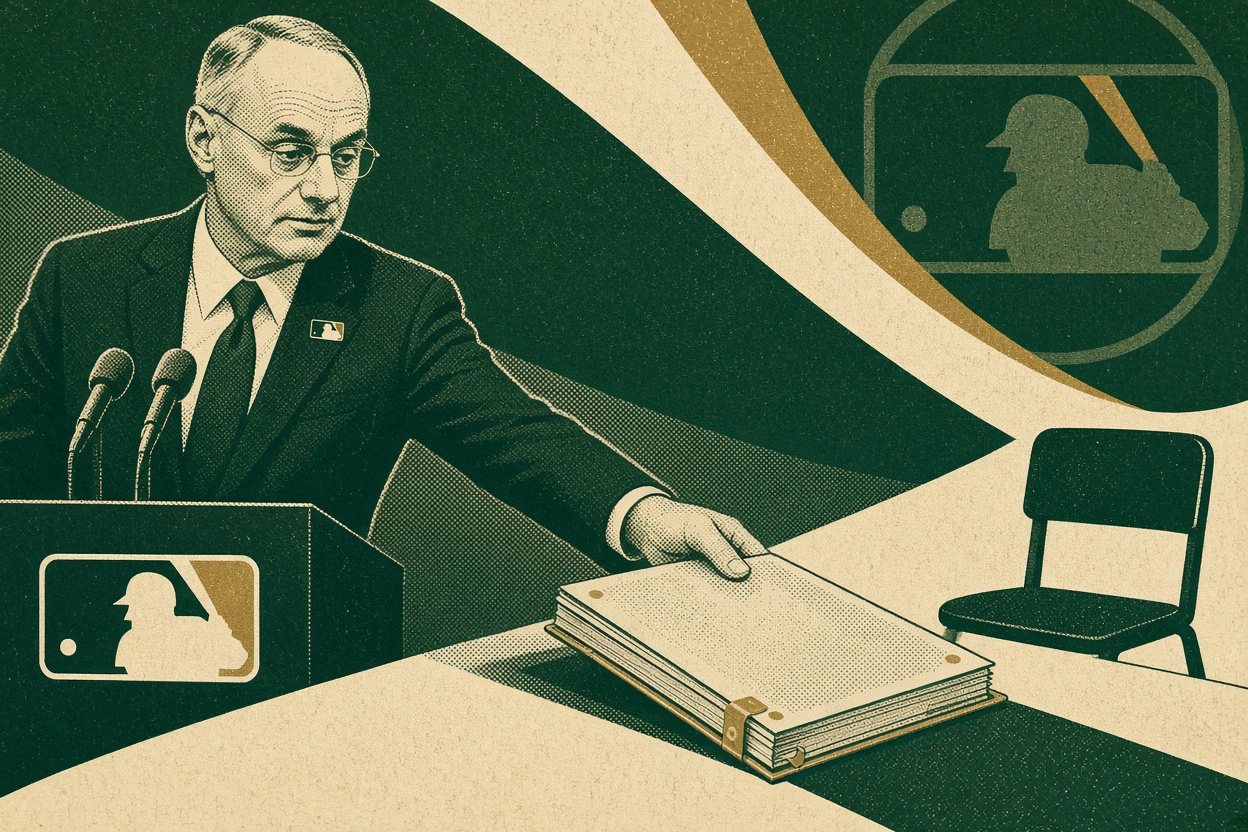
The union's math checks out, but its spin is where this fight gets sold.
On Nov. 3, 2026, with the current collective bargaining agreement set to expire Dec. 1, MLB proposed delaying its salary cap and floor until 2028 and raised both numbers: a cap at $258.2 million and a floor at $180.2 million. That's up from the league's June offer of a $245.3 million cap and a $171.2 million floor. The league moved its own figures upward twice in roughly five months. Whatever you think of a cap in principle, that's a league bidding against itself in public.
The union called the plan an attempt to "blow up the current system and replace it with one designed to line their pockets and increase their franchise values," and said that "despite MLB's proposal to delay implementation to 2028, at its core, the negative impacts of the owners' salary cap remain the same." Then came the familiar bullet points: a "massive reduction in player compensation," a system that "harms the middle class and pits player against player," and the "stripping current competitive advantages for smaller market teams."
Line those claims up against the actual proposal. A floor at $180.2 million forces the game's cheapest owners to spend money they currently refuse to spend. MLB's own listing had a dozen clubs sitting below that floor as of Nov. 3, including the reigning champion Brewers. A spokesperson for the league said the proposal would raise total player compensation in year one above current 2026 projections. You can distrust the league's motives all you want. "Massive reduction in player compensation" is still a hard thing to square with a proposal that bumps the minimum spend and, by the league's own accounting, puts more money into players' pockets up front.
The union counters that players would lose "more than $1 billion over the life of the league's proposal if they agreed to a cap." Maybe. But that's a projection the MLBPA has never walked through number by number, and MLB's figures are projections too, tied to actual 2027 revenue nobody has yet. Both sides are guessing at future dollars and presenting the guess as a verdict. What the union hasn't done, proposal after proposal, is put its own cap-and-floor counter on the table. It rejects the premise, then reaches for the same catastrophizing language no matter how far the league's numbers move.
The weakest piece of the pitch is the suggestion that this wipes out guaranteed contracts. MLB's proposal leaves existing contracts intact; the union's real objection concerns an escrow mechanism that could claw back money if players' share of revenue runs high, a system other leagues already use. That's worth arguing over. Framing it as MLB tearing up Juan Soto's contract is what makes the union's whole case easier to dismiss.
Players have a real reason to dig in this hard. A floor can lift the bottom while a cap quietly shaves the top, and the top is where the union's most powerful members, and their agents, live. If the real fight is over protecting the ceiling for superstars, say that. It's an honest position. Saying "this harms the middle class" dodges it, and nobody has been able to name which competitive advantage small-market teams supposedly lose when they're forced to spend more.
None of this makes the owners the good guys. The league is running its own p.r. operation, waving year-one gains around while a hard cap, once installed, mechanically limits how fast player pay can grow no matter how much money baseball prints. Neither side is a reliable narrator of its own proposal.
The union's public case, as of early November 2026, is overstated. That falls on Bruce Meyer, unanimously picked to run the union after Tony Clark resigned mid-scandal, the same Clark who was calling a cap "institutionalized collusion" before any numbers even existed. Meyer needed to look tough fast, and he chose a slogan over a rebuttal. The conclusion was written before the evidence showed up, and he's been reading from it ever since.