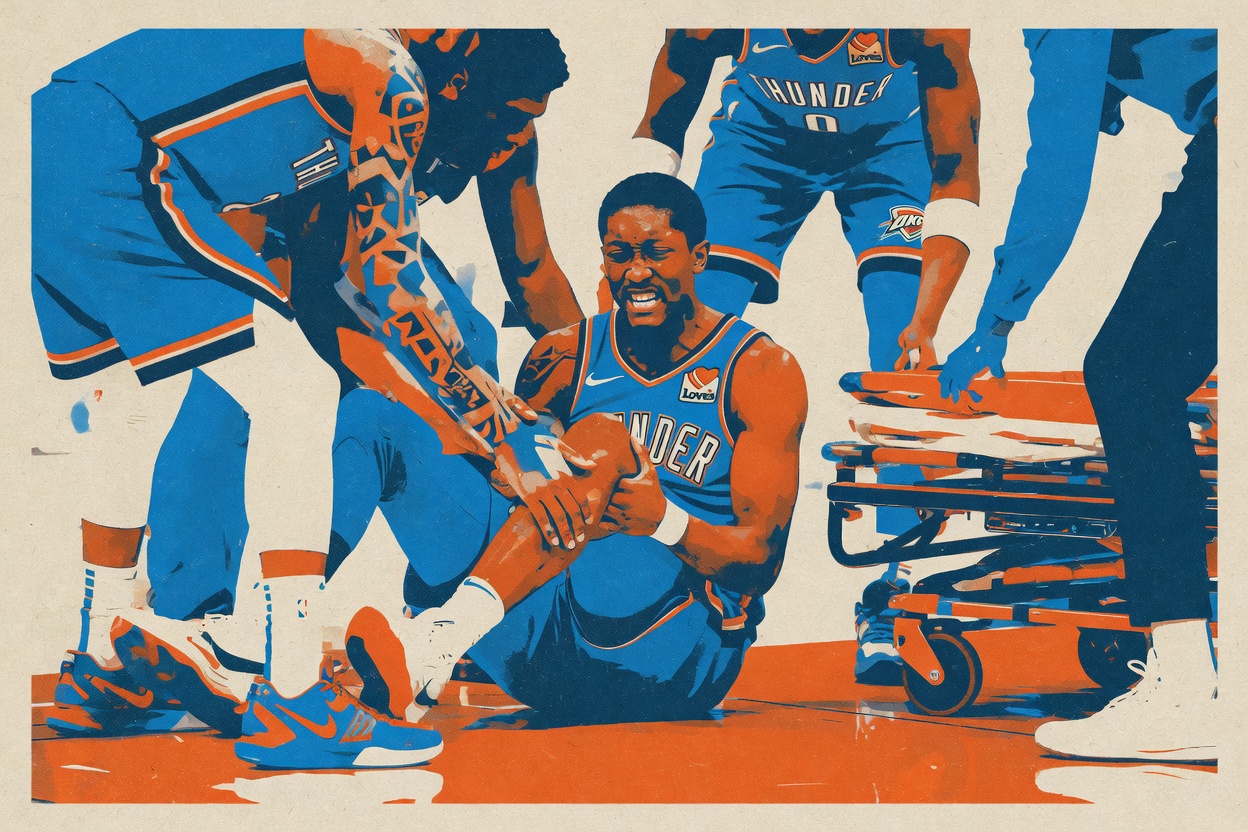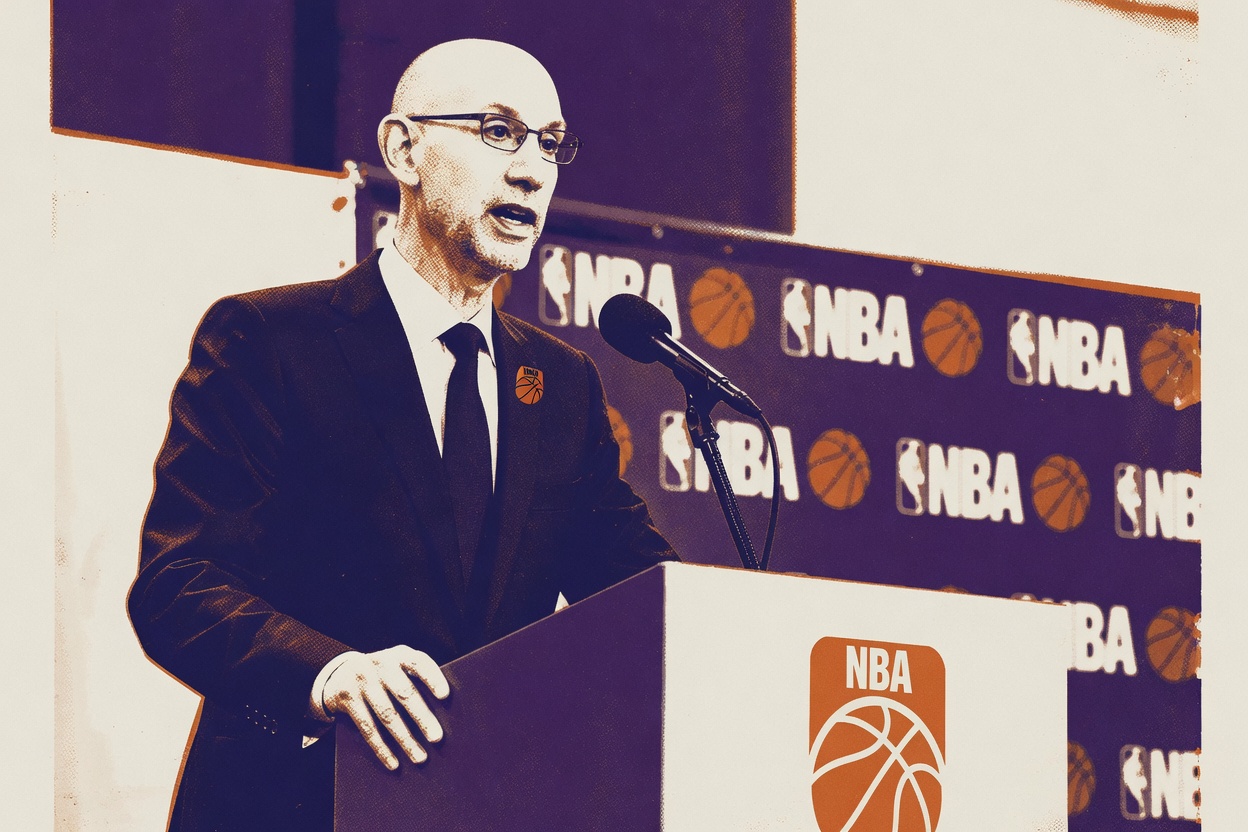
The NBA's answer to a season drowning in gambling indictments is to sign up two more gambling companies. That's the whole move. On Monday the league named Kalshi and Polymarket its "Preferred Prediction Market Exchange," gave them rights to use NBA logos and intellectual property, routed official league data to them through Sportradar, and signed a memorandum of understanding with the Commodity Futures Trading Commission to bless the arrangement. No financial terms were disclosed. The branding was.
The timing is indecent. Terry Rozier has pleaded not guilty to sports bribery and honest services wire fraud conspiracy; prosecutors allege he took a $100,000 bribe to tip bettors that he planned to leave a game early. Chauncey Billups has pleaded not guilty to wire fraud conspiracy and money laundering conspiracy, and faces up to 20 years if convicted. Both are on leave, both reportedly headed to trial in 2027. Damon Jones has already pleaded guilty to selling inside information he got through team access. That's the backdrop, and the league's response was to put out a louder partnership announcement.
This league has been living with gambling scandals for a while now. Jontay Porter, a former player, was banned for life in 2024 for sharing confidential information, limiting his own participation in games, and betting on the NBA. Before him there was Tim Donaghy, the referee who pleaded guilty to two felonies for betting on games he officiated and was sentenced to fifteen months in federal prison in 2008. Every one of those cases runs through the same kind of exposure: granular, prop-style information, who plays, who sits, what happens inside a single game. That's exactly the surface area prediction markets thrive on.
The league's own words give it away. "If you're going to be betting on our games or trading on our games or playing fantasy around our games, it's better for it to be regulated than unregulated," said Scott Kaufman-Ross, the NBA's head of media distribution and partnerships. "And clearly, our fans have interest in this activity. So, we're in a better position to protect the integrity of our games in a regulated market where there's transparency." It's a revenue and engagement pitch, and the integrity talk is marketing language.
There's one point worth giving the league, and it's the strongest thing it has going for it. Kalshi and Polymarket were already running markets on NBA games on their own, with no data-sharing arrangement and no duty to flag suspicious trading to the league. A few weeks earlier, the NBA had worked with its sportsbook partners to pull certain prop parlays, the bets most likely to feed the next scandal, and that cleanup never touched the prediction markets at all. A contract gives the league leverage it didn't have before: limits on which markets can run, a ban on league and team personnel trading, information-sharing on investigations. Doing nothing was worse.
But a non-binding MOU and a promise to police your own employees fall well short of real oversight. The league had a harder, more credible option sitting right there: pull back from prop-heavy, self-reported integrity models until the federal trials of its own coach and player wrap up, and keep the NBA logo off the next frontier of betting while the last one is still in court. Instead it put out a press release. The integrity-protection label doesn't fit: it landed just weeks after the league was still scrubbing props off its own sportsbooks, the exact bets that fueled the scandal.
There's a side detail that doesn't help. Donald Trump Jr. sits on Polymarket's advisory board, with an investment from 1789 Capital, the venture firm where he's a partner, and he's also tied to rival Kalshi as an advisor. No reporting connects any of that to this specific NBA deal, but the league walked into an industry carrying that baggage with its eyes open.
The league office under Adam Silver owns this decision. These are the people who decided being the official prediction-market partner mattered more than keeping distance from an industry that's already cost the NBA a coach and a player to federal charges. They managed their gambling liability by expanding their gambling footprint. They're selling off another piece of the game.