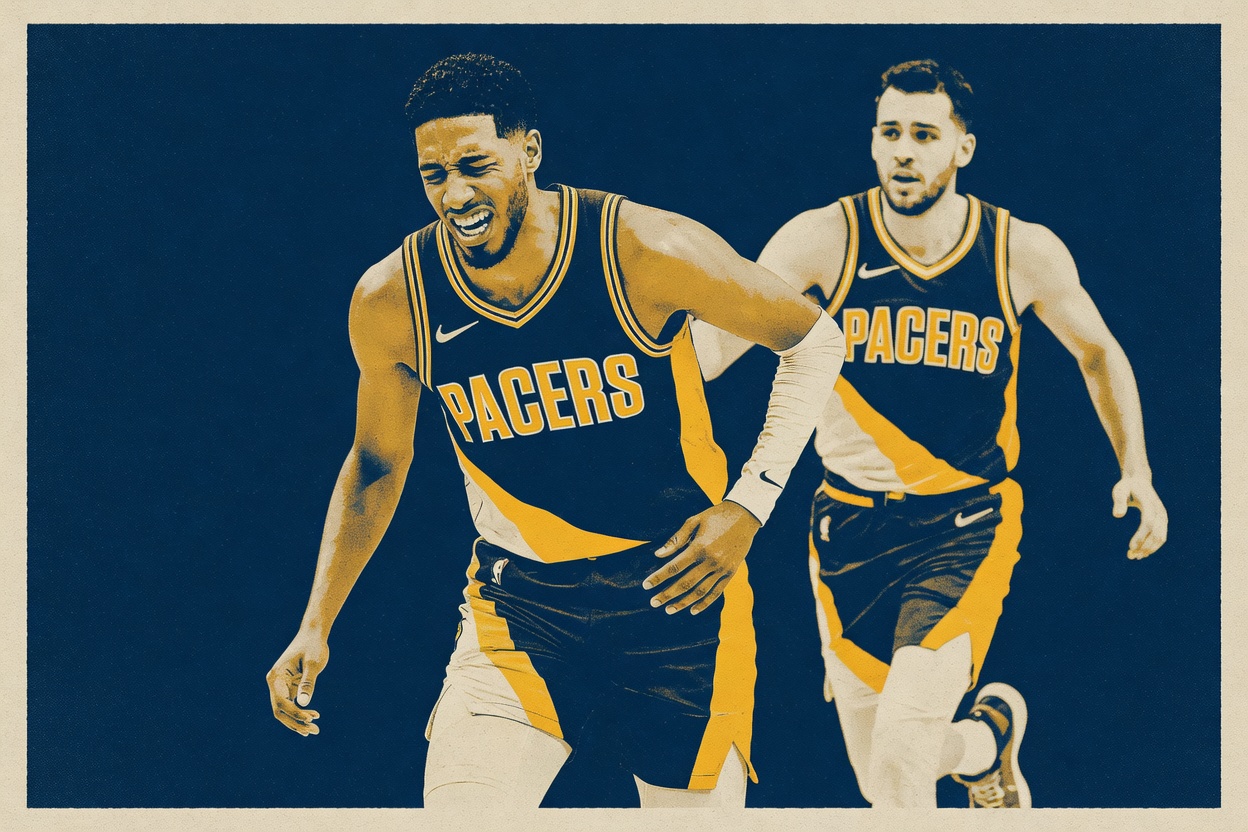
Tyrese Haliburton has a left hamstring strain and will miss time, and the Pacers and their doctors are still working out exactly how long. He's the sixth star in roughly a week to go down. Anthony Edwards needs a knee procedure. Jalen Williams fractured his fibula and dislocated his ankle. Paolo Banchero is out indefinitely with an ankle sprain. Kawhi Leonard has knee swelling. Jalen Duren pulled a hamstring. Fans are calling it a curse, a season ruined before November. It's the predictable price of the way the modern NBA runs its best athletes into the ground and calls it business as usual.
Start with the man in today's headline. Haliburton's had this hamstring scare before. Back in January 2024 the same muscle cost him most of a stretch of games, then flared up again in the playoffs and knocked him out of the final two games of the Eastern Conference finals against Boston. He only returned this fall after missing the entire previous season recovering from a torn right Achilles, the one he suffered in Game 7 of the 2025 Finals. Different leg, different tendon, same lesson nobody in charge seems interested in learning: a franchise cornerstone kept playing through warning signs until his body made the decision for him.
Look at the rest of the list with clear eyes. Edwards has a history of knee trouble that lingered for the better part of a year before anyone let him properly fix it. Duren went down just after finally landing the five-year, $200 million deal he had to stand his ground all offseason to get. They're soft-tissue breakdowns and worn-down joints, the kind of injury that builds quietly while a staff keeps saying "we'll manage it," right up until a hamstring or a knee says otherwise. It's a choice teams keep making, over and over, because there's always one more game, one more reason not to sit a star down.
The obvious fix everyone shouts is a shorter season, and that's going nowhere. Fewer games means less money, and the players' union isn't about to sign off on a pay cut just because it's framed as health policy. The league and the union both profit from the schedule exactly as it is. So the grind stays. Fine, then own the consequences instead of acting shocked by them. You can't build 82 games plus a brutal playoff run on top of athletes who are more explosive than any generation before them, hand them basically the same recovery infrastructure, and then act surprised when half a dozen of them crumble in the opening week.
Calling the season ruined in October is just drama for attention. Every team on this list has months to get bodies back and figure out who they are. Stars have returned from worse at this exact point on the calendar. Pacers fans, who watched Indiana crater to 19-63 the last time they lost Haliburton for a year, have every right to feel sick about the timing, but a hamstring strain in week one isn't a death sentence for anything.
Calling this random variance lets the people holding the clipboards off the hook. The workload is a decision. So is pushing a player through small injuries until they turn catastrophic. Six stars going down in a week is front offices and a league office cashing the same check every year and refusing to pay for the damage.