Every so often the NHL tells you exactly what it values, and this week in Munich, Bill Daly did it without breaking a sweat.
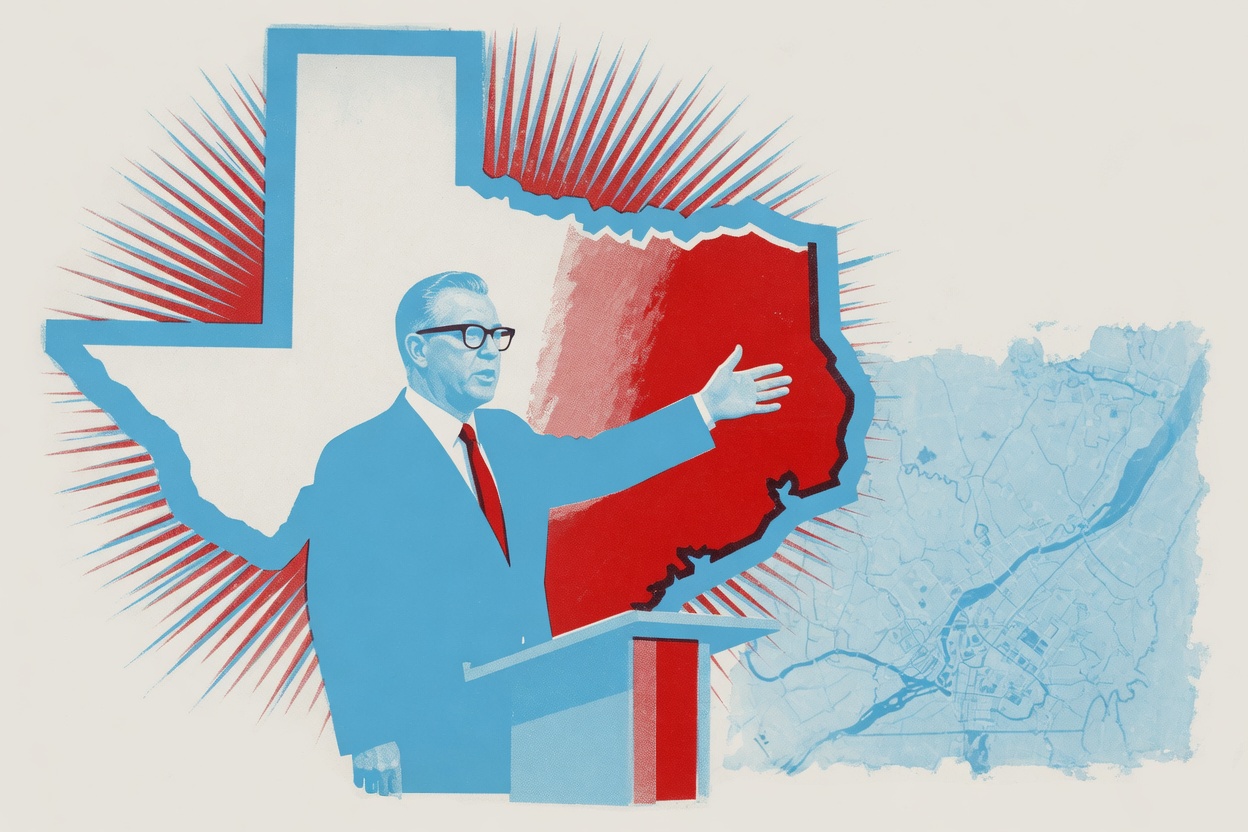
The deputy commissioner spent the league's European Media Tour sketching out a timeline for a 33rd franchise, and the picture is unusually clear for a deal that isn't done. Daly said the league has "agreed on the framework of a transaction, and we're all working to get toward that." He put a date on it too: definitive agreements "as early as December this year," a closing in early 2029, and a possible debut "as early as the 2029-30 season." The market is Houston, Daly said, with Austin as the fallback. The buyer is Houston-based billionaire Dan Friedkin, whose net worth Forbes pegs at $6.4 billion and who already holds a controlling stake in Everton and Serie A's AS Roma.
What the NHL has lined up in Texas, then, is a framework, a target date, and a single identified owner ready to put up roughly $3.5 billion. That figure, announced out of the June Board of Governors meeting, covers the expansion fee plus the cost of building an arena. It's almost certainly a record on a total-investment basis, and it dwarfs what came before. Vegas paid a $500 million expansion fee before starting play in 2017. Seattle paid $650 million a few years later. The pure fee for Texas hasn't been made public, but league sources told Sportico last year that any new NHL fee would run at least $2 billion, with another billion for a building. The escalator has gone vertical.
Set that against what Daly said about Canada, because this is where the priorities stop being subtle.
Asked directly about Canadian expansion, Daly didn't reach for diplomacy. "I'd say the interest in terms of owning and operating a franchise in Canada is less vibrant than it is for some markets in the United States," he said. "With respect to other expansion interests in Canada, kind of bona fide interest from real cities, is fairly low. I think we're in most of the big cities in Canada already."
Then there's Quebec City, the market that has become shorthand for hockey-mad and snubbed. Daly was almost kind about it. He called the Centre Videotron, an 18,259-seat building, "first-rate." He allowed there are "a lot of positives about Quebec City and potentially adding a franchise there." Then he got to the real issue: "Right now, I'm not sure our vision is necessarily shared by anybody else." The problem, per Daly, is no ownership group willing to pay the price or operate a team long term. He said essentially the same thing on a podcast back in late July, so this isn't a fresh reaction. It's the house position, and it has been for over a year.
My problem with that framing is simple. The league keeps describing Quebec as a chicken-and-egg problem it would love to solve if only a buyer materialized. Meanwhile, when a buyer did materialize in Texas, the NHL didn't wait for the market to prove itself. It went and found the arena question, the ownership question, and the timeline question, and answered all three at once because the money was there. The difference between "we'd take Quebec if someone would buy it" and "we've agreed on a framework with the Friedkins" isn't fan passion or building quality. It's which market a billionaire wanted to write a check for.
And this isn't the first time. Quebec City submitted a formal bid in 2015, led by Quebecor's Pierre Karl Peladeau, and the NHL passed it over for Vegas, citing a desire to balance the two conferences. It got passed again in 2018 when Seattle got the nod. Twice, the league looked at a proven Canadian hockey city with a real building and chose a U.S. sunbelt market instead. A Texas team would make it a pattern with a very expensive third data point.
I'm not arguing Houston can't work, or that Friedkin isn't a serious operator. A market that size with an owner who runs clubs on two continents is a legitimate bet. And the league has a point here too: you can't force a private buyer to plant money in a city he doesn't want. If nobody wants to own a team in Quebec City at today's prices, the NHL can't manufacture one.
But "nobody wants to" means something specific once the asking price for entry climbs into the billions. At those numbers, the only buyers left are the ones chasing untapped growth and new television households, and that math points south, not north. The northern markets are already "in," as Daly put it, which the league treats as a reason to stop rather than a base to protect. The fans who have carried this sport through every lean decade get told, essentially, that they're already served. The new dollars get the framework and the December deadline.
Worth keeping in perspective: none of this is final. A team hasn't been approved, the Board of Governors still has to vote, and some league insiders think 2030-31 is the more realistic debut than the 2029-30 Daly floated. Daly himself hedged with "as early as," and has said elsewhere there's "a long way between here and there," with no ground broken yet. Austin isn't buried either, despite Houston's priority tag.
Nothing is signed. But the direction is set. When the check is big enough, the NHL can move fast, find the owner, and pick the arena. When the check would have to come from a market it already counts as loyal, it suddenly rediscovers patience. Quebec City has the rink and the crowd. What it doesn't have is a sunbelt-sized pile of new cash attached, and in this expansion, that's the only currency the league seems to be counting.