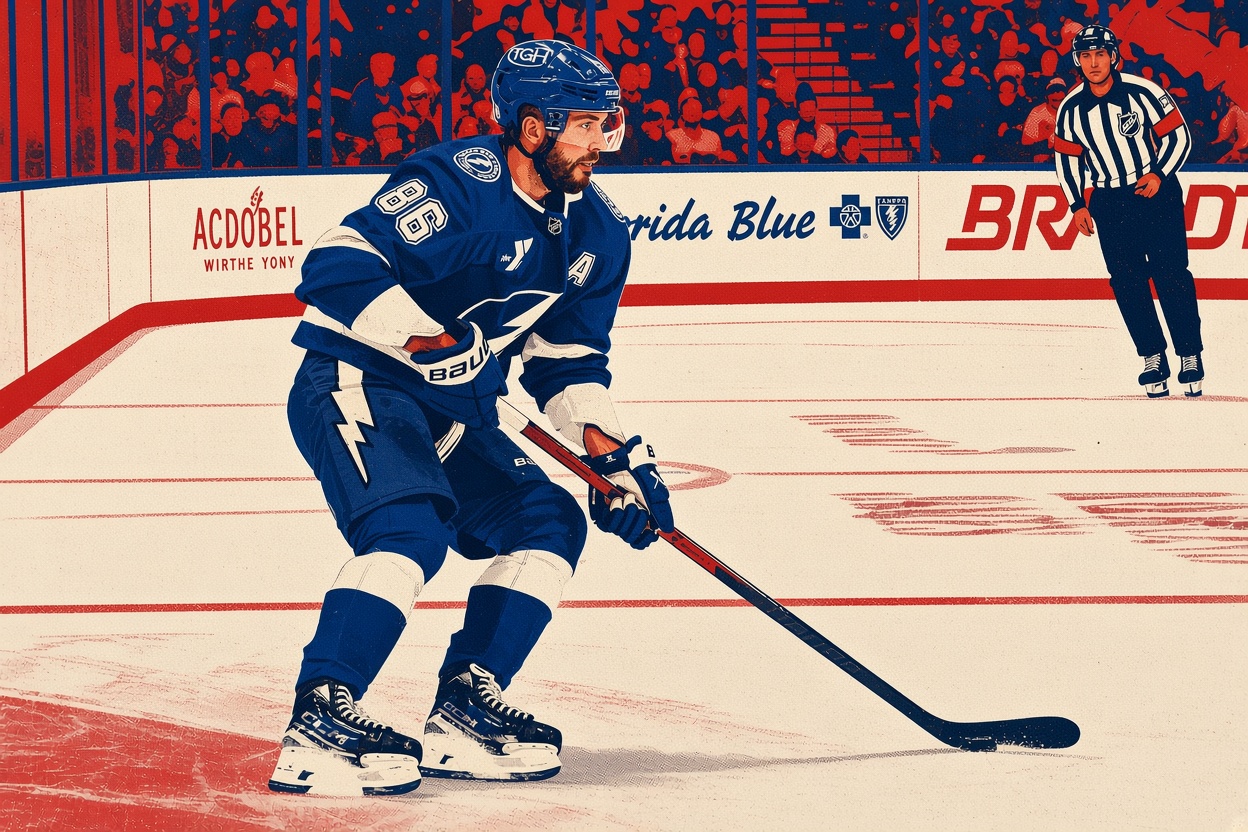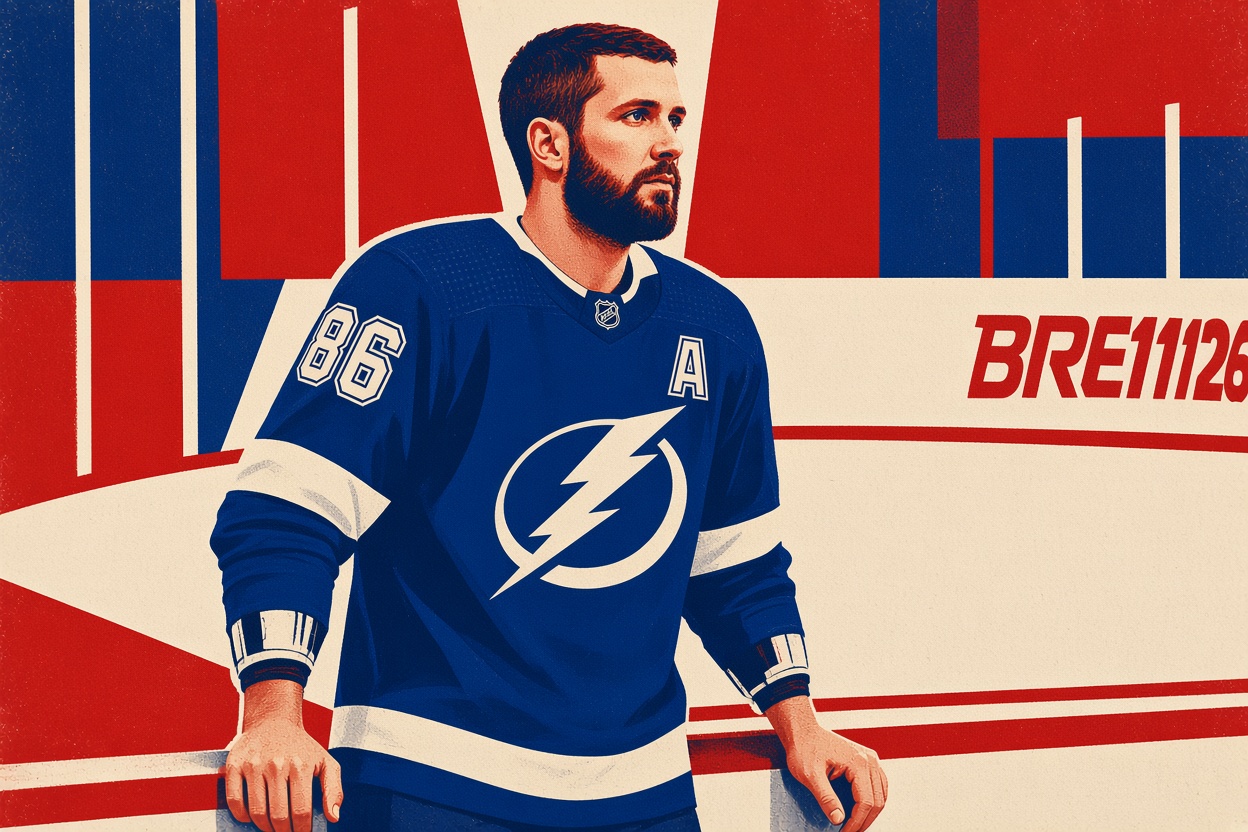
If Tampa Bay ever trades Nikita Kucherov, a three-team deal involving Detroit and Dylan Larkin doesn't make much sense right now. The whole thing is a Jenga tower stacked on one anonymous quote. Nobody with real authority to make a trade has offered a realistic three-team return.
Start with what actually happened, since it's getting buried under everyone's dream scenarios. Elliotte Friedman broke it Friday night: Kucherov told the Lightning, and his teammates on the flight to Nashville, that he won't re-sign and wants to be traded. That's real, and it's huge. He's in the final year of an eight-year, $76 million deal and set to become an unrestricted free agent after this season. Julien BriseBois answered the only way a competent GM answers in the opening 48 hours of a saga like this: "We unequivocally have no intention of trading Nikita." His agent Dan Milstein gave Pierre LeBrun nothing, saying "Nikita has spoken to all the parties involved and there's nothing else to add at this time."
That's the sourced story. From there it goes off the rails. In the same news cycle, LeBrun's Athletic piece quoted an anonymous agent saying the conditions for a three- or four-team blockbuster around Kucherov, Larkin and Simon Edvinsson have "never been more evident." One sentence, one unnamed source, talking generally about the market. From that single brick, an entire content machine built a dozen contradictory deals: Montreal sends a protected first and a second, Edmonton ships out Matthew Savoie and a pile of picks, and so on. None of them carry a Tampa Bay source or a reported ask. They're guesses presented as trade proposals.
Kucherov and Larkin generated the real smoke. Both walked into their employer's office and said trade me, and that's newsworthy and destabilizing for two franchises. The "three-team trade" framing belongs to the speculation industry that took a generic comment about market conditions and spun it into fully furnished hypothetical deals. Even LeBrun was careful: he called his own Larkin-plus-Edvinsson-for-Kucherov-then-flip idea a guess, something he was wondering about out loud.
Now the math, and this is where the symmetry falls apart. The cap fit is tidy: Larkin's $8.7 million hit sits just $800,000 below Kucherov's $9.5 million. Term is the real problem, and it's a wall. Larkin is signed through 2031. Kucherov is a rental about to hit free agency, reportedly after a six-year extension worth around $20 million a year. Any team giving up real assets for a half-season of Kucherov is betting it can immediately sign a winger in his thirties to a monster second contract, or it's renting two playoff runs at most. That's a completely different trade than the Detroit-Minnesota talks over Larkin, which have dragged on for months precisely because Larkin comes with years of control. Bundling the two just because both players are unhappy and both are good at hockey is lazy math.
Given that Kucherov is a rental with limited leverage, a package built around Larkin and Edvinsson would be a strong return for Tampa, if the Lightning ever decided to move him. They haven't, and BriseBois didn't hedge a syllable. LeBrun himself says that if Tampa's stance changes, it's more likely to happen near the March 1 deadline than anytime soon. Minnesota's long courtship of Larkin has already stalled, with reporting that Minnesota itself views Detroit's asking price as unrealistic. Stacking a second superstar onto a negotiation that's already jammed just makes it slower: it requires three front offices to agree on value at once while Larkin sits unpaid and grows angrier by the day.
This is a good story and a bad trade. The three-team framework is irresistible debate fuel because it lets everyone spend picks and prospects that cost them nothing. But as of today, November 1, 2026, there's no evidence that Tampa Bay, Detroit and a third club are talking to one another about anything. One team said no. An unnamed agent described the weather, and a pile of trade machines mistook that for sourcing. If Kucherov actually moves, it'll be a clean two-team deal closer to the deadline, and the internet will have to throw out every elaborate three-team bow it spent November tying.