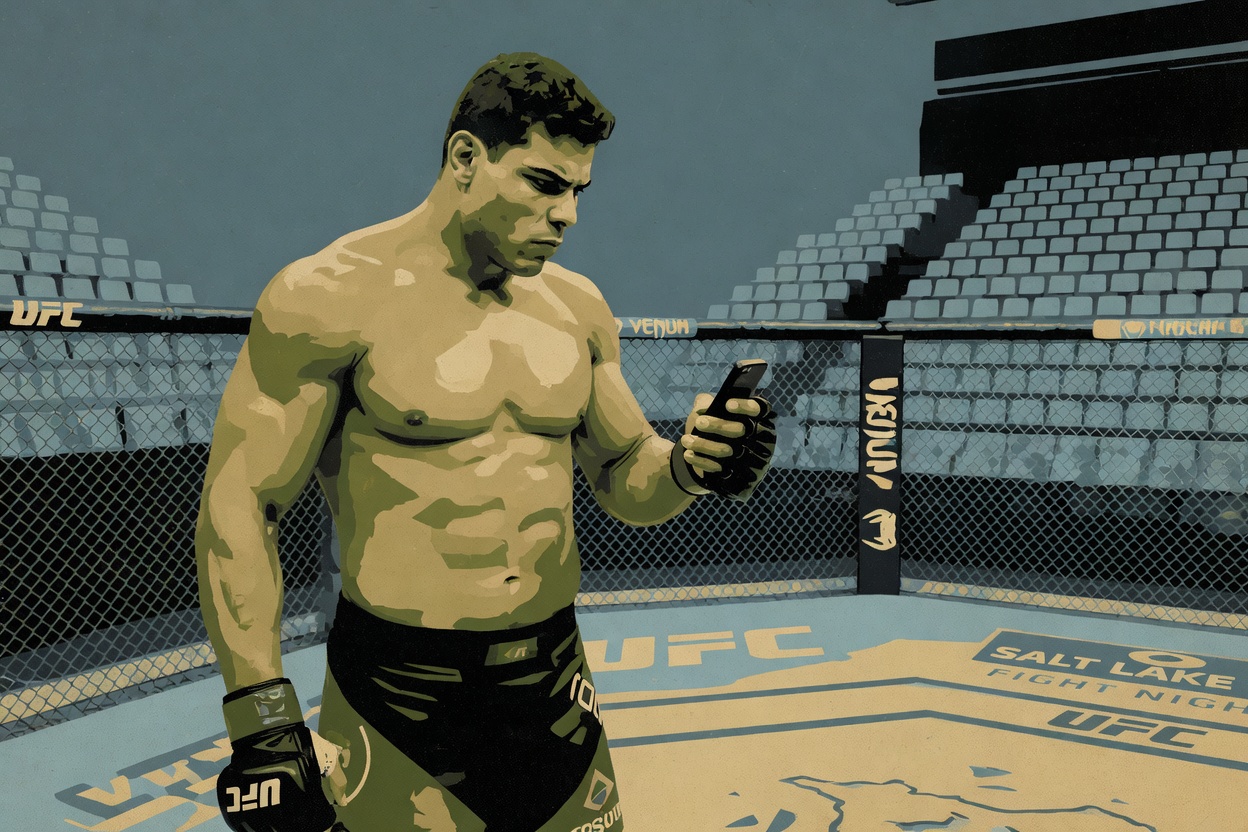
Forget the deleted tweet, the hunt for who actually typed it, and the chatter about whether a chatbot wrote it. The real question is whether Paulo Costa is right about the state of the UFC's product. He is.
Before Costa typed or dictated a single word, two separate outlets looked at UFC 332 and reached the same verdict on their own. One opinion piece called the Salt Lake City card "devoid of star power and one of the least appealing in recent memory," and pointed out that of the ten fighters on the main card, only four were ranked. A separate statistical breakdown, built from hard numbers, found the event had three top-10 fighters and no champion, the second-emptiest numbered card since 2016. That breakdown also confirmed the line that spread everywhere: zero ranked fighters outside the main and co-main events.
That's the box score. You don't need Costa's exact wording, and you don't need to work out whether ChatGPT helped a Brazilian fighter turn his Portuguese into English, to see the complaint is grounded in something real. Whether a human or a translation tool shaped the sentences, the arithmetic underneath doesn't change.
The responsibility sits with UFC matchmaking and leadership. They're the ones who let a planned title fight collapse into a vacant-belt scramble on short notice after Valentina Shevchenko's injury. They're the ones charging pay-per-view prices for a numbered flagship while the ranked depth gets buried on undercards nobody buys the event to see. When the promotion's own flagship fails its own standard, the problem is matchmaking.
The names on that card were thin, but the violence was real. UFC 332 set promotional records: eleven knockouts in a single event, nine of them in the first round. Natália Silva also beat Wang Cong by unanimous decision to take the vacant women's flyweight title. The card overdelivered on action. It still failed on the thing a PPV is supposed to sell you: stakes, rankings, fights that mean something. A great night of fights just means the matchmakers got lucky.
And about Costa himself. He's an unreliable narrator about almost everything in his own career. He's asked the UFC to release him, a request the company shut down, and the timing deserves the side-eye everyone's giving it: his last two fights were both wins, a decision over Roman Kopylov and a knockout of Azamat Murzakanov at UFC 327 back in April 2026. He hasn't fought since. A man who hasn't been in the cage in five or six months demanding out the moment it's inconvenient invites eye-rolls. Back in April he was already calling his own ranking "embarrassing." The grievance has been running a while.
Mock the delivery, mock the release demand. None of that touches the core point. A fighter can be insufferable and correct in the same breath. On this specific gripe, the receipts back him.
The UFC would love for this to be a story about Paulo Costa being Paulo Costa, or about whether a chatbot ghostwrote his complaints. Two writers counted the card and reached the same conclusion he did, and the thing they were counting was built by the promotion. Costa didn't make UFC 332 thin. The people selling it to you did.