The scariest new allegation in the Terry Rozier case has nothing to do with Rozier.
Federal prosecutors in the Eastern District of New York filed a motion Tuesday asking a judge to revoke the bail of Deniro Laster, Rozier's childhood friend and co-defendant, and hold him in custody until trial. They didn't mince words: Laster has "repeatedly and flagrantly violated the conditions of his release." Their filing lays out why they think the only fix is a jail cell.
The allegations, still just allegations, break into two ugly categories. First, contact. Prosecutors say Laster reached out to co-defendants directly and through intermediaries, violating his bond. One detailed account of the filing includes a call to another defendant around December 2025 in which Laster allegedly said they "would be well positioned to defend the charges against them if they did not cooperate with law enforcement." Call it a request or call it a warning. Prosecutors read it as the latter.
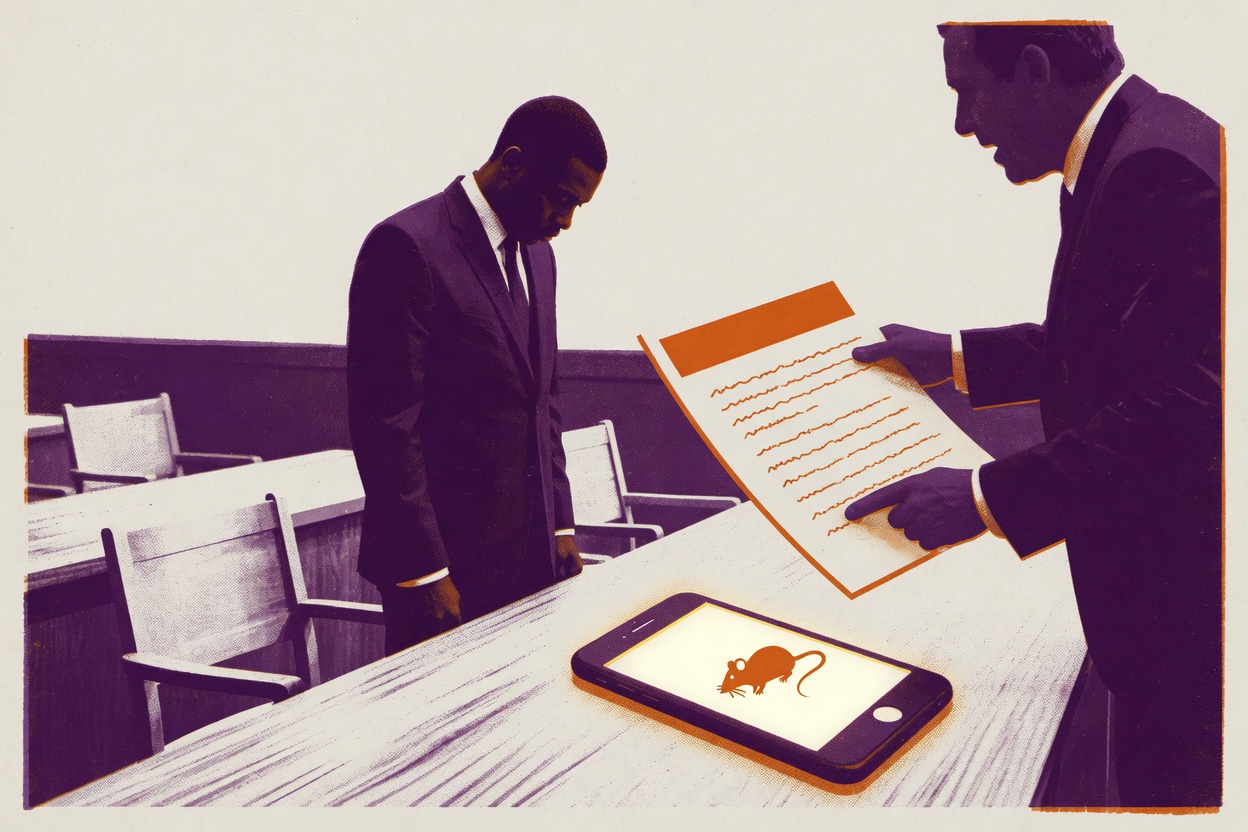
Second, the part that reads like a script. Prosecutors allege Instagram accounts tied to Laster posted rat emojis at least twice, and argue his reputation as "someone who had a gun collection and who typically carried a gun" is why witnesses would take those posts as threats. The filing calls the online needling "calculated to intimidate and imply the threat of violence." Their bottom line, quoted the same way across multiple outlets: revoking Laster's bail is "the only means of ensuring that he will comply with the Court's orders, refrain from further criminal conduct, preserve the integrity of these proceedings, and protect witnesses or perceived witnesses."
No judge has ruled on any of it. Laster has pleaded not guilty and hasn't been convicted of tampering or anything else in this case. Keep that in mind.
This is the moment a gambling story stops being a gambling story.
Every outlet that reviewed the filing says the same thing: prosecutors did not accuse Rozier of taking part in the alleged witness intimidation. The filing notes both men are identified as members of a group called GMB, but the tampering conduct is pinned on Laster, not Rozier. So if your instinct is "well, this only matters if Rozier goes down," you have it backwards.
Obstruction cases are how scandals metastasize. The underlying betting charge is complicated and contested, headed for a trial set for February 8, 2027. Rozier's lawyers have their own fight, separately asking a judge to dismiss the charges against him. Money laundering and wire fraud conspiracy charges get argued for months and can end in acquittal, plea, or dismissal. Nobody knows how that lands.
Alleged witness tampering is different. It doesn't care whether the original bet was a crime. It's a fresh wound on top of the old one, and it can outlive the case that spawned it. A gambling probe becomes an intimidation probe becomes a question about whether anyone can testify safely. The original point spread stops mattering. The threat is the story now.
That's why the league office should be watching this development, not filing it under "Rozier's problem." Remember how this started: the indictment naming Rozier, Trail Blazers coach Chauncey Billups and others was unsealed on October 23, 2025, part of a Justice Department sweep that charged 34 people across two related cases, with six defendants in the NBA betting case. Adam Silver came out the next day and said he was "deeply disturbed," that he "had a pit in my stomach." He put Rozier and Billups on immediate leave while the league reviewed the federal charges. The House Committee on Commerce sent Silver a letter asking for a briefing. Congress is already leaning on the door.
Picture the optics if a co-defendant in the NBA's marquee betting case is jailed pretrial for allegedly threatening witnesses. That goes straight at whether the public can trust the integrity of the games, the exact anxiety Silver named in the first place. The commissioner didn't ban Jontay Porter in 2024 because a court told him to. He did it as a league sanction, because betting integrity is treated as an existential issue inside the building. An intimidation allegation goes right at that same nerve.
And it does so no matter what happens to Rozier personally. Silver has pointed out that the NBA's own 2023 review of the March 2023 Hornets game at the center of the case found "aberrational betting" but concluded there was insufficient evidence to act at the time. The league has already lived through the version where the numbers looked strange and the case wasn't there. It hasn't faced the version where the process itself gets allegedly poisoned.
Rozier's basketball life is already in limbo. The Heat waived him around early June 2026, and an arbitrator ruled he must forfeit most of his $26.6 million salary for the 2025-26 season because his release conditions put him in breach of his contract. His path back to the NBA is unresolved. That's the human drama people want to argue about.
Argue it if you want. But the tampering motion is the part that should keep the league office up at night, and it barely mentions the star. When the peripheral figures start allegedly leaning on witnesses, the case stops being about one player and one game. It's about whether the whole thing holds together. The NBA doesn't get to sit this one out just because Rozier's name isn't on it.