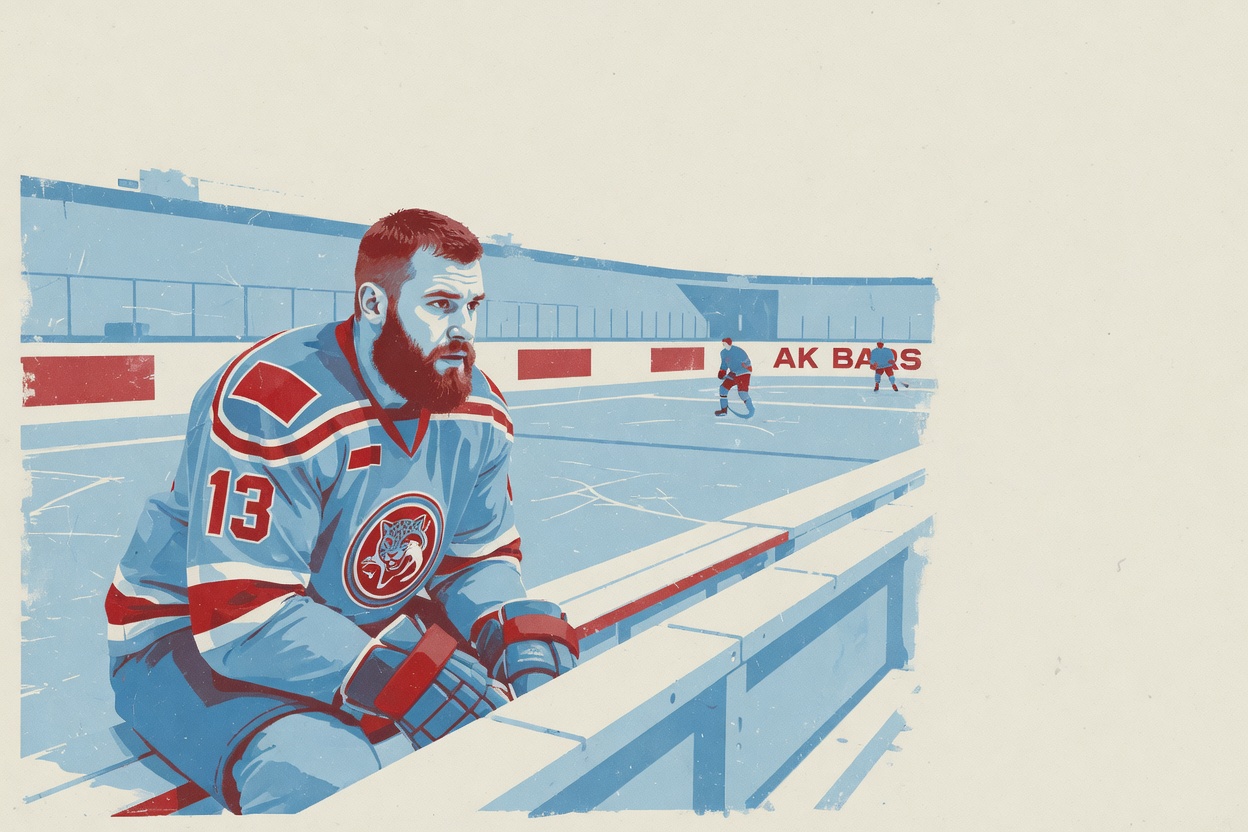
There's a version of this Red Wings offseason that reads like patience. Steve Yzerman stepped back from his role as executive vice president and general manager on July 15 and slid into a senior advisor job under governor and CEO Chris Ilitch. Ilitch hired a search firm to find the next head of hockey operations. Shawn Horcoff, the assistant general manager, took over the day-to-day. Detroit is the only NHL club currently hunting for a GM, so nobody's forced to rush.
Then you read the fine print, and the patience starts to look like paralysis.
Horcoff runs the building day to day, but he can't make trades. That's the catch. You can hand someone the schedule, the roster meetings, the prospect calls in Grand Rapids, and it still adds up to a caretaker job once you take away the one lever that actually changes a team's direction. This is my read, not something the team has said outright: Detroit hasn't even used the words "interim general manager" in its own release. That phrase comes from people around the league. What ownership actually built is a placeholder with a nice office and a locked drawer.
It matters because Larkin asked out. Dylan Larkin requested a trade back in June, and by early August there was still no sign Detroit was close to honoring it. Yzerman, before he stepped back, wouldn't guarantee the request would be granted. Fine. But now the person running the room can't grant it either. The Larkin trade is on hold because the interim GM has no final say, about as bluntly as it's been put anywhere. Larkin carries an $8.7 million cap hit on the eight-year, $69.6 million deal he signed in 2023, running through 2030-31. He's coming off a season of 34 goals and 67 points and turned 30 in late July. He reportedly prefers Minnesota, Vegas or Florida, with Dallas floated as well. Detroit, according to Helene St. James, wants NHL players who help right now in any deal, not a pile of picks and prospects.
There's a timing problem stacked on top of the structural one. Training camp opens September 17. The season starts October 2. Sorting a franchise-cornerstone trade like Larkin's takes conversations, leverage, competing offers, and a decision-maker who can say yes. Detroit has a decision-maker who isn't allowed to say yes. A star who wants out and a front office that can't move him structurally is not a stable way to walk into a locker room in September.
Larkin is the loudest example, but he's not the only clock ticking.
Alex DeBrincat led the team in scoring last season with 41 goals and enters the final year of the four-year, $31.5 million deal ($7.8 million AAV) he signed in 2023. He's said the right things about Detroit, that he loves it there, while also noting the two sides are "still a little bit far away from even having those (contract) conversations." It's been suggested Detroit won't trade him this summer, though that's analysis, not a confirmed position. Either way, extension talks with a top scorer are exactly the kind of thing a permanent GM negotiates and a caretaker can't credibly start.
Then there's Simon Edvinsson, a restricted free agent linked to a big long-term extension that isn't done. Detroit has a history of letting these stretch deep into the offseason, and the next GM inherits the delicate job of paying Edvinsson without blowing up the scale set by Moritz Seider. That's a decision about the blue line, and it's sitting in the same holding pattern.
Underneath all of it is a losing streak with no modern parallel in Detroit. The Red Wings finished 41-31-10 for 92 points, then lost eight of their final ten and posted a minus-17 goal differential. They've missed the playoffs ten straight seasons, the worst stretch in franchise history and the longest by any Original Six team. This isn't an organization with room to burn a summer figuring out its org chart.
I'll give ownership this much: the direction is coherent on paper. The search is reportedly aimed at an analytics-driven executive, the hockey version of the Scott Harris hire that brought a Giants front-office mind to run the Tigers' baseball operations in September 2022. That template implies patience by design, because the candidates worth waiting for aren't sitting by the phone. There's an argument, made well elsewhere, that Detroit simply started this search too late and is now paying for it. I don't think the Horcoff setup contradicts that so much as confirms it: this is what running late looks like once camp is bearing down.
Horcoff himself isn't the problem; ownership just didn't let him be one. He played fifteen years in the NHL, captained for three, and has run the AHL Griffins since 2022, handling contracts, player movement and development. He's qualified to be more than a seat-warmer.
Giving a man authority over everything except the decisions that matter tells you Ilitch wants continuity of paperwork while he shops for the person who'll actually decide. That's a defensible instinct if the roster were quiet, but Detroit's roster isn't. It has Larkin asking out, a leading scorer in a walk year, and a young defenseman waiting on a long-term deal, all at once, with a locked-drawer GM and a camp date closing in. The luxury of not rushing only exists if nothing is on fire. Something is.