There are two ways to read Rodri's hot-mic moment at Mestalla, and both are true at once. Yes, he was dismissive of a club that didn't deserve to be kicked while it was down. And yes, none of us would ever have known if a television production hadn't decided a whispered bench conversation was worth broadcasting to the world. You can hold both thoughts. I do.
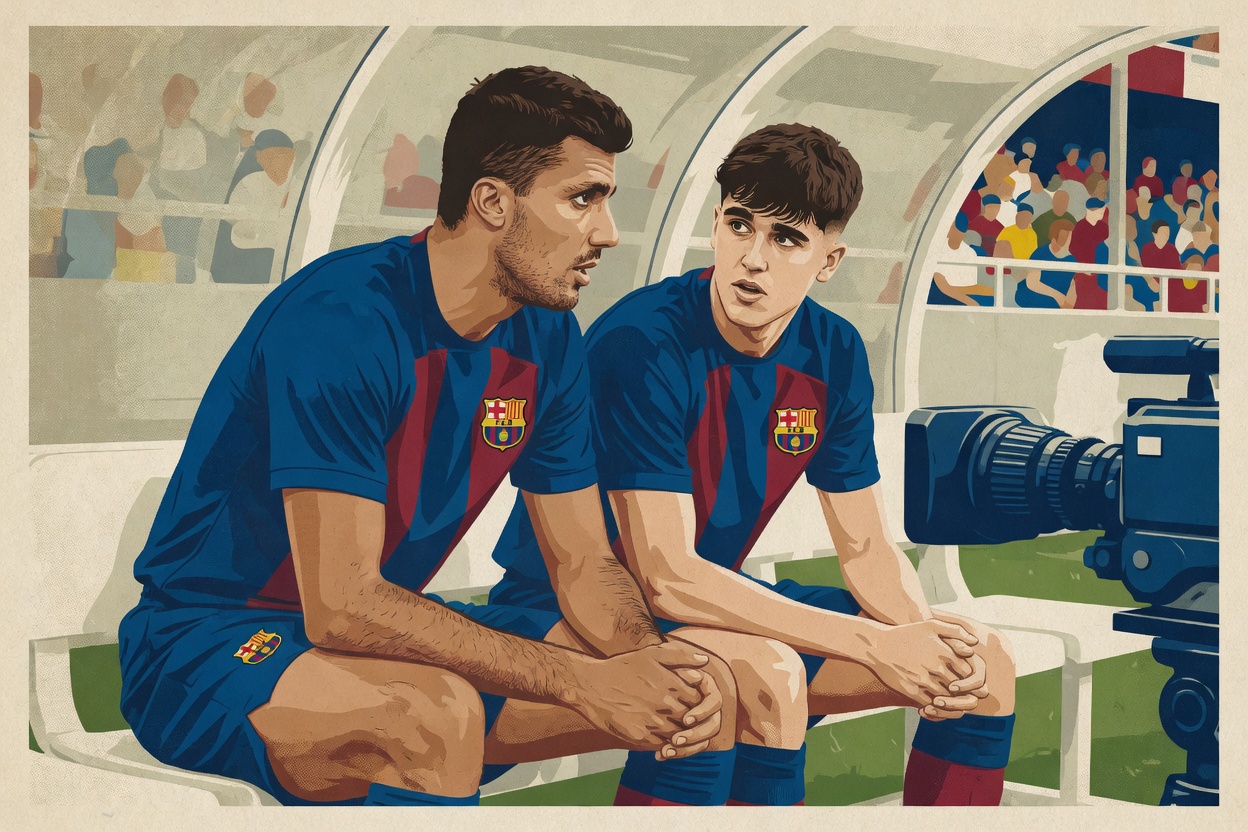
What happened is simple enough. Barcelona won 5-0 at Valencia on LaLiga's fourth matchday, Sunday, September 6, in a game that was effectively over long before the hour mark. Rodri, making his first start for Barcelona since his move from Manchester City, came off in the 62nd minute with the visitors already three goals up. Instead of trudging down the tunnel, he sat next to Pau Cubarsi and did what footballers have done on benches since benches existed: he talked about the match in front of him. What he said, picked up clearly by the cameras, was that Valencia were "really weak," that they were terrible, that they hadn't gotten past the halfway line. The exact wording varies a little across reports, as lip-read quotes always do, but the substance is consistent everywhere.
The disrespect is real, and pretending otherwise is silly
Take the substance seriously first, because Rodri's defenders shouldn't get to wave it away. Valencia were not just any opponent that weekend. They were bottom of LaLiga with a single point from their first four games as of that snapshot in early September, a run that has kept moving as more matchdays are played. Their only reprieve had come in a goalless home draw with Celta Vigo. This is a proud club going through something genuinely grim, and Rodri chose that moment, from the comfort of a three-goal cushion, to narrate their struggles to a teammate.
That's the part that stings for Valencia supporters, and I understand why. There's a difference between beating a team and appraising them like specimens. Valencia finished in the top half of LaLiga last season and even beat Barcelona 3-1 at home on the final day. If that's accurate, it makes the dismissiveness look worse, not better. Rodri talked about a club having a rough month as though the last few years hadn't happened.
I don't fully buy the "it was only surprise" framing, either. Rodri's own words, delivered after Barcelona's 5-1 Champions League win over Feyenoord on Wednesday, September 9, were that "it was simply a phrase expressing surprise, and I never intended to mock Valencia or take advantage of a bad moment the team was going through." He added, "I also want to make it clear that it was an expression of surprise; anyone who watches the video can see that." Maybe. But surprise doesn't usually come with a scouting report attached. "Terrible" and "they didn't even get past midfield" is analysis, not a gasp.
And yet: who decided we should hear this?
Still, I keep coming back to the mechanics of how this became a story at all. Rodri wasn't at a podium or miked up for an interview; he was a substitute talking quietly to the player next to him, reportedly without even covering his mouth, which some read as carelessness and I read as a man with no reason to think his private aside was being picked up. The footage was then broadcast with a voiceover explaining the conversation. Somebody made an editorial choice to take a bench murmur and turn it into a headline.
Footballers react emotionally to matches in real time. They always have. The only thing that's changed is that high-definition cameras and directional audio can now reach into a huddle on the touchline and pull out words that were never meant to travel more than a few feet. If we're going to hold players to the standard of a live broadcast every second they're in a stadium, we should at least admit we're the ones who moved the goalposts, not them.
None of this excuses Rodri. But it complicates the outrage. There's a version of this where the lesson everyone takes is that players must never say anything candid near a camera, which mostly guarantees more blandness and more hands cupped over mouths, not more respect. What made this feel gross wasn't just what Rodri thought, it was that a production truck decided his private contempt was worth airing.
The apology, and the profile that made one necessary
To his credit, Rodri didn't hide behind the media-ethics defense, and he didn't wait to be forced into a statement by a club press office. He reportedly called Valencia captain and Spain teammate Jose Gaya privately before saying anything in public, then addressed it on the record: "First and foremost, I'd like to apologise to anyone who may have felt offended. I had a phone call with my friend Jose Gaya and apologised to him and the whole squad." He finished with a line that landed better than the rest of it: "I hope Valencia return to the position they deserve and become one of the best clubs in this league again."
That's about as good as these apologies get. It reads like a man who knows he was thoughtless rather than one performing contrition.
It also happened because of who he is. Rodri is a World Cup winner and one of three Barcelona players, alongside Cubarsi and Lamine Yamal, nominated for the men's Ballon d'Or for 2026. A fringe squad player saying the identical words gets a shrug. A star of Rodri's standing gets days of backlash and a scheduled apology after a European tie. Fame turned a comment that, stripped of the name attached to it, would have died on the touchline where it was spoken.
Both parties come out of this a little diminished. Rodri should have shown more grace toward a club on the floor, and he seems to know it now. But the broadcaster that turned his private aside into a public trial deserves a harder look than it's getting, because it's the one that keeps deciding these moments are ours to judge. Valencia deserved better than to be discussed like a case study. They also deserved to lose that particular conversation in the noise of Mestalla, where it belonged.