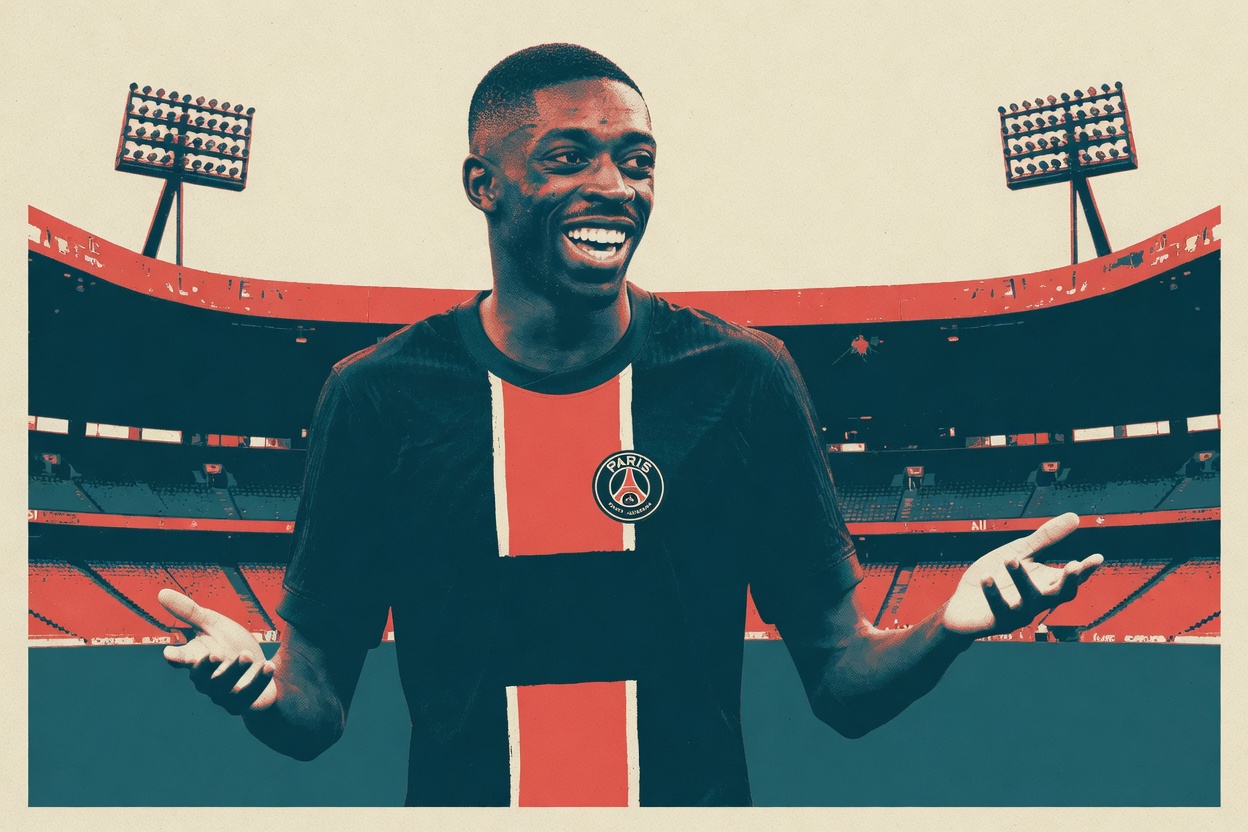
No, Rodrigo de Paul's bank balance doesn't disqualify him from saying he's lonely. And the people lining up to type cry me a river, Rodrigo under every clip of this interview are doing a very good impression of the exact isolation he's describing.
Here's what he actually said on Luzu TV. He missed an important phase of his life, his youth. He has free time, but the social side is hard, because after training he's often alone. And he hasn't celebrated a birthday with his mother, his brothers and sisters, or his friends in ten years. "I live in a golden cage."
He's engaged to Tini Stoessel, one of the biggest pop stars in Latin America. He just moved to Inter Miami in a transfer Atlético Madrid confirmed at fifteen million euros, later made permanent. By any reasonable measure, he's winning at life. So how dare he be sad.
That logic is garbage, and most of the people using it know it's garbage. Money buys a lot. It doesn't buy back a decade of missed birthdays, and it doesn't put your mother's face across the dinner table again. If you've ever felt isolated in a crowd, or far from the people who actually know you, you understand exactly what he means. The only thing separating you from him is that he said it on camera with a trophy cabinet behind him.
He chose this, though. He chose the career, chose Europe, and this summer chose to leave Atlético, where by every account he was playing the best football of his life (he made the 2024-25 La Liga Team of the Season), to go build something new in Miami. Nobody frog-marched him onto the plane. If he wanted to be near his family, he could simply be near his family.
Except he couldn't, not without quitting the one thing he's elite at, and that's where the "he chose it" line falls apart. The choosing happened long before Miami. It happened when he was a kid in Sarandí, in the province of Buenos Aires, before he could weigh what he was signing up for. This is how the sport works at the bottom. Clubs run scouting networks that start tracking children at five and six, the competition sharpens from eight or nine, and the churn is savage: studies of English academies show the overwhelming majority of boys never make it to a first professional contract, with huge numbers released at the key stages. You're asked to build your whole childhood around football before you're old enough to understand the trade, and the lucky few who make it come out the other side having, in his own words, missed his youth.
He's been saying a version of this for at least two years, including in an earlier interview while he was still at Atlético, calling a footballer's life a golden prison and describing the trapped feeling of not being able to go help a family member because the job won't let him leave. He keeps coming back to it. He's been telling us the terms of the deal for years. We just preferred the tough-guy version, Messi's bodyguard, the guy who runs through walls, because that one doesn't ask anything of us.
So who's responsible? De Paul is just describing the invoice that comes with a career he was recruited into as a child. The machine is responsible. It takes nine-year-olds, builds their whole lives around a dream, and discards most of them. The survivors get a lifestyle that trades home and family for money and fame, and then everyone acts shocked when one of them admits the swap hurt. The people mocking him for being rich and sad are just the machine's volunteer enforcers, policing the one survivor honest enough to say the cage is real.
He told you it's gold. He also told you it's a cage. Believe both.