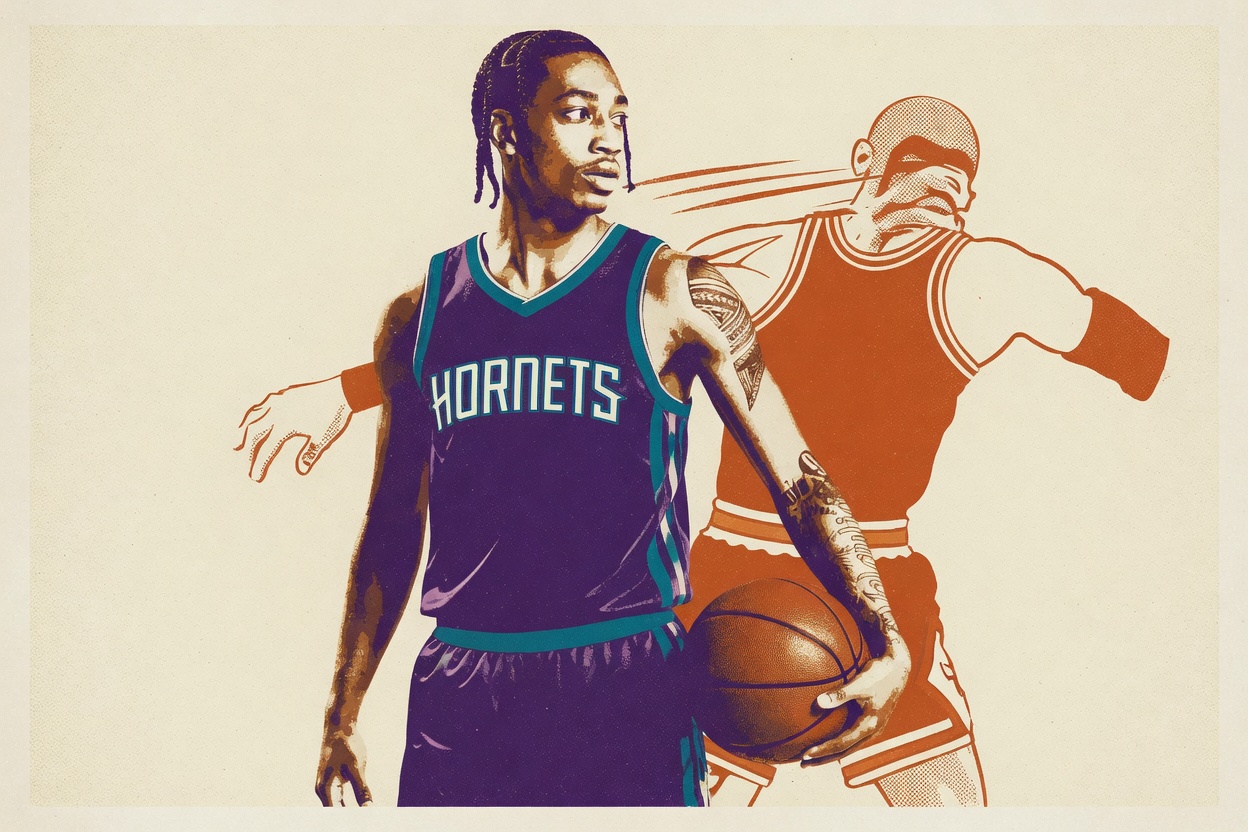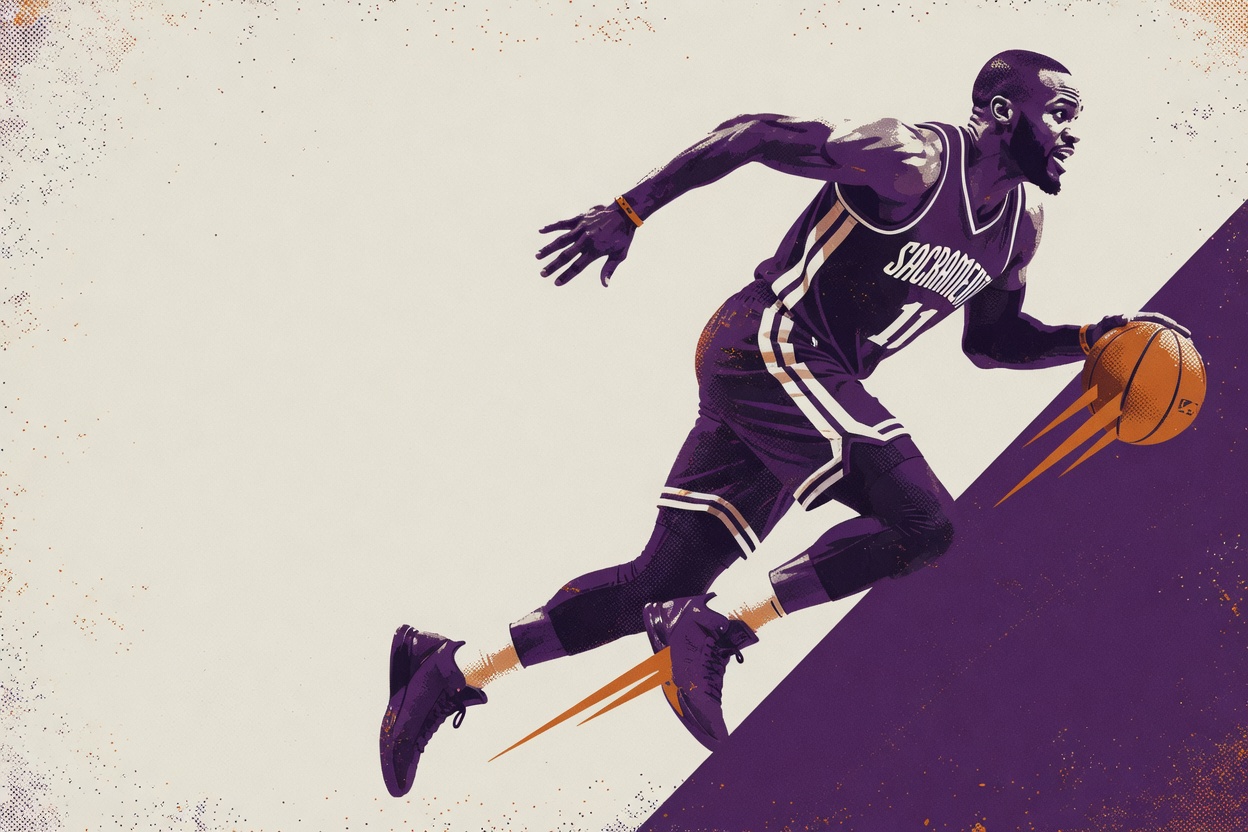
Russell Westbrook retired on his own terms, and that alone is going to irritate the ring-counters.
On Wednesday, after 18 NBA seasons and seven teams, Westbrook announced he was done through a video narrated by actor Michael B. Jordan, titled "The Museum of Unspoken Answers." The caption: "Sometimes you don't even know when you've already watched the end. You had to be there. And now it's over." Shams Charania reported that Westbrook had offers this offseason from the Sacramento Kings and Washington Wizards but chose to step away anyway. Nobody pushed him out the door. He closed it himself.
He closed it without a championship, too. That fact is going to shape how people talk about him more than anything in his stat sheet, and I think that's worth arguing about.
The résumé that should end the conversation
Start with what isn't in dispute. Westbrook retires as the NBA's career leader in triple-doubles with 209, a record Nikola Jokic (at 198 heading into next season) is on pace to chase down. He won the 2017 MVP. That season he posted 42 triple-doubles and averaged 31.6 points, 10.7 rebounds and 10.4 assists, the first player since Oscar Robertson in 1962 to average a triple-double across a full year.
For his career he averaged 20.9 points, 8 assists, 6.9 rebounds and 1.6 steals. He sits 14th on the all-time scoring list with 27,176 points and fifth in career assists, behind only John Stockton, Chris Paul, Jason Kidd and LeBron James. He's the career rebounding leader among point guards, and he joined James as one of only two players in league history with 25,000 points and 10,000 assists. Nine All-Star nods, two scoring titles, three assist crowns, Olympic gold in London, a spot on the NBA's 75th Anniversary Team.
That's a first-ballot life's work. Still, the loudest number in his obituary will be zero rings.
Where the title actually slipped away
Here's my honest read, and I'll call it a take, not a fact: the championship didn't get away because Westbrook was too much. It got away in one violent instant in the spring of 2013.
He got his real shot early, at 23, when he led Oklahoma City to the 2012 Finals against Miami. He put up 27.0 points, 6.6 assists and 6.4 rebounds in that series before the Heat won it in five. Everyone assumed he and Kevin Durant would be back. They lost the conference finals in 2011, 2014 and 2016, and Westbrook never returned to that stage once the two split. Durant went on to win two Finals MVPs in Golden State. Westbrook didn't.
What happened in between matters. On April 25, 2013, Patrick Beverley collided with Westbrook going for a steal and tore his meniscus. Westbrook, being Westbrook, kept playing that game. The injury ended his season and required surgery, then a second operation a few months later that snapped his streak of 394 straight regular-season games. Several retrospectives connect that knee directly to the moment OKC's window shut.
The tidy version says his own recklessness cost him. I don't buy the tidy version. A defender crashing into your knee on a steal attempt is bad luck stacked on a hard collision, not a character flaw. The Harden trade and the rise of a historically great Warriors team did plenty too. If you want to blame Westbrook's motor for the missing ring, you're picking the story that flatters what you already believed, not the one the evidence supports.
The longevity part is where the critics really lose
There's a popular idea that his all-gas-no-brakes style burned him out early. It didn't. He played 18 seasons. In his final year, at 37, he still started 58 of the 64 games he played for a Sacramento team that tied Utah for the worst record in the Western Conference at 22-60. You don't get to argue that a guy still starting deep into his late 30s was somehow shortened by his own intensity. The record shows durability interrupted by specific serious injuries, not a body that gave out ahead of schedule. If anything, the motor is why he lasted this long.
Ring culture, and the man who never bought it
Westbrook has pushed back on ring-based judgment for years. "I don't know why it's discussed so much in our sport and why it's the end-all, be-all of everything," he said this past April, before adding, "You sit here and tell me Allen Iverson and Charles Barkley and Steve Nash f---ing weren't unbelievable?" Back in 2021 he said flatly, "A championship don't change my life... I grew up in the streets. I'm a champion."
He's among the four highest scorers of any player who never won a title, which reads as either a knock or a badge depending on how you were raised on the sport. The reaction to his exit is split right now. Sympathetic columns argue his flaws were real but got used to erase everything he did well. Mark Medina's Forbes piece calls him "a celebrated yet profoundly flawed talent" whose strengths were tangled up with his most divisive habits. Thunder GM Sam Presti called him "the ultimate competitor."
Here's where I land. The ring standard is a lazy shortcut. It hands you a binary for a game that's the least individual of the major sports, where the same player wins or loses a title depending on which teammates and which era he lands in. Nash never got one. Barkley never got one. Iverson never got one. Nobody serious thinks they weren't extraordinary. Westbrook belongs in that room, full stop.
None of this is settled, and it won't be for a while. Hall of Fame speculation is still building, the tributes are still landing, and the debate over where he ranks is live. But strip away the ring math and you're left with a point guard who rewrote what the position could produce statistically and refused, all 18 years, to play any way but flat out. If that's your definition of flawed, the flaw is a hell of a career.