Shakhtar Donetsk are in advanced talks to make Chelsea's Stamford Bridge their "home" ground for the 2026/27 Champions League. Nothing is signed yet, and any deal still needs approval from Hammersmith and Fulham Council and from UEFA. But the direction is clear, and the story underneath it is uglier than a nice logistics update about west London hosting elite football again.
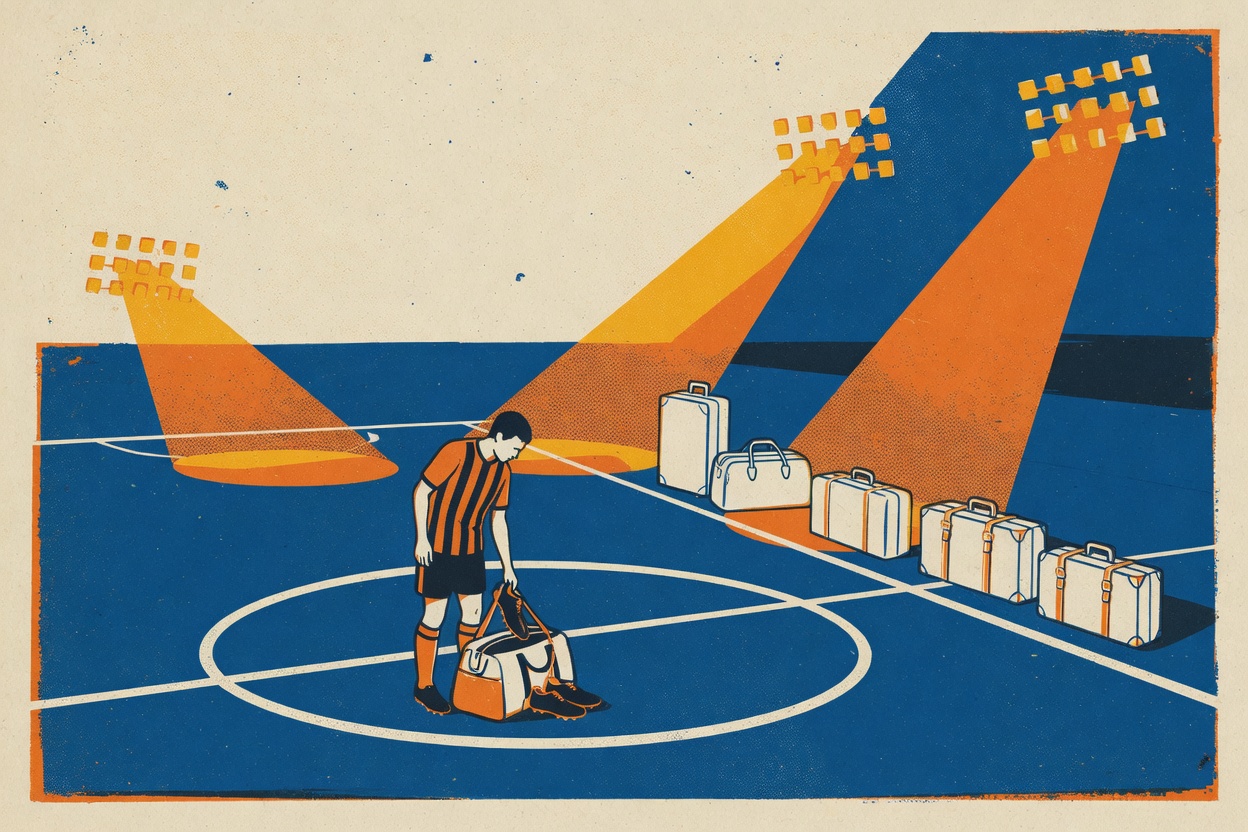
Shakhtar are one of the biggest clubs in Ukraine, the reigning Ukrainian champions, and they don't have a home. This isn't a temporary scheduling clash; they have no home at all. They've been unable to play at their Donbas Arena since 2014, after Russia-backed forces seized parts of Donetsk. When the full-scale invasion came in February 2022, their European matches were pushed outside Ukraine entirely. They've staged "home" games in Poland, Slovenia and Germany. Their most recent Champions League campaign, in 2024/25, was played at Schalke's arena in Gelsenkirchen. Add it up and it's more than a decade of a football institution living out of a suitcase.
The Stamford Bridge move makes sense. That's not the point.
On its own terms, this is a smart, humane arrangement. Shakhtar shortlisted three London grounds: Fulham's Craven Cottage, Brentford's Gtech Community Stadium and Stamford Bridge. The Bridge won out largely on capacity: its 40,000 seats and its location. It's available because Chelsea's men failed to qualify for European competition after finishing 10th in the Premier League last season, so the stadium is free in the required match windows.
This isn't a commercial land grab, either. The two clubs have built a relationship since Chelsea signed Mykhailo Mudryk from Shakhtar in 2023 and through the Game4Ukraine charity match. If it happens, one club will be quietly helping another through something no club should have to endure. That's worth applauding.
But lean on that word: if. As recently as late June 2026, the live option was Brentford's Gtech, with Polish and German venues still floating around. By mid-August the momentum had swung to Stamford Bridge. Even the fix is unstable, shifting city to city, season to season.
An "annual exercise" is a system failure
That's the real problem. Every summer, a club displaced by war has to go hunting for someone willing to lend them a stadium. New country, new capacity questions, new local council to satisfy, new sign-off from UEFA. It's become a recurring scramble, and the fact that it keeps landing somewhere decent is down to Shakhtar's staff and the clubs who open their doors, not to any structure protecting them.
There's no structure. UEFA should build one.
European football is very good at writing rules when it wants to. It rebalanced Champions League qualification so Shakhtar earned an automatic league-phase place for 2026/27 after the 2025/26 finalists, Paris and Arsenal, qualified through their domestic positions. The competition can bend its own machinery when the situation calls for it. So bend it here. Give displaced clubs a designated, multi-year host arrangement, a guaranteed venue framework, and administrative cover so a Ukrainian champion isn't reduced to auditioning stadiums like a band looking for a rehearsal space.
The current model treats a permanent tragedy as a temporary inconvenience. Shakhtar's exile isn't going to resolve itself by next window. Forcing them to renegotiate their own existence every year is a choice.
What Stamford Bridge should actually mean
If the council and UEFA wave this through, west London gets Champions League nights again, and a proud club gets to walk out under floodlights in front of a real crowd. That's worth celebrating. Shakhtar have kept their football alive through occupation, invasion and displacement, and they keep qualifying anyway.
But a one-year favor from a friendly neighbor isn't a policy. The next time Shakhtar qualify, and they will, someone will be back on the phone chasing another stadium in another city. Europe can keep leaving that to luck and goodwill. Or it can decide that a club robbed of its home by war deserves better than a handshake that expires in ten months.