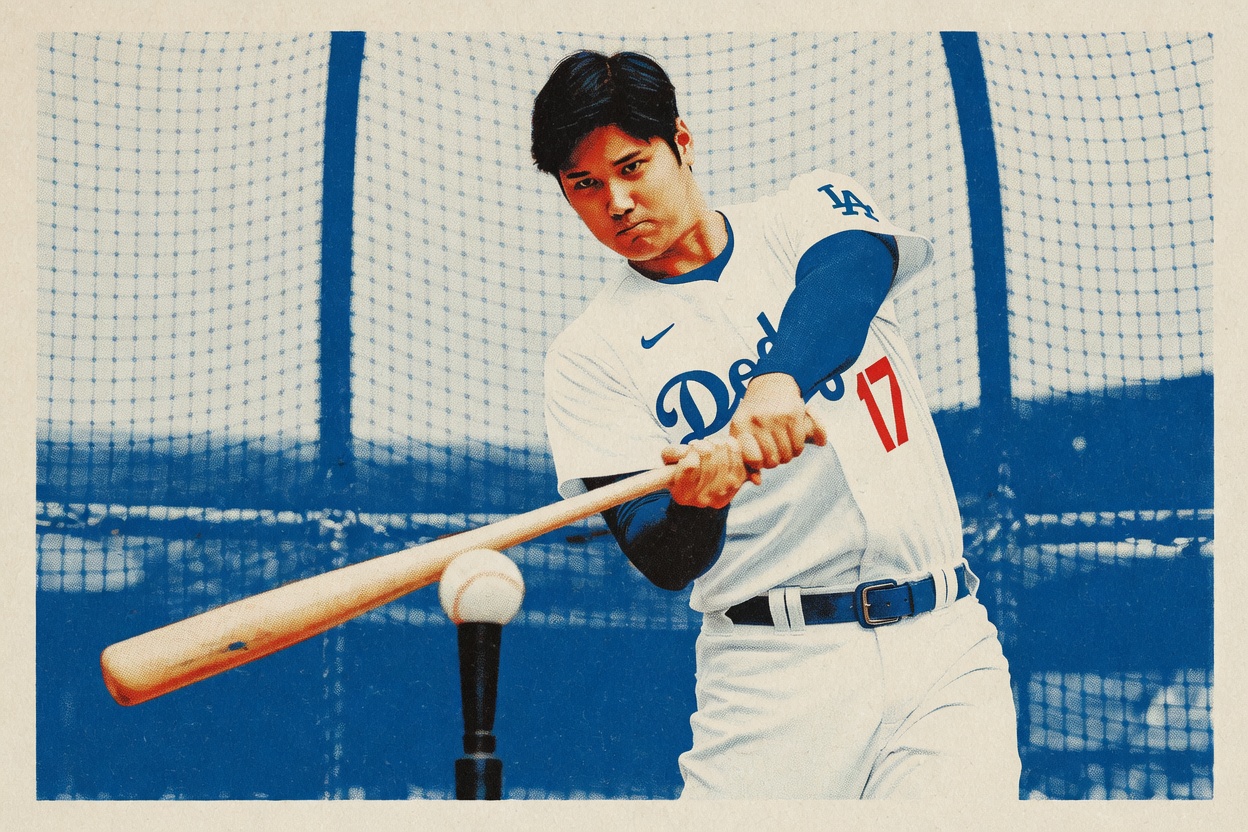
Here's what we can say for certain about Shohei Ohtani's recovery: he was scheduled to hit off a tee Tuesday in Los Angeles, his first hitting session since going on the injured list. Before that, his days were limited to lifting, working out and treatment. That's the milestone, and on its face it's good news for a team chasing a third straight title.
Here's what we can't say for certain: whether that tee session actually happened, how it felt, or whether it produced any of the pain that put him on the IL in the first place. None of that has been independently confirmed. Every update on Ohtani's health runs through one man. Dave Roberts said Monday that Ohtani would hit off a tee Tuesday. Roberts announced the injured list move late on the night of September 10. Roberts is the one relaying the medical details, the biceps, the knee, the reassurances. No doctor has spoken publicly. No independent trainer or physician has been quoted. Ohtani himself has said little beyond that he'll focus on hitting rather than pitching for the rest of 2026. Trace any of the recovery coverage back to its source and you land in the same place: a manager at a podium.
There's an easy version of this column that accuses the Dodgers of hiding something, and that version isn't supported. There's no evidence of deception. What there is instead is a structural problem. The recovery narrative for arguably the most valuable player in the game is being delivered to a global audience through a single spokesperson with no second opinion attached. That's a thin standard of transparency for a franchise whose October hinges on this one body.
The thinness matters more given how this saga has already gone. Roberts himself has admitted the team misjudged the timing once. "I think if we look right now, here today, I would love to go back and put him on the IL [last week]," he said. "But I did feel at that moment in time, we all felt that giving him four days was sufficient. He was agreeable." Ohtani had missed six of the last seven games managing soreness, returned Monday to bat leadoff against Cincinnati, went 0-for-3 with two strikeouts, and a swing in that game left him with a setback. The four-day plan didn't hold. So when the same voice now projects confidence, some skepticism is just good listening.
And the confidence has been steady. "I do think that if the playoffs were tomorrow, he'd be in the lineup," Roberts said. "I'm pretty confident that he'll be ready to go on that 15th day." General manager Brandon Gomes and president of baseball operations Andrew Friedman have both insisted Ohtani is healthy. All of it may be true. But it's all coming from the same building, and the building has already been wrong once this month.
Read the fine print and the messaging is more careful than the headlines suggest. The Dodgers don't expect Ohtani back to 100 percent by the start of the playoffs. Roberts described the plan as "kind of what him and the training staff agreed upon." The IL stint was backdated to September 8, so Ohtani isn't eligible to return until September 23, by which point only five regular-season games remain. Whatever happens off that tee this week is less about the final week of the regular season than about October.
The Dodgers were near the top of the National League when Ohtani went down, and their title defense runs through his bat. A player this important, recovering on a compressed timeline, deserves a fuller accounting than one man's press conferences can provide. Nobody's owed Ohtani's medical chart. But when the entire pipeline is a single microphone, and that microphone has already conceded it read this wrong once, fans are within their rights to ask for more than optimism relayed secondhand.