No. That's the whole answer to the question everyone's arguing about. The UK government shouldn't let a foreign state's investment money soften the punishment handed to a football club that an independent commission found guilty of cheating for the better part of a decade. Not by a point, not by a pound.
As of early October 2026, this is where things stand. A Premier League independent commission found Manchester City guilty on all but one of 115 charges, covering breaches of financial rules between 2009 and 2018, plus a batch of charges for failing to cooperate with the investigation. The league said City used "sham" commercial contracts "to artificially inflate the club's revenues, and reduce its costs, by more than 900 million pounds" of secret funding from its Abu Dhabi owners. City say they're "disappointed and surprised" and are appealing. The sanction itself hasn't been decided. The slate is still blank, and into that blank space the UAE has slid a warning.
Emirati officials told the UK government that the severity of City's punishment could affect their "willingness to invest and enter into wide-ranging commitments in the United Kingdom." Read plainly, that's a state saying: go easy on the club we own, or the money dries up. The UAE has put more than £30bn into Britain over the past five years, across defence, science and technology, and there's a formal government-to-government vehicle, the UAE-UK Sovereign Investment Partnership, launched in 2021. The leverage is real, and that's exactly why entertaining it is corrosive.
Strip away the diplomatic wrapping and this is a sovereign wealth power trying to buy down the consequences of getting caught. Manchester City is, on paper, privately owned by Sheikh Mansour bin Zayed Al Nahyan. He's also the UAE's deputy prime minister and the brother of its head of state. The idea that his football club and his government are separate entities is a fiction nobody in this story is bothering to maintain, least of all the UAE officials now lobbying Downing Street on the club's behalf.
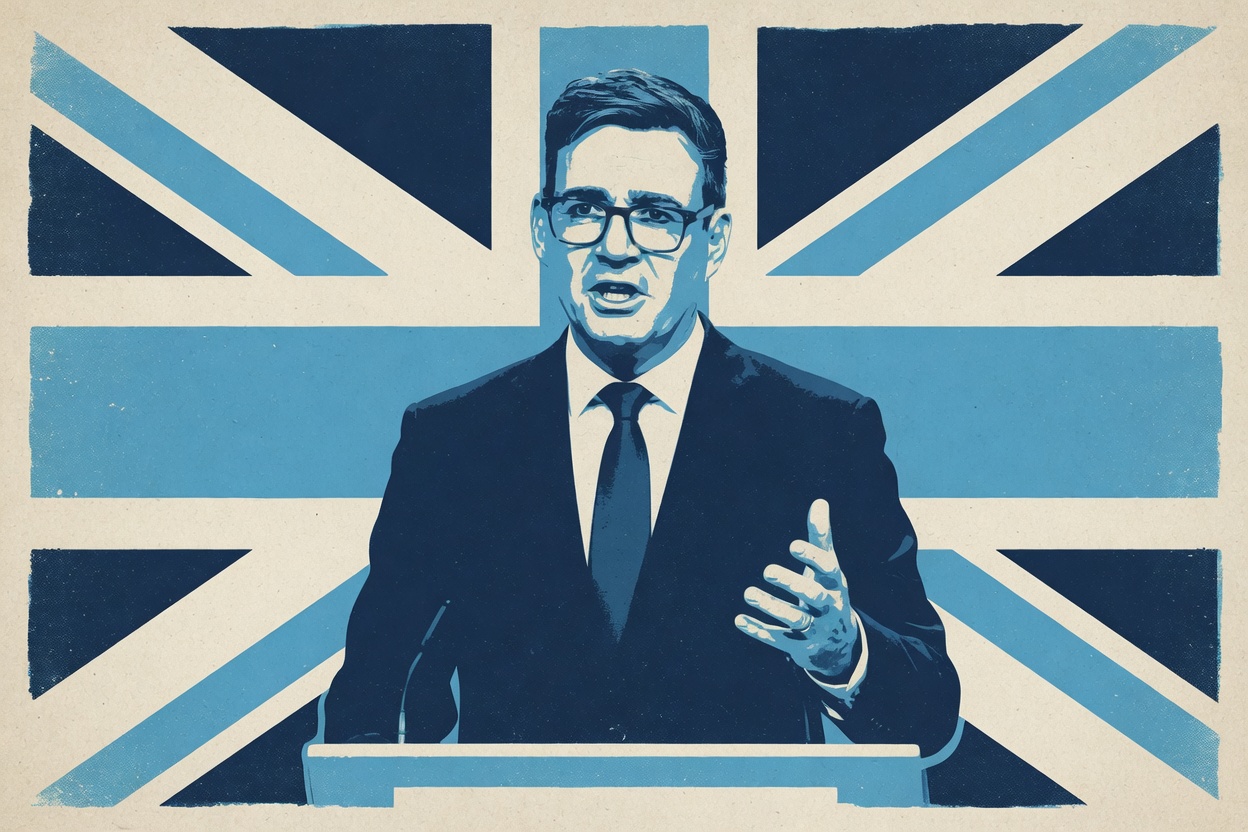
Which brings us to Andy Burnham, who has made this worse. The prime minister told the BBC he'd be "really concerned" if City's Abu Dhabi owners sold the club, calling them "a huge partner in the building of modern Manchester." His own government is being privately leaned on by the UAE, and his public instinct was to sound protective of the owners. That's a disgrace of priorities. Downing Street had to clean it up, insisting "the initial judgement is serious and there can't be any suggestion that anyone is above the rules." The cleanup was correct. It shouldn't have been necessary.
We've seen this exact playbook before, and it involved the same man. In 2024, a fund backed by Mansour tried to buy the Telegraph. When the UK moved to block foreign state ownership of newspapers, the deal collapsed and the diplomatic temperature dropped. Investment leverage as a pressure valve has become a pattern. Officials in London say privately that they're frustrated, that the Emirati side knew about the alleged breaches for almost a decade. They're right to be. They're also the ones who let commercial diplomacy wander into a sporting courtroom in the first place.
Maybe the UAE really would pull back billions over a points deduction. Maybe it's a bluff. It doesn't matter which. A government that lets the punishment for proven cheating depend on the mood of the cheater's owner has decided its league is for sale. If Abu Dhabi walks because the club it controls got caught, that's the price of taking autocratic money, and Britain should pay it without blinking.