
Every year the Champions League opens with a list of names who won't be involved, and normally the reasons are boring: a hamstring, a knock, a manager keeping some legs fresh. This year's Matchday 1 came with a stranger subplot. Roundups counted roughly a dozen players sitting out the opening round not through injury or rotation, but because of red-card bans carried over from last season's European football, in some cases from an entirely different competition. Most of those are defensible. One of them shows how little sense the whole system makes.
Start with the case that should embarrass UEFA. Atletico Madrid arrived at Anfield to face Liverpool without winger Arnau Ortiz, and Diego Simeone couldn't name him in the squad because he was serving a suspension dating back to 2024, not last season but two years earlier, and not even in this competition. Ortiz was sent off in a Conference League qualifier while on the books of Polish club Slask Wroclaw, picking up two quickfire yellows, one for diving and another for protesting the first, three minutes after coming on. He was the third Wroclaw player dismissed in a 3-2 defeat to St Gallen.
What turns this from harsh into flat-out silly is simple: Ortiz hasn't played a European fixture since. He went out on loan, spent time with Atletico's reserves, and only made the first team this summer. The ban didn't sit unserved because he was ducking it. It sat there because he never had a European match to serve it in, until Liverpool away. So the punishment tracked him across two years, one country, three clubs and two competitions, and finally landed on a marquee night against the reigning giants of English football. The rule worked exactly as written. That's the problem.
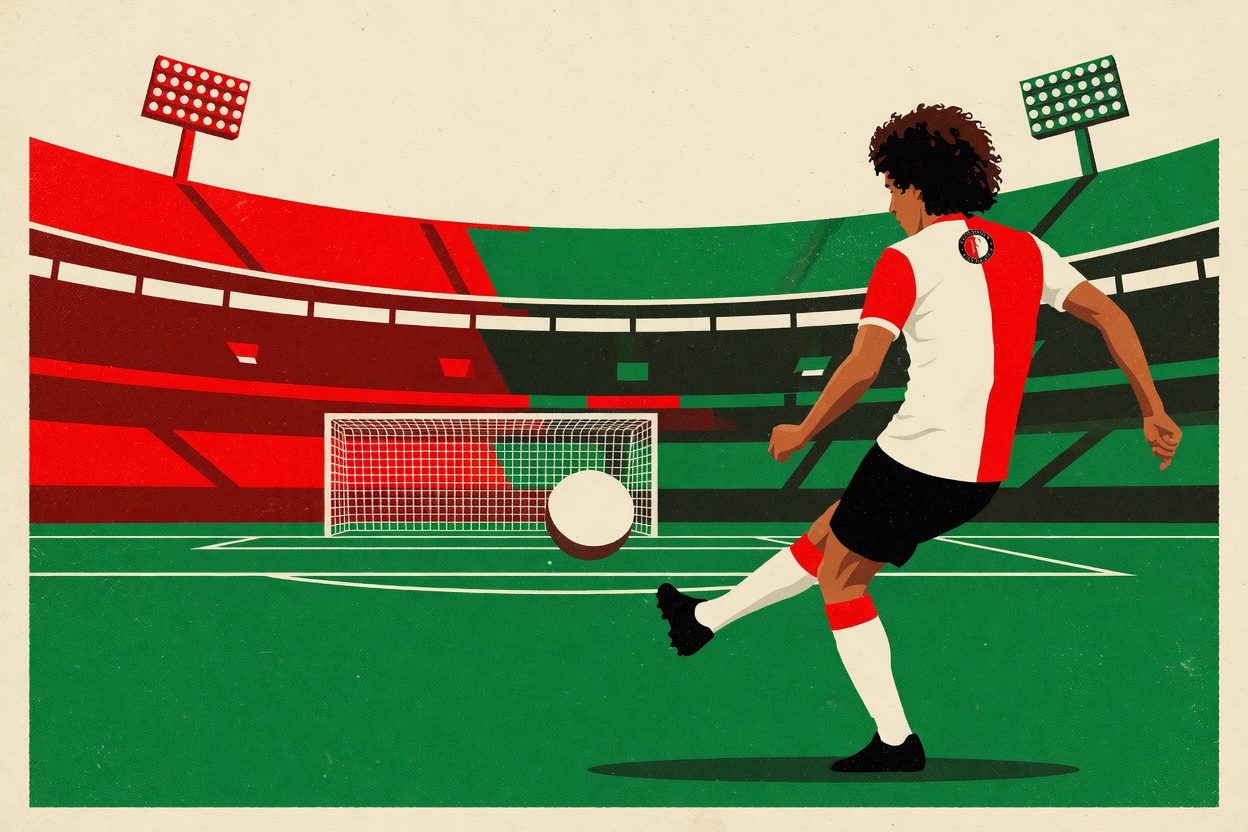
Compare that to the bans nobody's arguing about. Real Madrid opened without Eduardo Camavinga and Arda Guler, both dismissed for two yellows in last season's Champions League quarter-final second leg against Bayern, the 4-3 defeat that ended their run at that stage. Guler's second even came after the final whistle, for complaining to the referee. Madrid beat Inter anyway on Tuesday, 2-1, on goals from Kylian Mbappe and Federico Valverde before Carlos Augusto pulled one back. Barcelona faced Feyenoord without Eric Garcia, red-carded in last season's quarter-final at the Metropolitano. Dortmund beat Villarreal 3-2 despite losing Nico Schlotterbeck and Ramy Bensebaini, both sent off in the 97th minute of their playoff exit to Atalanta, a decision Niko Kovac openly questioned.
Those all follow a logic you can live with: get sent off in this competition last season, sit out the next match in it. Article 63.01 says a red card means a one-match ban in the next European fixture you're eligible for, and for players staying in the Champions League bubble, that lands sensibly, roughly a season apart. Even the Bernardo Silva oddity, serving out a Manchester City red card now that he wears Real Madrid's shirt, at least stays within a single campaign's memory.
What UEFA lacks is any statute of limitations and any sense that competitions sit at different tiers. A first booking gets wiped clean between seasons, but a dismissal follows you indefinitely, from a qualifier in a lower-tier tournament to a Champions League night years later. That's a rule that has stopped serving its purpose and started serving itself. A carried-over ban should expire if it isn't served within a set window, and a Conference League qualifier shouldn't be able to reach into an Anfield opener two years later. Punish the offense. Don't let it trail a player for two years into a different chapter of his career.