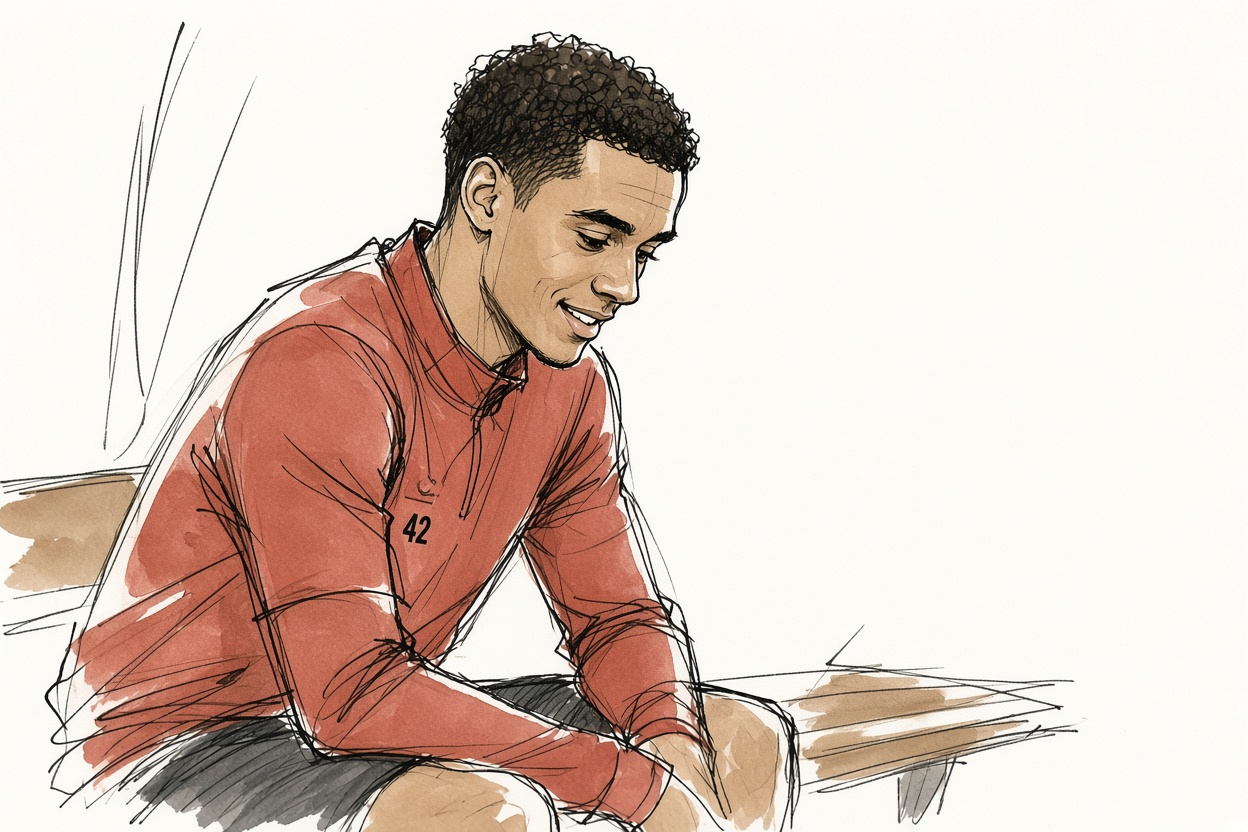
Bayern Munich betrayed Jamal Musiala, and Uli Hoeneß led the way. A 23-year-old collapses twice, gets diagnosed with a neurological dysfunction, and the most powerful men at his club respond by putting his pay packet up for public debate.
The newest detail is the ugliest. A Stern investigation, based on conversations with people close to the club, reports that Hoeneß remarked in private that "one of the highest-paid players now effectively has a market value of zero." He never said that on the record. He didn't need to: everything he's said publicly points the same way.
How a health scare became a pressure campaign
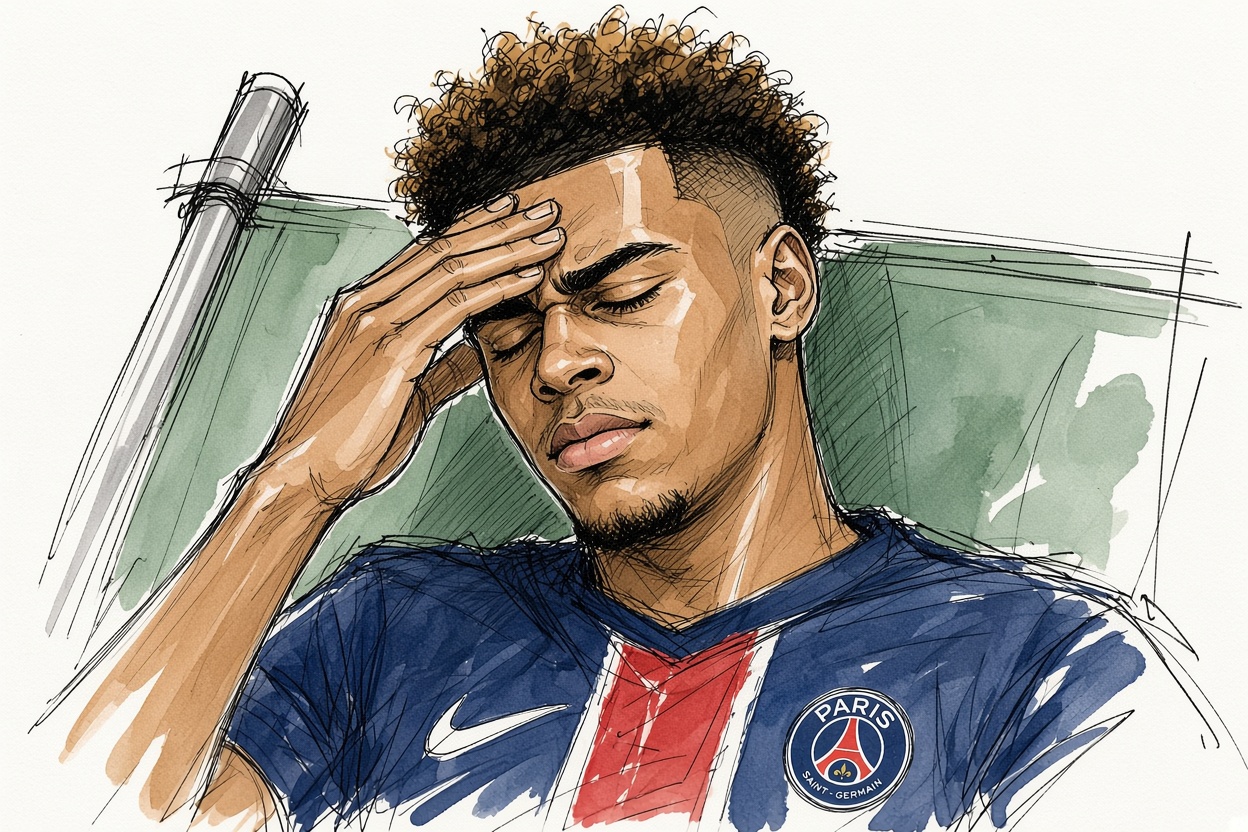
Musiala collapsed on the pitch twice in a matter of days during pre-season friendlies against Heidenheim and RB Leipzig, and was diagnosed with a "neurological dysfunction." A muscle fiber tear in September kept him out longer. That's a young man with a frightening medical problem, and any club that calls itself a family knows what the decent response looks like.
Instead, this is what Bayern did. On November 8, Hoeneß went on BR's Sonntags-Stammtisch and floated asking Musiala to take a pay cut: "What he's capable of now isn't what's stipulated in the contract." On November 18, CEO Jan-Christian Dreesen discussed a possible salary adjustment in an AZ interview, then reportedly started walking it back once the backlash hit. On November 20, former CEO Karl-Heinz Rummenigge told Sky: "It is known that he has a health problem. And it is known that he has a contract involving very substantial sums," adding, "I think it is responsible and entirely normal for a club to have to consider how to deal with that."
Rummenigge's intervention had been approved at the last supervisory board meeting. The institution signed off on it.
FIFPRO saw it straight away. The players' union pointed out that "Bayern's honorary president, chief executive and former chief executive have all publicly questioned Musiala's contract in quick succession" and called it "a coordinated strategy to put pressure on Musiala and his representatives ahead of any negotiations." Its conclusion: "Contracts are there to be respected."
The sharpest words came from inside the house. Oliver Kahn, a former Bayern captain and former CEO, wrote: "Contractual loyalty is not loyalty. It is an obligation." And then: "Clubs like to call themselves a family. It becomes problematic when they talk about family as long as it costs nothing, and talk in numbers as soon as it becomes expensive." Kahn ran this club, so he knows exactly what he's describing.
The money argument, and why it fails
Bayern's defenders have a real point. Musiala signed an extension in February 2025 running to 2030, reportedly worth around €25 million a year, and it includes a clause guaranteeing his full salary for six months if a long-term injury sidelines him. Under ordinary German employment rules, an employer usually only has to keep paying a sick worker for six weeks. That's an expensive obligation sitting on the books of a player whose availability has been badly hit. Bayern's side also claims there was an informal understanding to revisit his terms if his level dropped, though Musiala's camp tells that story differently and nobody says it was binding.
None of it rescues them. Bayern agreed to that clause. They signed a star to a huge deal and accepted the downside, which is precisely Kahn's argument: "The club did not just buy the performance. It also bought the risk." This is a club that just posted annual turnover of €978.3 million. It can carry one difficult contract without turning a sick player's wages into a talk-show segment.
Hoeneß had a private room available too. He reportedly met Musiala's agency at his Tegernsee home in August, where the club learned details of the medical situation before it became public, and those conversations reportedly produced no change to the contract terms. He had the quiet channel and the information, and months later he chose a television studio instead.
An insider describes him as "so romantically inclined that he genuinely believes the player and his management should forgo part of his salary as a gesture towards the club. He thinks that's only fair." A gesture, from the man who collapsed, when Bayern's own gesture would have cost nothing: keeping its mouth shut.
Who carries this
Hoeneß first and loudest, Rummenigge right behind him, backed by a supervisory board that waved his intervention through. Dreesen joined in, then flinched. As of November 24, the two sides had renewed contact two days earlier with no agreement announced, so the ending is still unwritten, though how Bayern handled it has already been judged.
Every young player Bayern tries to sign from now on gets to watch how this club talks about a contract once the player inside it gets sick. Hoeneß spent November putting a price on a sick man in public. The thing at Bayern that's lost its value is his judgment.