It's easy for Victor Wembanyama to say no to the betting money. He's early in his career, still on the deal he signed as a rookie, with Nike and Louis Vuitton checks waiting for him. None of that makes him wrong, and none of it lets LeBron James off the hook.
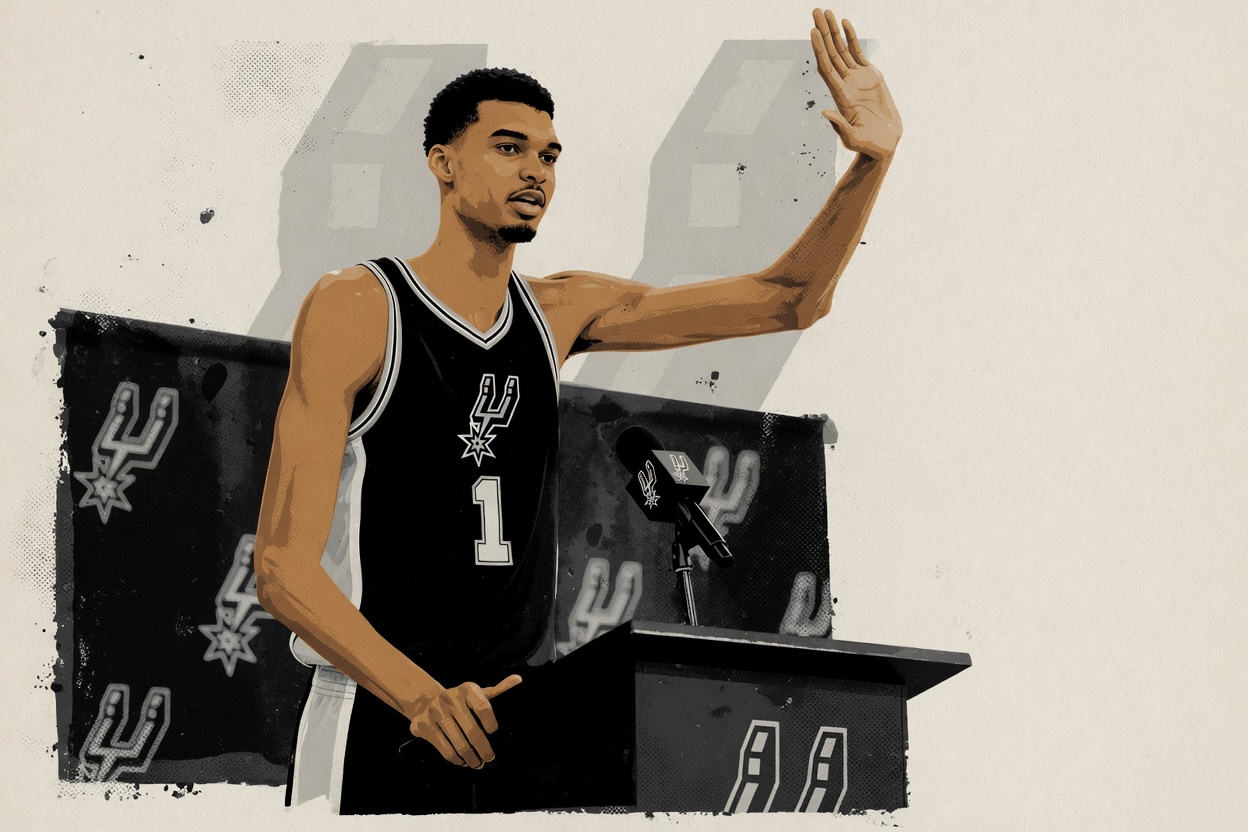
Asked at Spurs training camp on October 1 whether he'd ever promote a sports betting or prediction-market company, Wembanyama didn't blink. "Absolutely not. I will never do that. Honestly, I think it's very sad to see some players promote it," he said, before adding: "I think it's very sad seeing athletes and people in general promote betting. I think it messes with people's lives. So I would never promote that." He named no one. He didn't have to.
A few weeks earlier, LeBron James announced a partnership with Polymarket, posting a video from a fake company headquarters. The deal reportedly pays him $15 million a year, more than he'll make playing for the Philadelphia 76ers this season, where he signed the smallest salary of his career. Before Polymarket it was DraftKings. He's not alone in this: Kevin Durant is with FanDuel, Giannis Antetokounmpo with Kalshi. The NBA's collective bargaining agreement permits all of it. This comes down to values.
On the values, the "let the man eat" defense collapses the second you look at the numbers. LeBron has earned over $581 million in NBA salary alone across his career. Wembanyama has made roughly $38.5 million. The person cashing the betting check is already one of the highest-paid players in NBA history, late in his career, sitting on a fortune he'll never spend. There's no scarcity story here. Nobody forced him to swap one gambling logo for a bigger one. He looked at an industry whose entire business depends on turning fans into bettors who lose, and he decided his name was for rent. His own fans noticed.
Now flip it to the kid getting called a cheap virtue-signaler. This summer Wembanyama signed a five-year, $252 million extension with San Antonio, and he took the 25% maximum instead of the 30% supermax, a choice that reportedly leaves roughly $50 million on the table and gives the Spurs room to build. His agent has said he's turned down soda deals too, because he doesn't drink it and won't push it on kids. That's a pattern. A guy who keeps choosing less money on purpose means what he says.
He's following a path somebody else already cut. Kylian Mbappé has refused betting advertising for years, calling it destructive and pointing to the lives it wrecked in the neighborhoods he came from. It's a stance that costs famous athletes real money, which is exactly why so few of them take it.
Put them on the same scale. Who had something to gain and grabbed it, and who had something to gain and walked away? LeBron, Durant, Giannis, every star fronting a betting app who doesn't need a cent of it, took the money. Wembanyama, with a fraction of their wealth, said no. That gap has nothing to do with whose bank account is bigger. The 22-year-old isn't the one who owes anybody an explanation here.