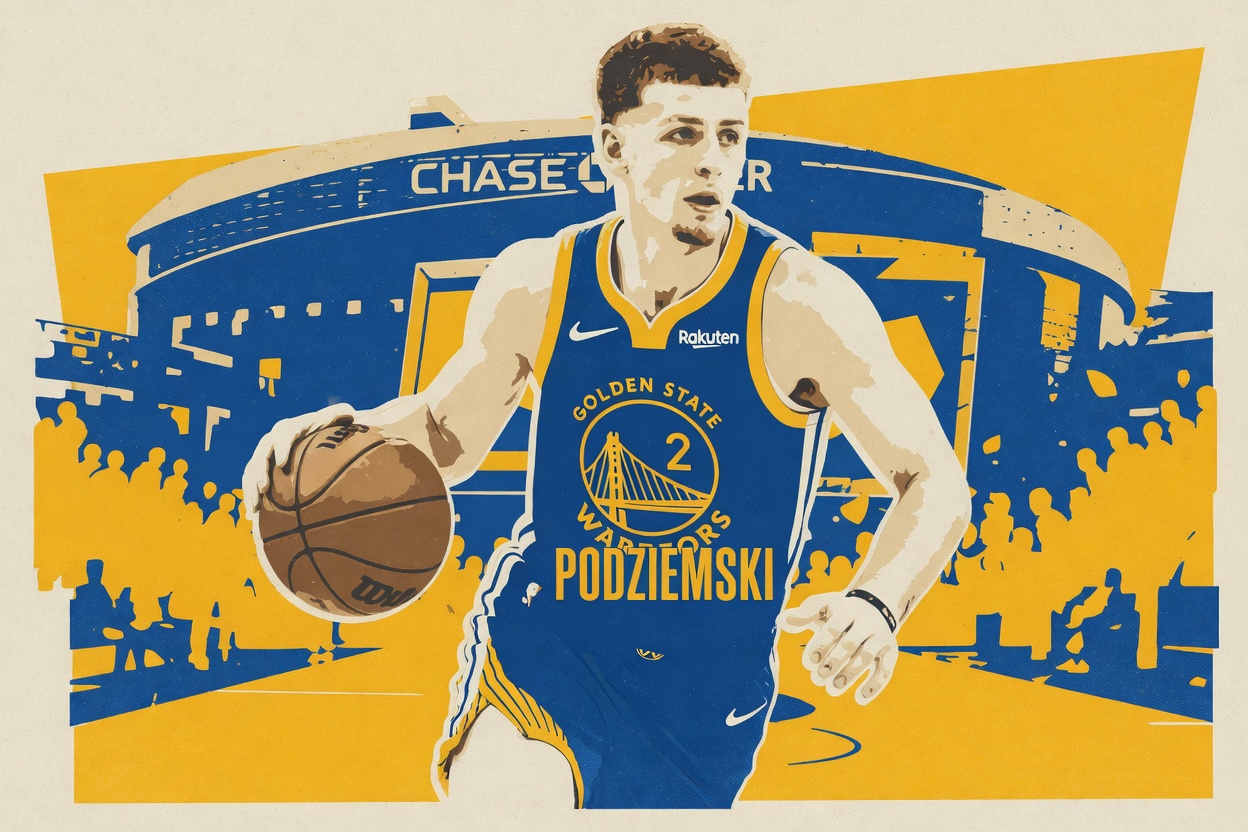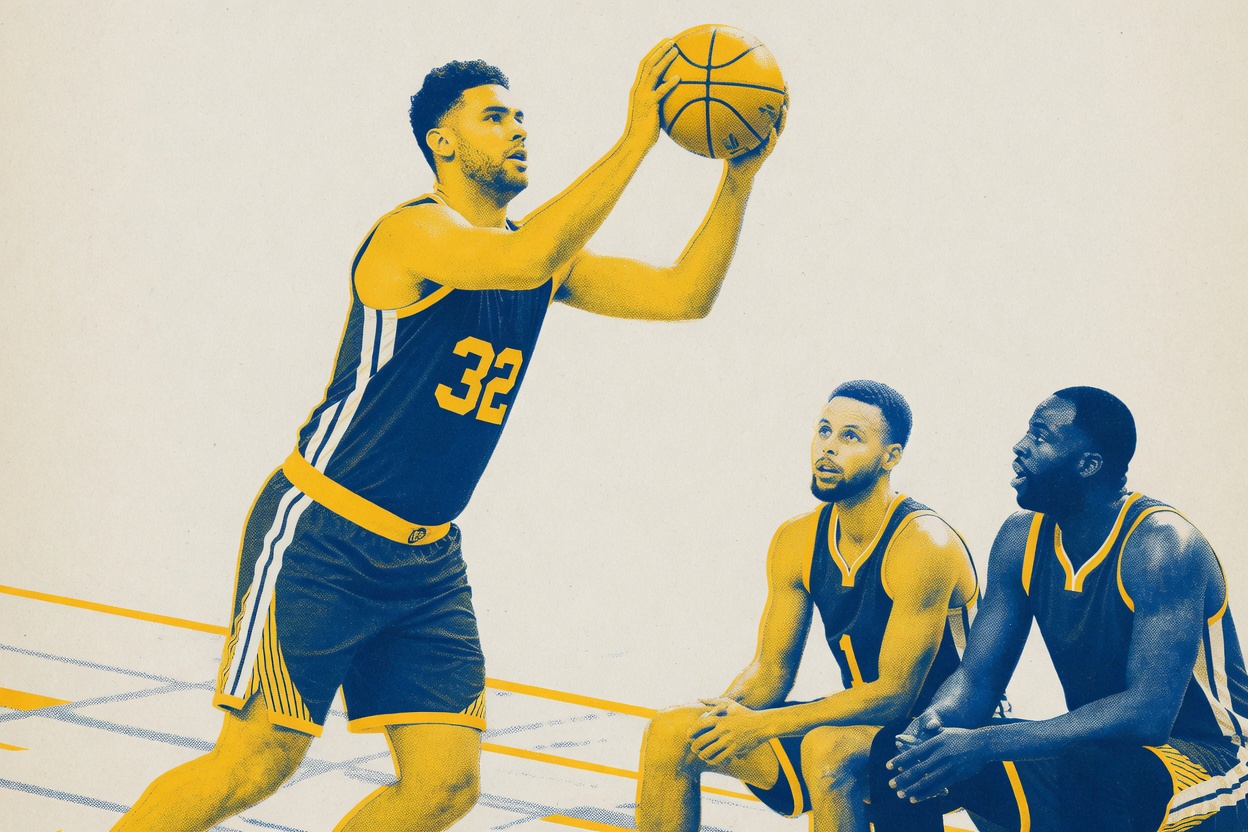
The Warriors closed out their 15-man roster Tuesday, signing Georges Niang to a one-year, $3.9 million deal a few hours after agreeing to a minimum contract with reserve guard Brandon Williams. Two useful, unglamorous additions, and pretty much the whole offseason in miniature.
These were Golden State's first outside free-agent signings of the summer. Everything else the front office did was hang onto what it already had. Draymond Green, Al Horford, Kristaps Porzingis, Gary Payton II and De'Anthony Melton all re-signed. Porzingis came back on a two-year, $40 million deal. Melton returned after a career-best 12.3 points per game in 2025-26. The one real swing was LeBron James, the team's top target, with Green pitching him in person and Steph Curry calling him more than once. James picked Philadelphia. After that, general manager Mike Dunleavy Jr. went shopping for depth, and depth is exactly what Niang and Williams are.
Niang is a fine bet on his own terms. He's a career 39.9 percent 3-point shooter on real volume, and before he fractured his left foot last September, an injury that cost him the entire season, he rarely missed a game, playing 72, 76, 78, 82 and 79 games across his prior five years. He has old ties to the organization, going back to a stint with the G League affiliate in Santa Cruz after joining training camp in 2017. He should slot in behind Green, Porzingis, Horford and rookie Yaxel Lendeborg. Williams averaged 13 points and 3.9 assists across 66 games for Dallas last season, so there's a real player in there too.
Add it up and you get a roster that's essentially last year's roster plus two men filling out the back of the bench. That would be a defensible plan if last year's roster had worked. It didn't. Golden State finished 37-45, tenth in the Western Conference, and lost to the Suns in the play-in to end the season one game short of the playoffs. That's not the outcome you run back on purpose.
What should worry Warriors fans more than the LeBron whiff is that the front office may not have had a choice. According to Spotrac, the team sat around $249.4 million against the 2026-27 cap before Williams signed, and the two new deals pushed that to roughly $252 million, leaving about $2.6 million of room under the second apron. That's not a war chest, it's a team working out of a phone booth. When the biggest lever you can pull is a $3.9 million veteran, aggressive retooling isn't on the table even if you want it.
So the bet, by design or by necessity, is health. That's where the whole thing gets nervous. Jimmy Butler tore his ACL in January, had surgery in February, and is expected back sometime in late 2026, so he'll miss at least the start of next season. Moses Moody is working back from a torn left patellar tendon with no clear timeline. Curry's own knee, diagnosed as patellofemoral pain syndrome last season, kept him out until early April and quietly sank the team's stretch run. As of late August, none of it has fully resolved.
Steve Kerr's own postmortem was blunt: "I think that injury just derailed us." He was talking about Butler going down, and he's right that injuries wrecked the year. The trouble is that a roster built on Curry, Green and Butler, all deep into their 30s now, is a roster where injuries stop being bad luck and start being the base case. Betting on that group to stay upright for a full season is betting against the calendar.
This isn't new behavior, either. Last summer followed the same script: swap Kevon Looney for Horford, bring Melton back on a minimum deal, re-sign the guys already in the building. During the season the Warriors dealt Jonathan Kuminga, a former top-10 pick still in his early 20s, and brought back the 30-year-old Porzingis. Reasonable people can frame the Kuminga move as much about a fractured relationship as roster philosophy, but the direction is hard to miss: older, familiar, safe. Green, for what it's worth, isn't going anywhere. ESPN's Anthony Slater reported the team has "no intention to shop Green," still valuing him as a winning presence and, in effect, an extra coaching voice.
My read: this is a franchise that decided its best version is the one it already has, then found out it couldn't afford to build any other version anyway. Niang and Williams are smart, cheap moves. They're also confirmation that the plan for a title window closing in real time is to hope the training room does the heavy lifting. If Butler comes back on schedule and Curry's knee holds, Golden State can be dangerous again. If either breaks the wrong way, we already know what a healthy-on-paper, hurt-in-practice version of this team looks like. It looked like 37-45.