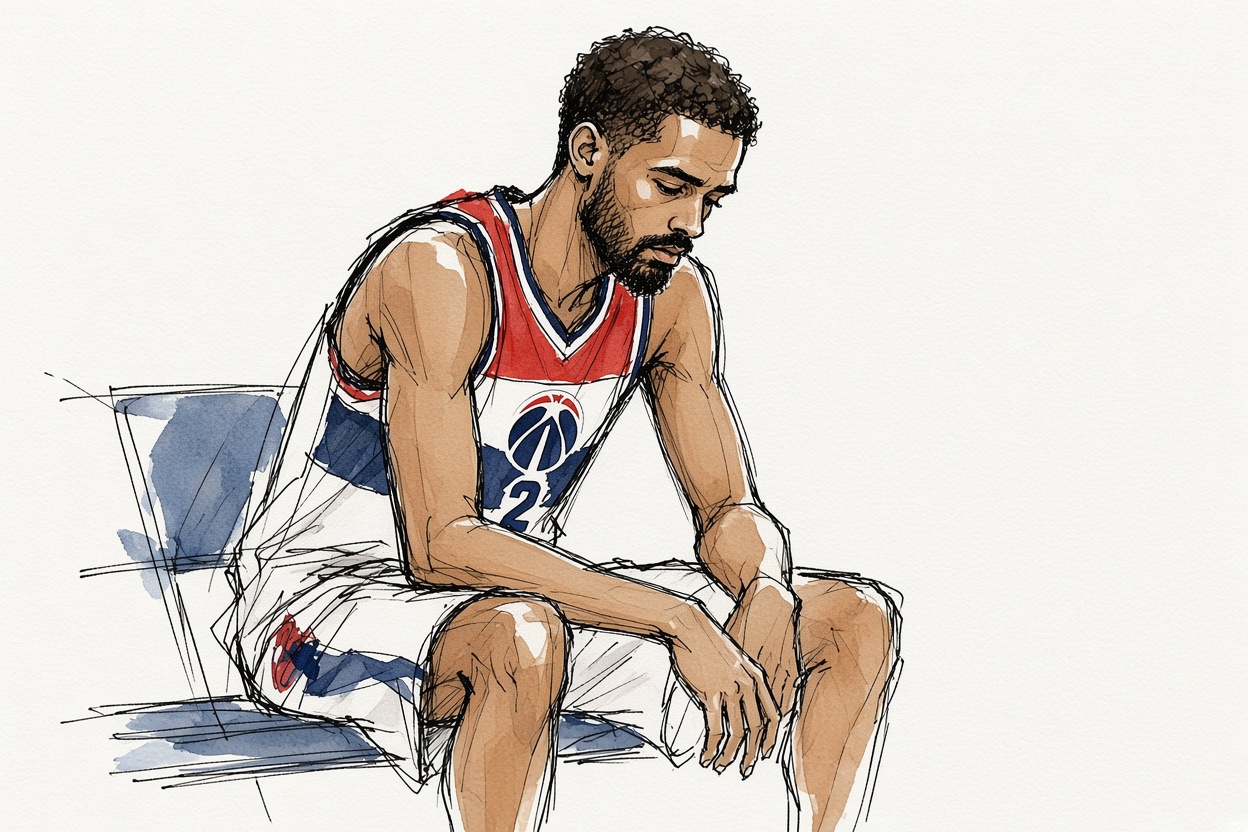
Washington's 144-140 double-overtime loss to Detroit on Thursday was the same deflating script the Wizards have been running for weeks, just with better production values this time.
The game was thrilling. Trae Young buried a three to force overtime, and rookie AJ Dybantsa, bleeding from the mouth after getting clipped by Cade Cunningham's head on a drive, stayed in the game and hit the shot that forced a second overtime. Alex Sarr, Anthony Davis and Young all scored 30 or more in the same game, something the franchise hadn't done since Mike Davis, Earl Monroe and Gus Johnson did it for the Baltimore Bullets in 1969. That's a genuinely rare stat line. None of it changes the record: Washington has lost six straight and sits at 4-9 early this season.
The moral-victory reading doesn't hold up. This is the same failure mode that's defined the whole streak: the team builds a lead, loses it, and then piles on enough fourth-quarter and overtime heroics to make the final score respectable. Washington led by double digits early and watched it evaporate. Forcing overtime twice means Washington keeps needing a miracle just to survive its own fourth quarters.

 Rating
 Rating
If you want someone to blame beyond the players, start with the rotation. Tre Johnson logged heavy minutes through a double-overtime game while shooting terribly from the field and from three. A Wizards blog's own game breakdown asked flatly why a player having that kind of night was still logging that much time. It's a coaching failure: Brian Keefe's staff still isn't adjusting when a cold shooter needs to sit, in a game decided by inches. This was also the second meeting between these two teams in a matter of days, and Washington lost both, with recognizably similar breakdowns in each.
The people pointing at Sarr's efficiency, Dybantsa's competitiveness and the three 30-point scorers aren't wrong about any of those individual moments. Sarr had the best game of his young career. Dybantsa got up and hit a shot with blood on his mouth. But a rebuild gets measured by whether the same mistakes stop happening, not by fireworks produced in a loss, and they didn't stop happening here. Washington is 4-9, losers of six in a row, and the losses keep arriving as almost-wins.
RTGAt some point almost stops being a silver lining. It becomes an indictment of the rotation decisions and the fourth-quarter execution that keep letting winnable games slip into overtime theater. This was the same step sideways Washington's been taking for six games now, just with better production values around it.